Setting up a first-floor bedroom takes more than finding a place for the bed. You need to check the room, measure the furniture route, decide where existing pieces will go, and agree on the moving and reassembly work.
This 17-step checklist focuses on bedroom furniture setup in a Southborough home or apartment. It works for a move to a new address or a room-to-room move within your current home. Tell Lifetime Moving Co which type of job you need, including any steps or stairs along the route.
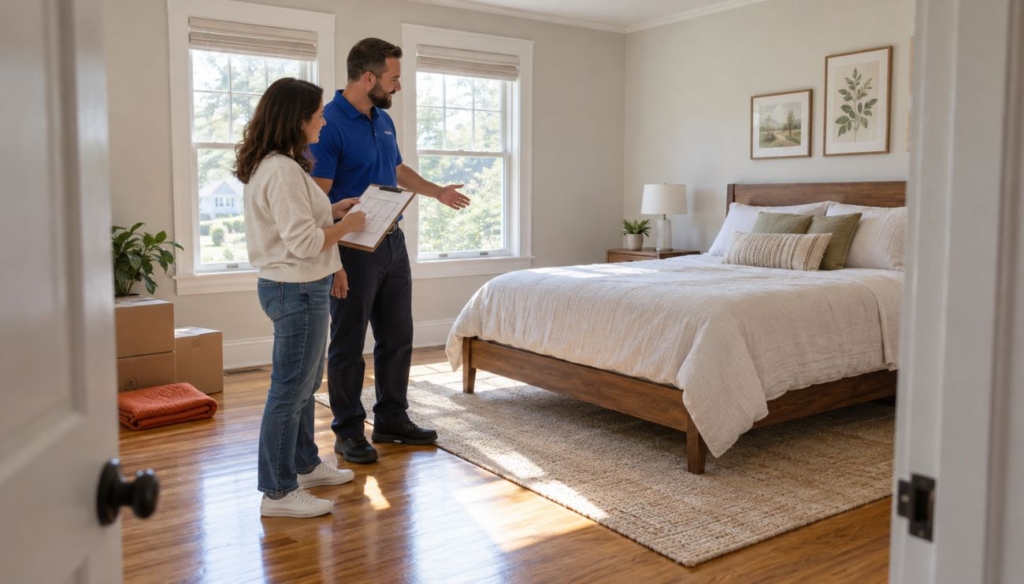
1. Confirm the Room Is Suitable for Sleeping
Consider privacy, noise, bathroom access, ventilation, and the needs of the person using the bedroom. A room that fits a bed is not automatically suitable or approved for sleeping.
If you are converting a different type of room, contact the Southborough Building / Zoning Department about applicable requirements before proceeding. Renters should also confirm proposed changes with the landlord. A divider or temporary arrangement does not establish that a space is an approved bedroom.
2. Measure the Destination Room
Record the room's length, width, ceiling height, and usable wall sections. Mark doors, windows, closets, outlets, radiators, vents, and built-in features. Check irregular or narrow areas separately rather than assuming every wall is straight.
Use consistent units and label each measurement clearly. Avoid rounding up tight clearances. Measurements help the crew plan, but they cannot guarantee that furniture will fit.
3. Measure Each Furniture Piece
Record the overall height, width, and depth of the bed frame, headboard, dresser, nightstands, and any other large pieces. Include projecting handles, trim, legs, and attached mirrors.
Measure the actual bed frame rather than relying on mattress size. Also note how far drawers extend and how much space you need to stand, reach storage, or operate adjustable furniture.
4. Sketch a Practical Bedroom Layout
Draw the room and furniture to a consistent scale, or label a simple sketch with dimensions. Mark door swings and the routes between the entrance, bed, closet, and bathroom.
Allow space for the user's mobility needs, including walking aids or assistance where relevant. Avoid treating a generic furniture-spacing number as an accessibility standard. Keep exits clear: the U.S. Fire Administration's home fire escape guidance calls for unblocked doors and windows.
5. Inventory Furniture Already in the Room
List everything occupying the destination room and mark each item as staying, moving elsewhere, or leaving the home. Include dimensions, fragile parts, and existing damage.
Take clear photos for your records. The National Association of Insurance Commissioners' home inventory guidance explains the value of photographs and organized item records. Keeping an inventory does not itself confirm insurance coverage for the move.
6. Assign a Destination to Every Displaced Item
Decide where the desk, sofa, or other furniture currently in the room will go. If an item needs storage, confirm the location, access, handling, costs, and eventual return arrangements before booking.
Lifetime Moving Co's residential moving services include furniture rearranging, in-home moving, and storage options. Ask which arrangements suit your job rather than assuming storage or a second visit is included.
7. Check the Starting Room's Doorway
Measure the actual clear opening with the door in the position available during the move. Include height and the narrowest usable width, accounting for the door, stops, hardware, and trim.
A nominal door size is not the same as usable clearance. If a door might need removal, let the crew assess it and confirm any property permission, removal work, and refitting responsibility in advance.
8. Check Hallways and Turning Space
Measure narrow sections and photograph corners, projecting fixtures, and the space on both sides of each turn. A piece may fit through a straight opening yet lack enough room to rotate into it.
There is no single extra-width rule that proves a hallway will work for every piece. Share the furniture dimensions and route together, and ask for an assessment when the fit is uncertain.
9. Assess Any Stairs and Landings
A first-floor destination can still involve porch steps, entrance stairs, or furniture coming down from another floor. Measure the usable width between the closest obstructions, including handrails and banisters, rather than wall-to-wall space alone.
Record landing dimensions and low overhead points from safely accessible positions. Leave handrails and light fixtures in place for the assessment. Any alteration needs separate planning and appropriate permission or professional work.
10. Verify the Bedroom Entrance
Measure the destination doorway as carefully as the starting doorway. Check where the open door sits, what is directly opposite the entrance, and whether the furniture has room to turn once inside.
Show the crew any difference between your proposed layout and the space needed during handling. Do not force an item through a marginal opening or assume tilting it will solve every clearance problem.
11. Photograph the Complete Route
Take a sequence of photos from the starting point to the bedroom, including entrances, hallways, corners, stairs, and landings. Label tight spots and place the corresponding measurements beside them.
For an apartment move-in, include building access, parking arrangements, permitted moving hours, and any elevator requirements. For an in-home move, include every room involved and a temporary holding area that keeps walkways and exits open.
12. Agree on Furniture Disassembly
Find the model details and manufacturer instructions for the bed and any furniture that may need taking apart. Identify removable parts, powered components, fragile joints, and existing wall anchors.
Lifetime's moving FAQs confirm furniture disassembly and reassembly services. Agree on the specific items and tasks in your quote. Do not assume every flat-pack piece tolerates repeated disassembly or that a powered bed uses the same process as a basic frame.
13. Label Hardware and Record Condition
Keep hardware for each item in a separate, clearly labeled bag or container. Photograph joints and parts before they are separated, and agree on who will keep the hardware during the move.
Document existing scratches, cracks, loose fittings, and damage to nearby walls or floors. Follow the crew's instructions about emptying furniture and securing or removing drawers. Avoid applying tape directly to delicate finishes.
14. Confirm Furniture and Surface Protection
Discuss protection suitable for your furniture finishes, flooring, doorways, and stairs. Tell the movers about recently painted surfaces or newly finished floors and follow the relevant product's curing and care instructions.
For an antique dresser, large mirror, or fragile decorative piece, ask whether custom packing or crating is appropriate. Protection methods should match the materials and route; a loose blanket on stairs can create a trip hazard.
15. Agree on the Moving Sequence
Walk through the plan with the crew before handling starts. Confirm which items move first, where displaced furniture goes, and how the bedroom will remain accessible while the bed and other pieces are positioned.
Remove loose cords, rugs, toys, and clutter from the route. NIH's fall-prevention guidance, especially relevant to older adults, recommends removing trip hazards from stairs and walkways. Keep children and pets away from the work area, and stay reachable for placement decisions.
16. Check Reassembly, Placement, and Anchoring
Confirm agreed reassembly is complete before using the furniture. Check that doors and drawers operate and that walking routes, closets, and exits remain accessible. Report loose connections or missing parts rather than relying on a quick wobble test as proof of safety.
Arrange necessary anchoring at the new location. The CPSC's Anchor It guidance recommends securing furniture and TVs according to manufacturer instructions. Confirm who will do this work and obtain any required landlord permission before installation.
17. Confirm the Booking Details and First-Night Essentials
Before booking, send your furniture list, room sketch, route measurements, photos, preferred date, and requested preparation or reassembly tasks. Confirm the written scope, pricing method, minimum charges, storage arrangements, and process for changes or damage concerns.
Keep bedding, everyday clothing, toiletries, and other first-night essentials accessible. For help planning the furniture work, request a first-floor bedroom moving quote and explain whether this is a new-address move or a rearrangement within your Southborough home.
Key Takeaways
- Confirm room suitability before treating a new sleeping arrangement as an approved bedroom.
- Measure actual furniture and usable route clearances, including rails, door hardware, and turning space.
- Give every displaced item a destination and confirm all moving, storage, and assembly tasks.
- Finish with clear walkways, completed reassembly, and necessary furniture anchoring.
Frequently Asked Questions
Can this checklist be used for an in-home move?
Yes. Focus on the starting and destination rooms, any stairs between them, and where displaced furniture will go. If you are moving to another address, add building access and delivery arrangements at both properties.
Does a first-floor bedroom mean there are no stairs?
No. There may be entrance steps, a raised first floor, or furniture coming from an upstairs room. Describe the actual route instead of relying only on the floor label.
How much room should I leave around the bed?
Allow enough space for the people using the bedroom, door and drawer operation, and any mobility equipment or assistance needed. Generic furniture-spacing advice does not establish accessibility compliance or suitability for a particular person.
Will removing a door guarantee that furniture fits?
No. It may change the available opening, but hallway turns, overhead clearance, and the furniture's shape still matter. Ask the crew to assess the complete route and agree on any door removal and refitting.
Is bed assembly automatically included?
Confirm the exact assembly and disassembly tasks in the quote, including any powered components or unusual hardware. Also ask separately about wall anchoring and mounting work.