Boston serves as home to more than 150,000 students from colleges and universities of all sizes. The city transforms into a chaotic symphony of rental trucks, furniture, and stressed movers every year on Boston moving day September 1, as thousands of students arrive simultaneously.
This massive student migration has created a peculiar Boston phenomenon called "storrowing" - rental trucks slamming directly into low-clearance bridges on Storrow Drive, Memorial Drive, or Soldiers Field Road. Bright "Cars Only" signs and low clearance warnings of nine feet[-4] don't seem to help, as multiple trucks get stuck under these overpasses each year. The problem extends beyond move-in day, with trucks of all types hitting these low bridges and causing major traffic jams throughout the year.
The Department of Conservation and Recreation (DCR) reported some good news - no "storrowings" occurred during move-in weeks in 2023 and 2024. Awareness campaigns seem to work, yet the risk stays high as students and movers try to direct their way through the city's restricted parkways.
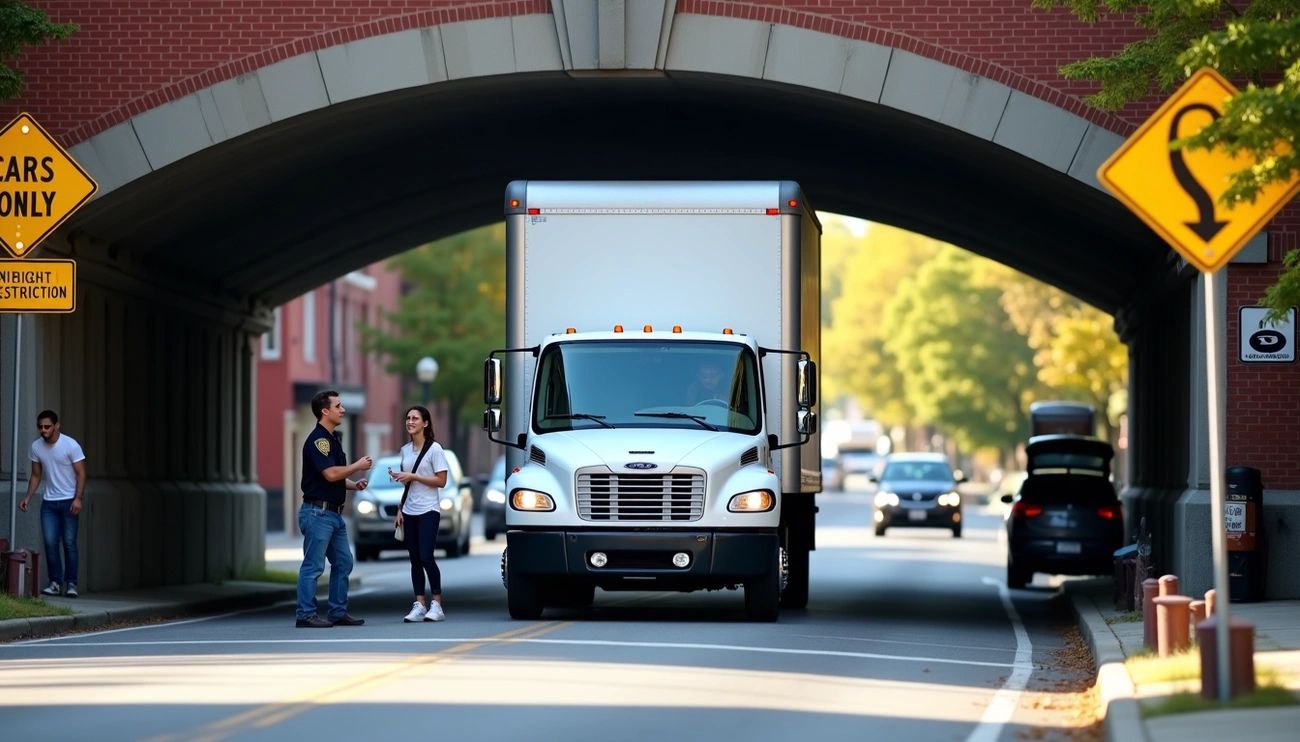
Our team has helped countless families move around Coolidge Corner, along Mass Pike, and near Boston's university districts. We've witnessed everything there is to see. In this piece, we'll share essential tips to help you avoid becoming another "storrowing" statistic and ensure your Boston move goes smoothly.
What Is Boston Moving Day and Why It’s So Chaotic
September 1st marks a notorious date in Boston's calendar. Locals nicknamed this day "Allston Christmas" because streets overflow with discarded furniture. This unique phenomenon traces back to the city's rental market structure.
Why is September 1 moving day in Boston?
The [September 1st tradition](https://en.wikipedia.org/wiki/Moving_Day_(Boston) comes from Boston's distinctive rental patterns. Most leases start and end on this single date, which creates a massive city-wide moving event. This decades-old practice continues because property managers prefer standard lease terms. The presence of more than 20 colleges and universities in Boston leads property owners to match lease cycles with academic calendars. This helps them keep their units occupied year-round.
How college move-ins impact city traffic
Thousands of college students return to Boston University, Northeastern, and other schools near Commonwealth Avenue and Huntington Avenue at once. This turns narrow streets in Allston, Brighton, and Mission Hill into gridlock zones. Moving trucks double-park along Beacon Street and major roads. Traffic snarls spread beyond university areas and reach from Jamaica Plain to Somerville.
The rise of 'Storrowing' incidents during this time
'Storrowing' has become a peculiar Boston tradition - though not a welcome one. The term describes what happens when rental trucks hit low-clearance bridges on Storrow Drive and create massive traffic jams. Our moving company has seen these incidents spike each September during move-ins. New drivers who don't know Boston's roads often miss warning signs along these parkways.
Students and families moving to Brookline or nearby areas should know that our Brookline movers at Lifetime Moving Co. suggest avoiding these parkways completely. The Massachusetts Department of Transportation has added more warning signs, but trucks still get stuck under these overpasses every year.
Need help with your Boston, MA move? Our local experts at Lifetime Moving Co. can handle the heavy lifting. Reach out today for a free quote with no obligations!
Understanding Storrow Drive and Its Restrictions
Storrow Drive is one of Boston's most challenging roadways, especially if you're planning to move around the city. Our team at Lifetime Moving Co. has helped countless families relocate throughout Beacon Hill and Back Bay neighborhoods, and we know how crucial it is to understand these restrictions.
What is Storrow Drive Boston known for?
Storrow Drive has become famous as a major route next to the Charles River with a dangerous twist – its extremely low-clearance bridges. The road's reputation for truck accidents led Bostonians to create the term "storrowing" for vehicles that crash into these overpasses. These accidents happen most often during Boston moving day as drivers try to find their way through the city's tricky road system.
Height limits and 'Cars Only' rules
The Department of Conservation and Recreation (DCR) marks Storrow Drive as a "cars only" roadway. Some spots have height restrictions as low as nine feet. Most moving trucks stand 10-12 feet tall and can't safely use this route. The Massachusetts Department of Transportation has added better warning systems with new, more visible, and stronger "Cars Only" signs at each entrance. These signs sit at bridge height and get hit whenever tall vehicles try to pass under them.
Other roads with similar restrictions: Memorial Drive, Soldiers Field Road
Storrow Drive isn't alone in having these restrictions. Both Memorial Drive in Cambridge and Soldiers Field Road have similar "cars only" rules with equally dangerous clearances as low as nine feet. Our Boston movers suggest different routes for moving trucks, such as Beacon Street, Commonwealth Avenue, and the Massachusetts Turnpike. If you need to cross the river, all bridges east of the Eliot Bridge – including the BU Bridge, Harvard Bridge, and Longfellow Bridge – allow trucks.
Planning your move to Boston, MA? Let Lifetime Moving Co. help! Contact us today for a free quote and let our local experts take care of everything.
How to Avoid Getting 'Storrowed'
Moving a truck through Boston streets demands careful planning if you want to avoid becoming another "storrowing" statistic. Our team at Lifetime Moving Co. has helped numerous clients navigate the city's challenging roadways safely.
Know your truck's height before you drive
Storrow Drive enforces a strict height limit of 10 feet. Most moving trucks reach heights between 10-12 feet, making them too tall for these parkways. The best practice involves measuring your vehicle and keeping the height written on a dashboard note as a constant reminder.
Use truck-specific GPS apps like SmartTruckRoute
Standard navigation apps fail to account for truck height restrictions. The smart choice lies in using truck-specific GPS applications:
- SmartTruckRoute: Boston developers created this app with Storrow Drive specifically in mind. The app factors in bridge heights, clearances, and load limits
- TruckMap, Hammer, and TruckerPath: These options let you input vehicle dimensions
Watch for warning signs and flashing lights
DCR has placed bright yellow "Cars Only" signs at restricted roadway entrances. These reflective markers hang at bridge height with rubber bottoms that give drivers a warning tap.
What to do if you hit a warning sign
A warning sign strike requires an immediate stop and route change. Drivers who continue ahead face fines up to $200 ($50 for illegal vehicle operation plus $150 for ignoring signs).
Why Google Maps and Waze can't be trusted for trucks
Google Maps and Waze often lead trucks onto restricted roads. These apps ignore vehicle dimensions, which creates dangerous situations for drivers who aren't aware.
The next step toward your Boston, MA move starts here. Contact Lifetime Moving Co. today for a free, no-obligation quote and let our local experts take care of the heavy lifting!
Smart Planning for a Smooth Move-In
A well-planned moving day in Boston can make all the difference. Our team at Lifetime Moving Co. has seen how good preparation can streamline a stressful day, especially when you have to deal with packed neighborhoods like Beacon Hill and Allston.
Apply for parking permits early
Parking permits are not mandatory but they ensure reserved spaces for your moving truck. You should submit online applications at least two weeks before your move date. If you prefer applying in person at City Hall, do it at least three days ahead. The cost ranges from $69.00 to $109.00, based on whether you need metered spaces. You must post the "No Parking" signs 48 hours before your scheduled move.
Best times to move to avoid traffic
The ideal moving window is between 10 AM and 3 PM on weekdays to dodge rush hours. You could also choose early mornings (before 7 AM) or evenings (after 7 PM) when traffic is lighter. Monday mornings are your best bet for a smooth move along Commonwealth Avenue and other major thoroughfares.
Navigating narrow streets and one-ways
Boston's historic neighborhoods come with their own challenges due to narrow, winding streets. You should measure curb-to-door distances beforehand for brownstone moves in Back Bay or South End. Someone needs to guide your driver through tight corners since many streets in the North End and Beacon Hill need careful navigation.
Tips for unloading quickly and safely
Make clear pathways in your new home before the movers arrive. Put drop cloths or tarps near entrances - this helps substantially during Boston's unpredictable weather. A color-coded system for boxes can speed up unloading time. Just stick colored tape on boxes to match specific rooms.
Resources: Boston 311, MassDOT truck restrictions
Boston 311 is your go-to resource for non-emergency help around the clock. The BOS:311 mobile app lets you report problems or get information quickly. You can reach MassDOT at (857) 368-3690 on weekdays for truck route guidance.
Planning a move to Boston, MA? Get in touch with Lifetime Moving Co. today for a free quote. Let our local experts take care of the heavy lifting!
Conclusion
Success on Boston Moving Day comes down to smart planning and knowing the area, especially to avoid those dreaded "storrowing" incidents. Our experience serving communities from Allston to Beacon Hill shows how much proper preparation matters. Storrow Drive, Memorial Drive, and Soldiers Field Road are strictly "cars only" zones with height limits of nine feet - by a lot lower than typical moving trucks.
On top of that, it helps to use truck-specific GPS apps like SmartTruckRoute instead of regular navigation tools to stay clear of restricted roads. Getting parking permits early, choosing off-peak hours to move, and knowing how to handle Boston's narrow streets will without doubt save you headaches. Recent years show fewer "storrowing" incidents, which proves that better awareness really works.
Moving to a brownstone in Back Bay or a student apartment near Commonwealth Avenue becomes much easier once you understand these local challenges. The keys to a smooth Boston move are preparation, timing, and local know-how - skills we've mastered through countless moves across the city's diverse neighborhoods.
Looking to move to Boston, MA? Let our local experts at Lifetime Moving Co. handle the heavy lifting! Reach out today to get your free quote with no strings attached.
Key Takeaways
Boston's September 1st moving day creates citywide chaos as 150,000+ students relocate simultaneously, but proper planning can help you avoid the notorious "storrowing" incidents and navigate successfully.
• Know your truck height and avoid restricted roads: Storrow Drive, Memorial Drive, and Soldiers Field Road have 9-10 foot height limits while most moving trucks are 10-12 feet tall.
• Use truck-specific GPS apps like SmartTruckRoute: Regular navigation apps like Google Maps and Waze don't account for height restrictions and will route trucks onto dangerous parkways.
• Apply for parking permits 2+ weeks early and move during off-peak hours: Reserve spaces cost $69-109 and moving between 10 AM-3 PM on weekdays avoids rush hour traffic.
• Watch for "Cars Only" warning signs and stop immediately if you hit one: These yellow reflective markers hang at bridge height - continuing forward after striking them risks fines up to $200.
• Plan your route in advance using truck-safe alternatives: Use Beacon Street, Commonwealth Avenue, and Mass Pike instead of the restricted riverside parkways to ensure safe passage through the city.
The recent trend of zero "storrowing" incidents during 2023-2024 move-in weeks proves that awareness and preparation work - follow these guidelines to join the success stories rather than becoming another cautionary tale.
FAQs
Q1. What is "Storrowing" and why is it a concern in Boston? "Storrowing" refers to incidents where oversized vehicles crash into low-clearance bridges on Storrow Drive and similar parkways in Boston. It's a major concern during moving seasons, especially September 1st, when many students and residents relocate.
Q2. How can I avoid getting "Storrowed" when driving a moving truck in Boston? To avoid "Storrowing," know your truck's height, use truck-specific GPS apps like SmartTruckRoute, watch for warning signs, and avoid restricted roads like Storrow Drive, Memorial Drive, and Soldiers Field Road. Stick to truck-safe alternatives such as Beacon Street, Commonwealth Avenue, and the Massachusetts Turnpike.
Q3. Are there any specific apps or tools to help navigate Boston safely with a moving truck? Yes, truck-specific GPS apps like SmartTruckRoute, TruckMap, Hammer, and TruckerPath are recommended. These apps consider vehicle dimensions and route you away from low-clearance areas, unlike standard navigation apps which may lead trucks onto restricted roads.
Q4. What should I do if I accidentally hit a warning sign while driving a moving truck in Boston? If you hit a warning sign, stop immediately and find an alternative route. Continuing forward could result in severe damage to your vehicle and fines up to $200. It's crucial to heed these warnings to avoid potentially catastrophic accidents.
Q5. How can I plan for a smooth move-in experience in Boston? For a smooth move-in, apply for parking permits at least two weeks in advance, schedule your move during off-peak hours (10 AM to 3 PM on weekdays), and familiarize yourself with your specific neighborhood's challenges. Consider using Boston 311 for non-emergency assistance and consult MassDOT for truck route guidance if needed.