We are monitoring the multimodal project construction phase that begins this March on Cambridge Street Bridge, a critical route for Allston commuters and residents planning spring relocations. The Massachusetts Department of Transportation is advancing its $1.9B Allston Multimodal Project to reconstruct the aging Allston interchange and replace the Mass Pike's outdated infrastructure. This multimodal project example demonstrates how transportation improvements can disrupt daily routines temporarily. Recent bike traffic counts recorded 613 riders on a single weekday along Franklin Street near the footbridge. This highlights the route's importance. Construction barriers affect bike lanes and pedestrian access, so understanding the Allston Multimodal Project timeline and detour options becomes crucial. We will get into how MassDOT's construction zone affects local mobility and what safety improvements have emerged from community feedback.
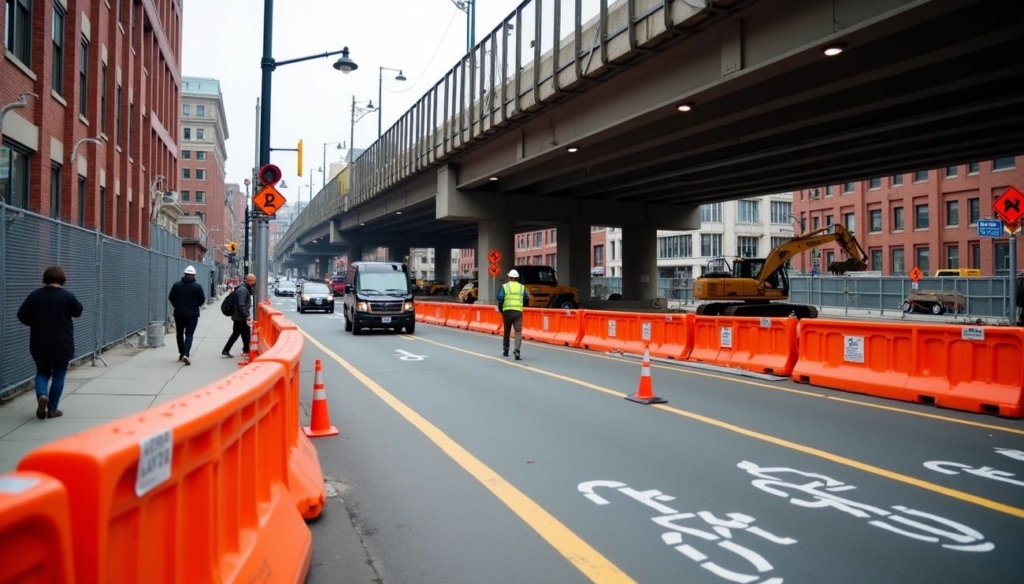
MassDOT Launches March Construction Phase for Cambridge Street Bridge
MassDOT started preservation work on the Cambridge Street Bridge structure in January 2026, closing the right lane of Cambridge Street southbound to support ongoing construction activity. Lifetime Moving Co. advises clients planning relocations with [our Allston movers](https://lifetimemovingco.com/allston-movers/) to expect this lane closure until October 2026. The multimodal project meaning extends beyond simple repairs. This preservation work addresses deck patching, steel beam end repairs and joint replacement to extend the bridge's lifespan until full replacement occurs.
MassDOT classified this as an "early action project" within the scope of the Allston Multimodal Project, which could be advanced as a standalone initiative. This designation came due to the loss of a federal funding grant of $327 million directed toward the broader AMTP. The Cambridge Street overpass sidewalk has remained closed since 2010 or 2011. This makes the preservation work overdue rather than early. Professional movers working with moving services in MA recognize that spring 2024 saw Cambridge Street Bridge replacement added to the project scope. Book moving in Brighton early as the spring real estate market heats up.
How the Construction Affects Bike Lanes and Pedestrian Access
Construction barriers erected during the bridge preservation work blocked the southbound Cambridge Street bike lane and the southern entrance to the Franklin Street footbridge over I-90. Hundreds of bicycle users and pedestrians had to share a narrow, broken sidewalk between the footbridge and Harvard Avenue intersection during most of January. The Franklin Street footbridge serves as one of only five north-to-south crossings of I-90 in a 2-mile stretch between Market Street and the B.U. Bridge. Mass.gov bike traffic counts recorded 613 and 570 bike riders on consecutive weekdays on Franklin Street near Alcott Street in June 2025. These riders represented more than a quarter of the street's total vehicular traffic on both days.
Lifetime Moving Co. recognizes these disruptions challenge clients relocating to apartments near Harvard Avenue. The bike lane west of the Franklin Street footbridge reopened after MassDOT's adjustments and allowed southbound and westbound bike traffic to use the bike lane once again. But the work zone continues to occupy the sidewalk and bike lane on the northern westbound side of the bridge through October. Westbound car traffic remains restricted to a single lane. Cambridge.gov regulations mandate a minimum width of four feet of unobstructed sidewalk passageway, and pedestrian access routes during construction should remain available. Our Allston movers recommend booking early as professional movers face increased need with spring relocations.
Community Response Prompts Safety Improvements
Brookline resident Emily Jacobsen launched a public petition calling on MassDOT to provide protected bike lanes during construction. This drew attention to safety gaps along the Cambridge Street corridor. As a result, MassDOT rearranged its construction zone to improve bike and pedestrian access and reopened the bike lane west of the Franklin Street footbridge. Lifetime Moving Co. observes how professional movers benefit from community advocacy that drives infrastructure improvements.
Boston worked with the Massachusetts Department of Transportation to build a crosswalk at the on-ramp between North Harvard Street and Sorrento Street. The city shortened mixing zones between bicyclists and right-turning drivers and installed physical separation for bicycle lanes. The design now spaces flexposts 30 feet apart rather than the 60-foot spacing that was planned. Task Force member Galen Mook raised concerns about accessibility at a January 15 meeting. He noted that residents using wheelchairs cannot traverse the deteriorated sidewalk. The Cambridge Police Department created 149 crash reports for Cambridge Street between Oak Street and Second Street from January 2021 to September 2023. Driver-cyclist crashes resulted in injury 84% of the time. Our Allston movers recommend booking moving services in MA early as spring relocations just need more moving in Brighton.
Conclusion
As spring approaches, the Cambridge Street Bridge preservation work reminds us that infrastructure improvements, while disruptive, ended up improving safety for our community. The construction phase extends through October 2026 and affects bike lanes, pedestrian access and traffic flow along this critical corridor. Community advocacy proved effective in securing protected bike infrastructure and accessibility improvements. We recommend planning relocations with these detours in mind, as the spring ground estate market accelerates and the just need for reliable moving assistance increases throughout Allston and Brighton.
Key Takeaways
The Cambridge Street Bridge construction project highlights how infrastructure improvements require careful planning and community engagement to balance progress with daily mobility needs.
• Construction runs through October 2026 - MassDOT's $1.9B preservation work closes the right southbound lane, affecting 613+ daily cyclists and pedestrians using this critical route.
• Community advocacy drives safety improvements - A public petition successfully prompted MassDOT to reopen bike lanes and install protected barriers with closer spacing.
• Multiple transportation modes face disruptions - The project blocks bike lanes, closes sidewalks, and restricts vehicle traffic to single lanes during peak moving season.
• Franklin Street footbridge remains crucial - As one of only five north-to-south I-90 crossings in a 2-mile stretch, this route handles over 25% of local traffic volume.
• Spring relocations require early planning - Professional movers and residents should book services early and account for detours as construction coincides with peak real estate activity.
This multimodal project demonstrates how transportation infrastructure improvements, while temporarily challenging, ultimately enhance long-term safety and accessibility when community input shapes the construction approach.
FAQs
Q1. When will the Cambridge Street Bridge construction be completed? The preservation work on Cambridge Street Bridge is scheduled to continue through October 2026. The project began in January 2026 with the closure of the right southbound lane and includes deck patching, substructure repairs, steel beam work, and joint replacement to extend the bridge's lifespan until full replacement occurs.
Q2. How does the construction affect cyclists and pedestrians? Construction barriers initially blocked the southbound bike lane and the southern entrance to the Franklin Street footbridge, forcing cyclists and pedestrians to share a narrow, broken sidewalk. Following community advocacy, MassDOT reopened the bike lane west of the footbridge, though the work zone continues to occupy sidewalk and bike lane space on the northern westbound side through October.
Q3. Why is the Franklin Street footbridge so important during this construction? The Franklin Street footbridge serves as one of only five north-to-south crossings of I-90 in a 2-mile stretch between Market Street and the B.U. Bridge. Traffic counts show over 600 cyclists use this route on weekdays, representing more than a quarter of the street's total vehicular traffic, making it a critical connection for the community.
Q4. What safety improvements resulted from community feedback? Community advocacy through a public petition prompted MassDOT to rearrange the construction zone, reopen bike lanes, and install physical separation barriers with flexposts spaced 30 feet apart instead of the originally planned 60-foot spacing. Boston also built a new crosswalk and shortened mixing zones between bicyclists and right-turning drivers.
Q5. What is the total cost and scope of the Allston Multimodal Project? The broader Allston Multimodal Project is a $1.9 billion initiative to reconstruct the aging Allston interchange and replace outdated Mass Pike infrastructure. The Cambridge Street Bridge preservation work is classified as an "early action project" within this larger scope, though it lost a $327 million federal funding grant.