A small living room works best when the furniture fits both the space and the way you use it. Before shifting a sofa or buying another chair, decide what the room needs to do, measure the available space, and test a few layouts on paper.
Whether you are refreshing a Watertown apartment or making room for a home workspace, the steps below will help you plan the arrangement and the order of the move. If heavy pieces need repositioning, Lifetime Moving Co offers furniture rearranging and in-home moving services.
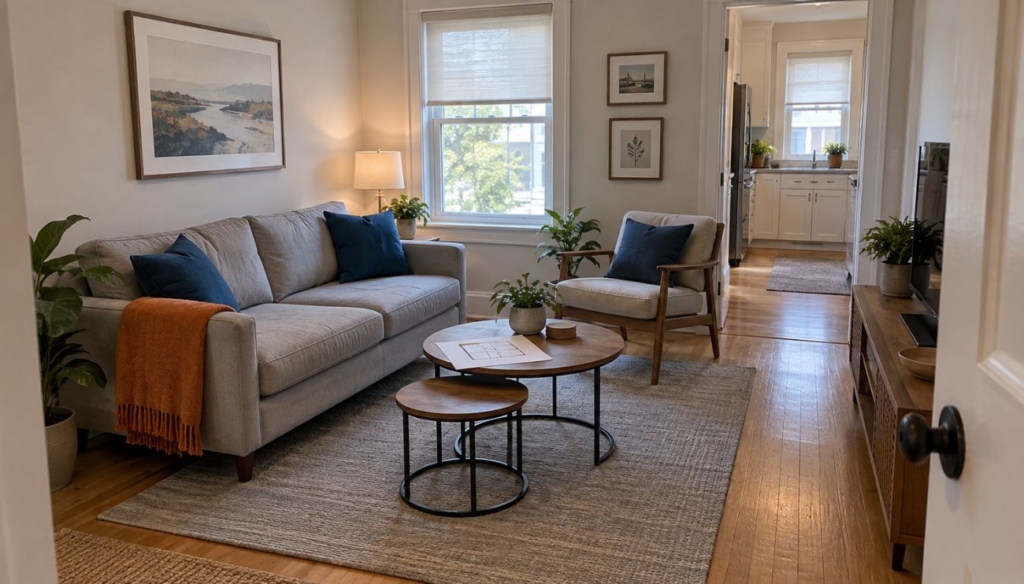
1. Decide What Your Living Room Needs to Do
Choose the room's main purpose before deciding where the sofa goes. Conversation, television viewing, reading, and remote work each create different demands on the layout.
- For conversation: Arrange seating so people can face each other without blocking the route through the room.
- For television: Check the view from each seat and consider glare, outlet locations, and cable routing.
- For work or reading: Reserve a usable corner with suitable lighting and enough space to pull out a chair.
Prioritize the activities you use most. A compact sofa, one comfortable chair, and a small table may serve the room better than a full matching furniture set. Nesting tables or a storage ottoman can provide flexibility, but include the space needed to separate the tables or open the ottoman.
Make a Furniture Inventory
For each piece you plan to move, record its description, width, depth, height, current position, and intended destination. Photograph existing scratches or damage as a condition record. Decide which pieces will stay, move elsewhere, or leave the room before moving day.
Use simple reference names such as Sofa A and Chair B on your inventory and sketch. Attach matching labels to protective wrapping or use loose tags where suitable. Do not assume painter's tape is safe for every finish, fabric, or antique surface.
2. Measure the Room, Furniture, and Access Route
Measure the room's length and width, then mark the features that limit placement: doors and their swing, windows, built-in storage, radiators, vents, fireplaces, outlets, and switches. Check ceiling height where a tall piece or low overhead feature makes it relevant.
Measure furniture at its widest points, including arms, legs, and projecting handles. Record the fully open footprint of recliners, sleeper sofas, drawers, and cabinet doors. A piece that fits when closed may block the walkway when someone uses it.
Check the Route Between Rooms
Measure the usable opening with each door open, rather than measuring the decorative frame. Check hallway turns, stair landings, handrails, and overhead clearance along the full route. If furniture is arriving from elsewhere, include the building entrance and any elevator.
Room dimensions alone do not establish that a piece can be moved into place. Share difficult turns and tight openings with the mover before booking so the team can assess whether disassembly or a different approach is needed.
Draw a Simple Scaled Plan
Use graph paper or a digital room planner. One convenient scale is 1/4 inch on paper for each foot in the room, so a 12-foot wall becomes a 3-inch line.
Draw the room outline, add fixed features, and make furniture shapes at the same scale. Compare two or three arrangements before choosing one. Include the space needed to use the furniture, not just its closed outline.
3. Test the Layout for Everyday Use
Start by placing the sofa on your plan, then add only the seating, tables, and storage you need. A sofa beside a wall can work well in a narrow room. Moving it away from the wall is useful only if that improves the seating arrangement without sacrificing needed circulation space.
Try These Small Living Room Layouts
- A narrow room: Test a sofa along a long wall, a shallow console opposite, and a small side table instead of a large central coffee table.
- A square room: Try a sofa with one chair angled toward it. Keep the entry side of the seating group open.
- A multipurpose room: Place a compact desk outside the main walking route and check that its chair can pull out without obstructing the seating area.
These are starting points. The best arrangement depends on the room's doors, windows, fixed features, and the people using it.
Check Movement and Reach
Test whether everyone can enter, pass the seating, sit down, and stand up comfortably. Leave enough space to reach a table without making it an obstacle. Allow for any walker, wheelchair, or other mobility aid used in the household rather than relying on a single spacing rule.
AARP's home accessibility checklist recommends removing extra furniture to make rooms easier to navigate and keeping electrical cords out of pathways. Use those practical checks when comparing your layouts.
Keep Windows and Heating Equipment Usable
Maintain access to windows and follow the required clearances for your heating equipment. Do not place furniture over vents or against heaters simply to gain more seating space.
If young children live in or visit the home, consider what they could climb to reach a window cord. The CPSC's window-covering guidance recommends cordless coverings and moving furniture away from windows and accessible cords.
4. Prepare Temporary Space and a Moving Sequence
Choose a temporary holding area outside the route through your home. A spare room or unused corner may work, provided it does not obstruct access. Avoid using shared hallways, stair landings, or exit routes for furniture storage.
The U.S. Fire Administration's escape-planning guidance emphasizes keeping doors and windows unblocked. Maintain those routes during the rearrangement as well as in the final layout.
- Pack loose belongings and remove small tables, lamps, and other obstacles.
- Prepare appropriate protection for furniture, floors, and doorways.
- Move out the pieces that will not be part of the finished arrangement.
- Position the largest retained pieces when the access route is clear.
- Add chairs, tables, and storage, checking the walking route as you go.
- Return lamps and decor after confirming that the layout works.
Placing the sofa first on paper does not mean it must be the first item moved physically. Adjust the sequence to avoid trapping furniture behind other pieces.
Arrange help for heavy or awkward items. NIOSH identifies bulky loads, awkward postures, and twisting while carrying as physical risk factors. Leave difficult lifting and tight stair moves to a crew equipped for the job.
5. Coordinate the Plan with Your Movers
If you are arranging help from residential movers in Watertown, explain that you need furniture repositioned within the home. Send the inventory, layout sketch, item photos, and access measurements.
Check with your building manager about approved work hours, elevator reservations, common-area protection, and any certificate-of-insurance requirement. Confirm which rules apply even if nothing is being transported to another address.
Lifetime Moving Co's moving FAQs cover general pricing options and furniture disassembly and reassembly. Before booking, confirm the tasks included in your particular job, any minimum charge, and how additional work is priced.
Also ask what protection applies to furniture and property damage during an in-home rearrangement, what exclusions apply, and how to report a problem. Get the terms for your booking in writing.
6. Check the Finished Arrangement
Walk through the room, sit in each seat, and open doors, drawers, and reclining furniture. Check that lighting is useful, cords stay outside walking routes, and rugs lie flat. Remove a nonessential piece if the room still feels difficult to use.
After relocating bookcases, dressers, or TVs, arrange any necessary anchoring in their new positions. Follow the manufacturer's instructions and the CPSC's furniture and TV tip-over prevention guidance. Confirm who will handle anchoring rather than assuming it is part of the moving service.
Frequently Asked Questions
Should a Sofa Sit Against the Wall in a Small Living Room?
It can. In a narrow room, placing the sofa near a wall may preserve the clearest walkway. Try a floating arrangement only when there is enough space around it and it improves how the room functions.
How Much Space Should I Leave Around Furniture?
Allow enough room to walk through, use doors and drawers, and sit or stand comfortably. Check the needs of everyone in the household, including people using mobility aids. A gap that works beside a coffee table may be too tight for the main route through the room.
Which Piece Should I Place First?
Start with the sofa or largest retained piece on your floor plan. For the physical move, clear obstacles first and use a sequence that keeps the access route open.
Get Help Rearranging Your Watertown Living Room
A measured plan and a clear moving sequence make it easier to turn a compact room into a comfortable space. Request furniture rearranging help from Lifetime Moving Co and share your inventory, proposed layout, and access photos so the team can review the job and confirm booking details.