Most Boston leases expire simultaneously, with 60 to 70% of turnovers happening at once. This creates a perfect storm that leads to moving truck disasters.
"Storrowing" incidents spike every year as rental trucks slam into the very low bridges on Storrow Drive, Soldiers Field Road, and Memorial Drive. Some overpasses sit as low as a basketball rim, which means your truck's roof will tear off if you don't pay attention. The authorities have installed about 100 warning signs and invested $400,000 in a two-year contract to maintain these signs, yet these avoidable crashes keep happening.
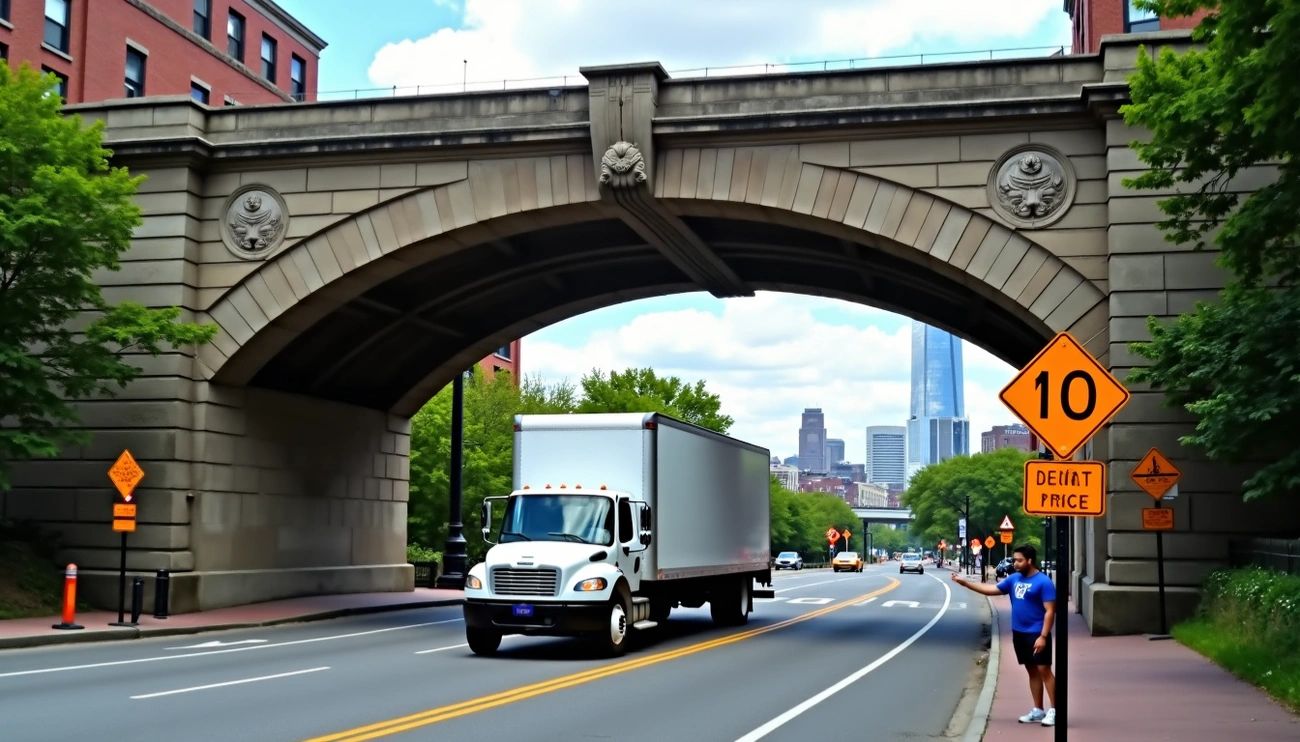
Storrow Drive presents the biggest challenge with its very low height limits - just 9-10 feet under certain overpasses. Standard rental trucks from U-Haul, Penske, and Ryder stand between 11 and 13 feet 6 inches tall. Lifetime Moving Co.'s detailed guide will help you direct your way through Boston's challenging roadways during your winter move in 2026. This becomes even more important with the ongoing Cambridge Street bridge construction causing detours in Allston.
Know the Roads That Can Ruin Your Move
Storrow Drive: Boston's most important road to avoid with trucks
Storrow Drive has become a notorious trap that catches many unsuspecting movers. Some spots have height restrictions as low as 9 feet, which is why this parkway only allows cars. The maximum clearance on Storrow Drive reaches just 10 feet, yet standard moving trucks stand between 11 and 13.5 feet tall.
Low bridges paired with poor visibility on short entrance ramps make this road especially dangerous. Massachusetts State Police deal with multiple trucks that get stuck under bridges or need to back out from overpasses each year. These accidents happen so often that local media now calls them getting "Storrowed" - a term that has stuck in Boston's everyday language.
Memorial Drive and Soldiers Field Road: Equally dangerous alternatives
You might think other riverfront routes would be safer, but think again. Memorial Drive and Soldiers Field Road have the same "cars only" rules and tight height limits. These parkways are just as dangerous as Storrow Drive, with some spots having only 9 feet of clearance.
The Massachusetts Department of Conservation and Recreation (DCR) strictly prohibits all vehicles except cars on these three river roads. A successful pilot program in 2023 led DCR to install clearer "CARS ONLY" signs at every entrance.
Cambridge Street bridge detour in Allston (2026 update)
Moving in winter 2026 comes with extra challenges due to the Cambridge Street Bridge preservation project in Allston. Since January 2026, construction work has closed the right lane of Cambridge Street southbound. This project will run through October 2026.
The closure affects the bike lane and creates detours that limit moving truck access. MassDOT has adjusted the barriers to improve access while protecting construction workers after public feedback. The work zone and lane closures still pose a major challenge for large vehicles in this area.
Standard GPS apps like Google Maps don't factor in vehicle height restrictions. Your best bet is to use truck-specific navigation apps such as SmartTruckRoute, TruckMap, or Hammer.
Why GPS Apps Can't Be Trusted for Truck Routes
Many movers make a big mistake by trusting standard GPS apps to navigate moving trucks around Boston. These apps might lead you straight into a bridge - not the kind of collision you want.
How Google Maps and Waze mislead truck drivers
Google Maps and Waze work great for regular cars. But these apps miss something big - the height restrictions that keep trucks safe. They'll show you the quickest way through town. The problem? They don't care about the challenges tall vehicles face.
Regular navigation apps often send trucks down Storrow Drive, despite clear "cars only" signs. Sure, they nail the traffic updates. Yet they miss bridge clearances and truck restrictions that matter most. That's why drivers end up getting "Storrowed," even with fancy tech in their hands.
Best truck GPS apps: TruckMap, Hammer, SmartTruckRoute
Your winter 2026 Boston move needs a specialized truck navigation app. At Lifetime Moving Co., we've tested many options. Here are three that work best:
- TruckMap: Shows all the low bridges around Boston
- Hammer: Gives you live winter road updates
- SmartTruckRoute: Creates routes just for moving trucks
These apps know all about height limits, weight restrictions, and where trucks can't go in Boston. You can also set them up with your truck's exact size.
How to enter your truck's height correctly
The right setup of your truck GPS makes all the difference. Here's what to do before you hit the road:
Check your rental agreement for the exact vehicle height - most moving trucks are between 11-13.5 feet. Add 6 inches to this number in your truck GPS app. This extra space helps with snow on the roads during January 2026 moves.
Take a minute to review your route before leaving. The Cambridge Street bridge work in Allston means detours this winter. Even the best truck GPS apps need a quick check against the Boston.gov moving guide.
Safe Routes and Height-Friendly Roads in Boston
You've learned which roads to avoid, so let's explore the safe paths for moving trucks through Boston that won't get pricey with accidents.
Use I-90, I-93, and Route 2 for major access
The Massachusetts Turnpike (I-90) stands as the most reliable east-west corridor through Boston. Designers built it with standard height clearances of 13 feet 6 inches specifically for commercial vehicles. I-93 serves as the main north-south route and maintains appropriate clearances for moving trucks. Route 2 gives you a safer option than Memorial Drive if you're coming from Cambridge or Arlington.
Beacon Street and Commonwealth Ave as local alternatives
Commonwealth Avenue and Beacon Street make excellent alternatives to the restricted parkways for local navigation. These roads welcome all types of vehicular traffic throughout the year, including winter moves. Standard clearances without dangerous low bridges that cause "Storrowing" incidents make these streets safer than the parkway system.
Avoid Beacon Hill's narrow streets and local truck bans
Beacon Hill's historic narrow streets and weight restrictions create unique challenges. "NO TRUCK" signs appear on many of this neighborhood's streets to protect the infrastructure. Boston also limits hazardous material transport through downtown from 6:00 a.m. to 8:00 p.m.. Some areas enforce even stricter rules for local deliveries.
Tobin Bridge vs Sumner and Callahan tunnels
Your harbor crossing choice matters. Sumner and Callahan tunnels' height clearances max out at 12 feet 6 inches, which might not work for larger moving trucks. The Tobin Bridge comes with no height restrictions, making it your best bet for taller vehicles. This bridge remains the only route that meets full interstate vertical clearance standards.
Planning your move in Boston? Let our local experts at Lifetime Moving Co. handle the winter weather and narrow streets. Reach out today for a free, no-obligation quote!
Permits, Parking, and Winter Hazards to Watch
You need to secure proper parking permits for your moving truck after navigating Boston's low bridges.
Boston City Hall moving permit fee: $69 base in 2026
A permit is essential to get legal parking for your moving truck in Boston. The standard fee costs $69 base for two non-metered spaces. The fee breakdown shows $50 as base fee, $11 for space usage, and $8 for two official "No Parking" signs. Metered spaces need an extra $40 ($20 per meter).
Where to pick up signs: 2nd floor Parking Clerk office
Head to the Parking Clerk's Office on the second floor of City Hall to get your permit. Blue lit signs mark windows 1-6 that show they're open. The office accepts cash and credit cards - Visa, MasterCard, Discover, and American Express.
Boston moving truck parking signs and restrictions
Put up your "No Parking" signs 48 hours before your move begins. Metered spaces need signs posted 24 hours ahead. Place copies of the notification flyer on nearby vehicles and building doors within a 20-foot radius. The non-emergency police line at 617-343-4911 helps if vehicles stay parked in your reserved space.
Salt, snow, and heating tips for winter moves
January 2026 moves need shoveled and salted walkways before loading starts. Layer your clothing and wear boots with good traction on icy surfaces. Clear paths between the door and truck to keep your belongings and movers safe.
Need help planning your Boston move? Lifetime Moving Co. offers free, no-obligation quotes. Let our local experts handle the winter weather and narrow streets for you!
Conclusion
Moving trucks in Boston need careful planning, especially during the snowy winter of 2026. In this piece, you'll learn why Storrow Drive, Memorial Drive, and Soldiers Field Road pose serious risks to standard moving trucks that typically stand 11-13.5 feet tall. These parkways with their 9-10 foot clearances have earned a reputation as truck-destroying hazards.
Standard GPS apps won't warn you about height restrictions. You'll need truck-specific navigation tools like TruckMap or SmartTruckRoute that factor in your vehicle's dimensions. On top of that, it helps to add a 6-inch safety buffer when entering your truck's height to account for winter road conditions.
You can definitely find safe alternatives if you know where to look. Major highways like I-90, I-93, and Route 2 provide reliable corridors with standard clearances. Beacon Street and Commonwealth Avenue are excellent local options. The Tobin Bridge is your best choice for crossing the harbor, unlike the more restrictive Sumner and Callahan tunnels.
Legal parking just needs proper planning. You'll need to get permits ($69 base fee in 2026) and post "No Parking" signs at least 48 hours before your move date. Winter conditions make things trickier, so proper preparation with salt, shovels, and appropriate clothing is crucial.
The Cambridge Street bridge construction in Allston creates major detours this January. Checking Boston.gov's official moving guide before finalizing your route is a smart move. Boston moves come with unique challenges, but these guidelines will help you avoid becoming another "Storrowing" statistic.
Planning a Boston move? Let Lifetime Moving Co.'s local experts handle the winter weather and narrow streets. Contact us today for a free quote!
Key Takeaways
Moving in Boston requires strategic planning to avoid the infamous "Storrowing" incidents that plague 60-70% of lease turnovers. Here are the essential insights to ensure your move goes smoothly:
• Never trust standard GPS apps - Google Maps and Waze don't account for truck height restrictions; use specialized apps like TruckMap, Hammer, or SmartTruckRoute instead
• Avoid Storrow Drive, Memorial Drive, and Soldiers Field Road at all costs - These parkways have 9-10 foot clearances while moving trucks are 11-13.5 feet tall
• Stick to major highways and safe local roads - Use I-90, I-93, Route 2 for main access, and Beacon Street or Commonwealth Ave for local navigation
• Secure permits 48 hours early and prepare for winter conditions - Boston moving permits cost $69 base fee in 2026, and winter moves require salt, shovels, and proper safety gear
• Add 6 inches to your truck's listed height when planning routes - This safety buffer accounts for snow accumulation and measurement variations during winter moves
The key to successful Boston moving is preparation and local knowledge. With ongoing Cambridge Street bridge construction in Allston creating additional detours through 2026, professional guidance becomes even more valuable for navigating these challenging winter conditions safely.
FAQs
Q1. What are the height restrictions for moving trucks on Boston's parkways?
The height restrictions on parkways like Storrow Drive, Memorial Drive, and Soldiers Field Road can be as low as 9-10 feet, while most moving trucks are typically 11-13.5 feet tall. These roads are designated for cars only and are extremely dangerous for trucks.
Q2. Why shouldn't I rely on standard GPS apps when driving a moving truck in Boston?
Standard GPS apps like Google Maps and Waze don't account for truck height restrictions or "cars only" road designations. Instead, use truck-specific navigation apps like TruckMap, Hammer, or SmartTruckRoute that consider vehicle dimensions and road restrictions.
Q3. What are some safe routes for moving trucks in Boston?
Safe routes for moving trucks include major highways like I-90, I-93, and Route 2, which have standard clearances. For local navigation, Beacon Street and Commonwealth Avenue are good alternatives to restricted parkways.
Q4. How much does a moving truck parking permit cost in Boston?
As of 2026, the base fee for a Boston moving truck parking permit is $69. This covers two non-metered spaces and includes the cost of official "No Parking" signs. Additional fees may apply for metered spaces.
Q5. What precautions should I take for a winter move in Boston?
For winter moves, add at least 6 inches to your truck's listed height when planning routes to account for snow accumulation. Shovel and salt walkways before loading, wear proper winter gear, and clear paths from the door to the truck to prevent accidents.