New flooring can transform a room, but the installation cannot begin until furniture and personal belongings are safely out of the way. For Medford homeowners, that may mean shifting furniture into another room, using temporary storage, or arranging professional help before and after the flooring work.
A clear plan protects your belongings, gives installers room to work, and reduces the risk of damaging the finished floor when furniture returns. Here is how to coordinate the process from the first walkthrough to the final furniture placement.
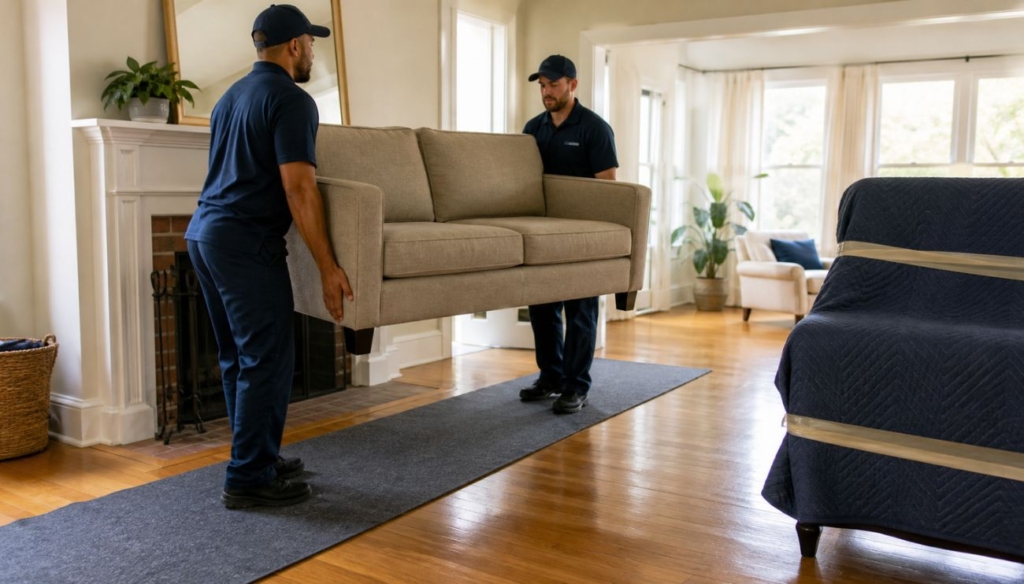
Confirm Who Will Move the Furniture
Ask your flooring installer exactly what must be removed before the crew arrives. Some installers may move a limited selection of light furniture, while others require the room to be completely empty. Appliances, pianos, safes, adjustable beds, exercise equipment, electronics, and other heavy or specialized items may require separate arrangements.
Get the responsibilities in writing so you know:
- Which rooms must be cleared
- Which items the flooring crew will or will not handle
- Whether closets must be emptied
- Who will disconnect and reconnect appliances
- Where flooring materials and tools will be staged
- When the completed floor will be ready for furniture
If you need help moving furniture within the home, Lifetime Moving Co lists in-home furniture rearranging for flooring and renovation projects among its residential moving services.
Decide Whether You Need Professional Movers
You may be able to move lamps, artwork, small chairs, cushions, and other light items yourself. Large, heavy, fragile, or awkward pieces deserve more caution, especially when the route includes stairs, narrow doorways, or tight corners.
The Occupational Safety and Health Administration recommends using handling equipment or team lifting for heavy loads and avoiding twisting, reaching, and other awkward lifting positions. Review its heavy-lifting safety guidance before deciding what you can safely handle.
Professional movers may be appropriate for:
- Sectional sofas and oversized tables
- King-size beds and heavy dressers
- Pianos, safes, and exercise equipment
- Glass, antique, or high-value furniture
- Items that require disassembly
- Furniture that must travel between floors
A local crew familiar with the area can also help plan around older buildings, narrow stairways, limited access, and other property-specific challenges. Learn more about moving services available in Medford, MA.
Create a Two-Phase Moving Plan
A flooring project usually requires two furniture moves: one before installation and another after the flooring contractor confirms that the surface is ready. Coordinate both phases in advance so the second visit does not depend on last-minute availability.
- Confirm the flooring schedule. Ask when each room must be empty and whether the work may extend beyond the planned completion date.
- Make a furniture inventory. List each large item and note anything requiring disassembly, special handling, or appliance service.
- Choose a temporary destination. Decide whether items will go to another room, a garage, a basement, a storage container, or an off-site facility.
- Photograph the room. Reference photos make it easier to restore the original layout and document the condition of furniture.
- Plan for schedule changes. Do not arrange the return move until the installer confirms that the floor is ready.
Prepare the Room Before Furniture Moves
Remove small and fragile belongings before movers or installers arrive. Pack lamps, framed photographs, plants, electronics, shelf décor, and other loose items in labeled containers. Keep hardware from disassembled furniture in sealed, clearly marked bags.
Ask the mover whether drawers should be emptied. Removing contents can make furniture lighter, but some pieces should remain assembled or require specific preparation. Unplug electronics and secure loose cords. Arrange for a qualified professional when an appliance requires plumbing, gas, or electrical disconnection.
Measure doorways, halls, stairways, and large furniture before moving day. Clear the route of rugs, cords, boxes, and other trip hazards. Protect walls, door frames, railings, and any flooring that will remain in place.
Choose a Suitable Temporary Storage Area
Another Room
An unaffected room may work for a small, single-room flooring project. Avoid packing the temporary space so tightly that furniture cannot be retrieved or safely moved again. Keep exits, utility equipment, and walkways accessible.
Garage or Basement
A garage or basement may provide convenient short-term space, but first consider moisture, temperature changes, pests, dust, and the condition of the access route. Upholstered furniture, wood pieces, artwork, and electronics may need a more stable environment.
Storage Container or Off-Site Storage
Larger or multi-room projects may require a storage container, truck, or storage facility. Confirm access dates, security, climate conditions, and insurance before placing valuable belongings in storage.
Protect Furniture During Flooring Work
Use clean moving blankets, furniture pads, or appropriate covers to guard against dust and accidental contact. Protect corners and delicate surfaces, and store removable pieces where they will not be crushed or misplaced.
Ask the flooring contractor how dust will be controlled and whether doors, vents, or adjacent rooms need preparation. Do not interfere with ventilation or equipment without the contractor’s approval, particularly when adhesives, coatings, sanding, or refinishing products are involved.
For additional ideas about protecting finished surfaces during a move, review this floor-protection guide for Massachusetts homes.
Wait for Approval Before Resetting the Room
There is no universal waiting period for returning furniture. The correct timing depends on the flooring material, adhesive, finish, environmental conditions, and product instructions. A factory-finished product may have different requirements from site-finished hardwood or glue-down flooring.
Ask the installer to confirm when the floor can accept foot traffic, furniture, rugs, and rolling loads. Do not rely on odor, surface feel, or a general online timetable to determine whether a finish or adhesive has cured.
Move Furniture Back Without Damaging the Floor
Before resetting the room, remove grit and debris from the route and inspect dollies, sliders, footwear, and furniture feet. Even a small particle trapped beneath a heavy item can scratch a finished surface.
- Lift furniture instead of dragging it.
- Use clean equipment suitable for the flooring material.
- Add compatible felt pads or floor protectors before placement.
- Keep wheeled furniture from moving unexpectedly.
- Lower each item gently rather than dropping it into position.
- Check that protectors remain centered after the furniture is set down.
Ask the flooring installer which pads, mats, or rug backings are compatible with the new surface. Some products can discolor or react with particular finishes.
Frequently Asked Questions
Will a flooring installer move my furniture?
Policies vary. Some installers move a limited selection of light items or offer furniture moving as an additional service. Others require the work area to be completely empty. Confirm the scope and any exclusions before signing the flooring contract.
Can movers clear the rooms and return later?
Some movers can schedule separate clearing and resetting visits. When requesting a quote, provide the flooring schedule, furniture inventory, access details, temporary storage plan, and the possibility that the completion date may change.
Where should furniture be stored during installation?
The best choice depends on the project size and the belongings involved. An unaffected room may suit a small project, while a garage, basement, storage container, or off-site facility may be better for several rooms. Consider access, moisture, temperature, dust, security, and the length of storage.
How soon can furniture return to new flooring?
Follow the flooring installer’s and manufacturer’s instructions. Installation methods, adhesives, and finishes have different requirements, so a fixed waiting period is not reliable for every project.
Plan Your Medford Flooring Project
Furniture management is easier when the flooring installer, homeowner, and moving crew agree on the sequence before work begins. Confirm the scope, prepare each item, protect the moving route, and wait for the installer’s approval before resetting the room.
If you need help clearing and restoring rooms around a flooring project, contact Lifetime Moving Co to discuss the furniture, access conditions, storage plan, and scheduling requirements.