Downsizing does not have to mean selling your Northborough home or moving to a smaller address. It can simply mean making the home you already love easier to use. By reviewing one room at a time, you can reduce excess, improve how each space functions, and decide where important belongings should go without turning the project into one exhausting weekend.
The most effective approach separates decision-making from heavy lifting. First, decide what should stay, move to another room, leave the household, or be discarded. Then arrange help for the furniture, packed boxes, and other items that are difficult to handle safely.
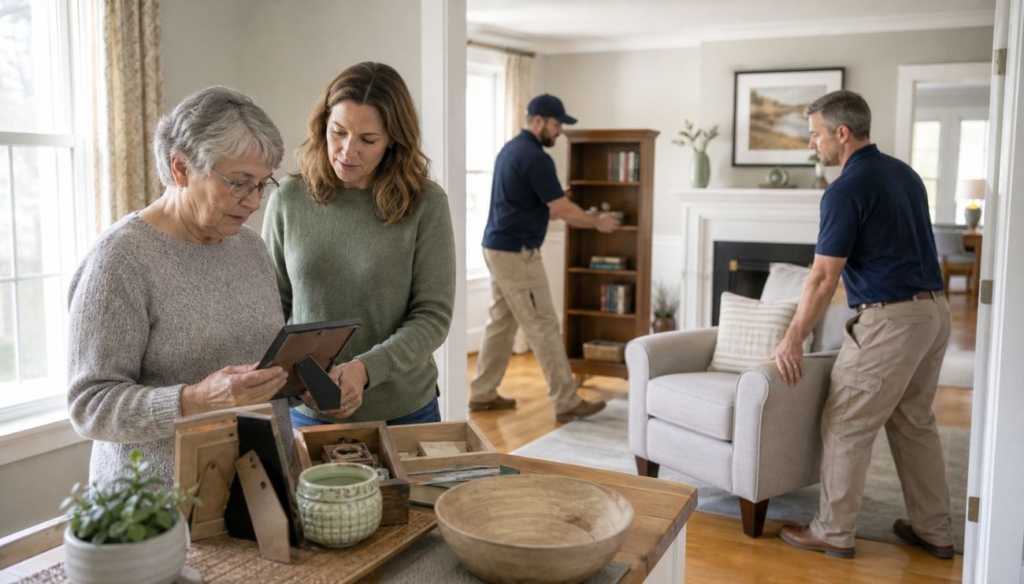
Start With a Clear Goal for Your Home
Before opening a closet or moving a chair, decide what you want the finished home to do better. A clear goal makes individual decisions much easier.
Your priorities might include:
- Reducing the time spent cleaning and maintaining unused rooms
- Bringing frequently used items to the main living level
- Turning a spare bedroom into an office, hobby room, or guest space
- Creating clearer routes between the bedroom, bathroom, kitchen, and entrances
- Clearing furniture before new flooring, painting, or another renovation
Write down two or three priorities and use them as your filter. An item may be attractive or useful in theory, but it may not support the way you want to live now.
Set Up a Simple Sorting System
Choose a small staging area that does not block a doorway, hallway, staircase, or daily living space. Use four clearly separated categories:
- Keep here: The item belongs in its current room and supports how you use the space.
- Relocate: The item will be more useful in another part of the home.
- Give away: The item will go to family, friends, a buyer, or an organization that accepts donations.
- Discard or recycle: The item is damaged, expired, unsafe, or not accepted for reuse.
Keep the first sessions short. One cabinet, one shelf, or one furniture grouping is enough. Finishing a defined area creates visible progress and reduces the chance that half-sorted piles will spread through the house.
A Practical Room-by-Room Order
There is no universal starting point, but beginning with less sentimental spaces helps build momentum. Leave photographs, family papers, and heirlooms until you have practiced the sorting process.
1. Spare Rooms and Storage Closets
Begin with spaces that are not central to your daily routine. Remove obvious rubbish, empty packaging, duplicate supplies, and items that belong elsewhere. Then decide what purpose the room or closet should serve. Keeping that purpose in mind prevents cleared space from becoming a new holding area.
2. Living Room and Other Shared Spaces
Focus on comfortable seating, useful surfaces, lighting, and easy movement through the room. A piece of furniture does not have to leave the home merely because it no longer works in its present spot. It may fit better in a bedroom, den, or finished basement.
Measure the room and the furniture before planning a new layout. Photographing the current arrangement can also help if you want to compare options or restore something later.
3. Kitchen and Dining Area
Review the kitchen according to your actual cooking and entertaining habits rather than a fixed quota. Keep everyday dishes, cookware, and appliances within comfortable reach. Move seasonal serving pieces or rarely used equipment to a secondary storage area only if you genuinely plan to use them.
Check food dates, match containers with their lids, and remove damaged utensils. If an appliance is heavy or awkward, leave it in place until someone can help.
4. Bedrooms and Clothing Storage
Sort clothing by fit, comfort, condition, and current use. Place frequently worn items where they are easy to see and reach. Extra linens can be grouped by bed size and stored together, which makes duplicates easier to identify.
When reviewing bedroom furniture, consider whether each piece helps or limits movement. Do not move a dresser, bed, or large mirror alone. Create the new layout first, measure the route, and include any disassembly needs in your moving plan.
5. Basement, Attic, and Garage
These areas often contain the largest backlog, so break them into zones. Start with accessible shelves and visible floor space rather than pulling everything out at once. Separate household items from paint, chemicals, batteries, electronics, and other materials that may require special disposal.
Stairs, low ceilings, temperature extremes, and bulky objects can make these spaces harder to work in. Schedule assistance before moving heavy bins or furniture between floors.
Handle Heirlooms Without Rushing
Sentimental belongings often carry stories that are more important than their market value. Set them aside for a separate session. Photograph each significant item, note its history, and ask relatives what they genuinely want before arranging delivery.
The University of Minnesota Extension offers research-informed resources for transferring personal possessions and managing family decisions. If an item is governed by a will, trust, shared ownership agreement, or estate plan, confirm the legal requirements before giving it away.
Plan Donations and Disposal Before Moving Items
Donation rules vary by organization, item condition, and ZIP code. Check acceptance requirements and pickup availability before placing furniture or boxes outside. The Salvation Army donation portal is one place to check local options, but availability is not guaranteed for every item or address.
Create a written list of what is leaving, its destination, and who is responsible for it. Schedule family pickups, donation appointments, resale collections, and disposal separately. Until items leave, keep them in a safe staging area that does not obstruct doors or walking routes.
Make Everyday Use and Safety Part of the Plan
A less crowded room is most useful when it supports the resident's routines and preferences. Review lighting, loose cords, unstable furniture, frequently used storage, and the route between essential rooms. The CDC's fall-prevention information identifies home hazards as one factor worth addressing, while the National Council on Aging's home-modification guidance describes practical ways to improve safety and accessibility.
Accessibility is personal. Avoid making permanent changes based only on a generic checklist. If mobility, balance, vision, or another health concern affects the layout, involve the resident and consider advice from an occupational therapist or appropriate healthcare professional.
When In-Home Movers Can Help
Professional help can be useful when furniture needs to move between rooms or floors, when a piece requires disassembly, or when belongings must be cleared for a renovation. Lifetime Moving Co lists furniture rearranging and in-home moving among its residential services.
Before booking, prepare a simple inventory and note:
- Which items will move and where each one should go
- Whether stairs, narrow turns, low ceilings, or limited parking affect access
- Which pieces may need disassembly and reassembly
- Whether any item is unusually fragile, heavy, or valuable
- Which items are staying in the home and which need another destination
Confirm the scope, pricing method, and handling requirements directly with the mover. Northborough homeowners can review the company's current Northborough service-area page before requesting an estimate.
A Manageable Downsizing Timeline
Work in stages rather than assigning an arbitrary deadline to the entire house:
- Plan: Define the goal, choose the first room, and take measurements.
- Sort: Make decisions in small, complete sections.
- Schedule: Confirm family transfers, donation acceptance, and disposal options.
- Move: Reposition furniture and remove packed items with appropriate help.
- Reset: Put daily-use belongings away and check that the new layout works.
The right pace depends on the size of the home, the number of decisions, and everyone involved. Build in extra time for sentimental belongings instead of treating them like ordinary clutter.
Frequently Asked Questions
Can I downsize without moving to another home?
Yes. Downsizing can mean reducing possessions, changing room functions, consolidating storage, or bringing important items to the main living level while staying at the same address.
Which room should I tackle first?
Start with a small, low-sentiment area such as a linen closet, utility cabinet, or spare room. Avoid beginning with family photographs or inherited belongings if those decisions are likely to slow the project.
Should movers decide what I keep?
No. The homeowner or authorized decision-maker should determine what stays and where it belongs. Movers can then handle the agreed furniture and boxes.
Can in-home movers take furniture to another floor?
That may be possible, depending on the item, stairway, access, and mover's service scope. Provide measurements and disclose unusually heavy, fragile, or valuable pieces when requesting an estimate.
How far in advance should I book?
Availability varies by company, season, and project. Contact the mover after you have a preliminary inventory and preferred dates, then ask what lead time applies to your specific job.
Simplify Your Northborough Home One Room at a Time
Room-by-room downsizing works because it turns a whole-house project into a sequence of practical decisions. Define the goal, sort before lifting, verify where outgoing items can go, and protect the routines of the people who live in the home.
When the plan calls for furniture rearranging or other professional moving help, contact Lifetime Moving Co to discuss the inventory, access, destination of each item, and current availability.