Your Allston triple-decker move just became a geometry puzzle the moment you realized your sofa weighs between 100 and 250 pounds and your stairwell barely clears 30 inches.
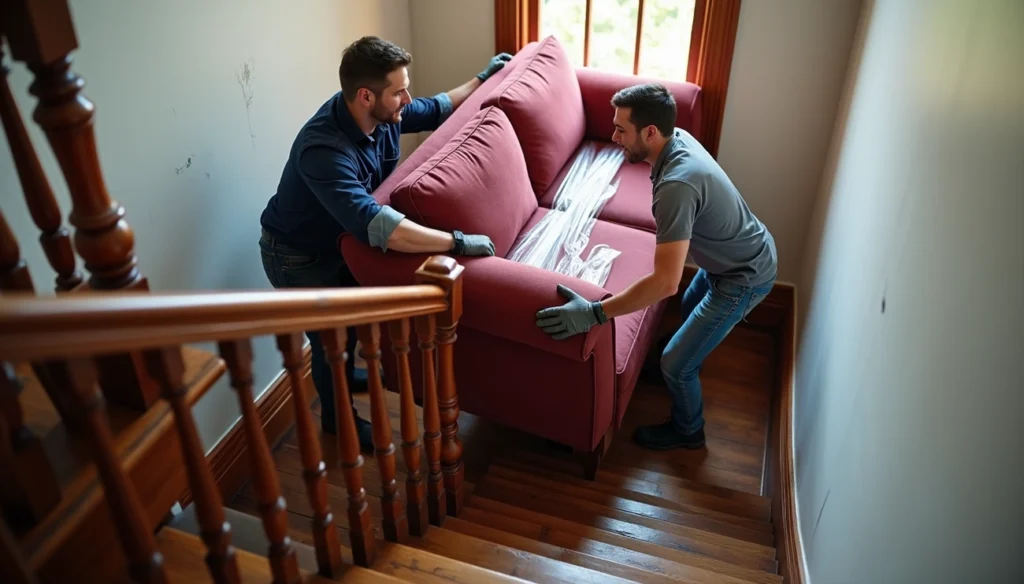
We've watched countless DIY moves in Allston turn into disasters at the time solid wood dressers weighing 150 to 200 pounds meet those steep 90-degree turns and historic narrow passages. Triple-deckers weren't designed for modern king-size mattresses or sectional sofas. Standard doors running 28 to 32 inches create clearance issues.
This piece breaks down how to move heavy furniture up stairs and down through Allston's tightest spaces. We'll show you narrow stairwell moving tips that prevent damage and tactical maneuvers for controlling bulk items. You'll also learn when professional help becomes necessary for moving in Allston safely.
Deciphering the Triple-Decker Stairwell Twist
Triple-decker stairwells weren't built for modern furniture transport. The architectural quirks that make these Allston buildings charming turn into serious logistical barriers during an Allston triple-decker move.
Why Traditional Horizontal Carrying Fails at Level Turns
Horizontal furniture positioning collapses at the first 90-degree turn. Tilt a 200-pound sofa on a standard 37-degree staircase and the person at the bottom bears 240 to 260 pounds. The shifted center of mass creates an unbalanced load that horizontal carrying cannot handle at tight pivots.
The tilt and pivot method sounds simple until you hit Allston's 30-Inch Constraints. Narrow hallways force awkward positioning where one person guides from behind while the other traverses blind corners. Vertical tilting and the hook pivot technique become essential, or furniture wedges between walls and handrails.
The Geometry Problem: Tight Corners and Low Clearance
Building codes mandate minimum headroom clearance around 6 feet 8 inches, but older triple-deckers fall short. Low ceilings in stairwells block upward movement during vertical tilts. Sharp turns combined with short landings demand more pivot space than straight stairs provide.
Fixed banisters shrink your maneuvering room by several inches, especially when you have handrails, light fixtures and trim that create hidden obstacles. Ceiling height below 7 feet prevents the angled lift needed for long pieces. Door frames at landing tops add another width restriction that catches people off guard.
Common Furniture Pieces That Get Stuck
Sofas weighing 150 to 250 pounds get wedged most. Long sectionals cannot rotate within tight landing spaces. Tall armoires hit low-hanging chandeliers or stepped ceilings common in basement approaches. Heavy dressers need the hook motion through doorways, but triple-decker door frames rarely accommodate the L-shaped swing pattern required.
Mattresses and box springs present diagonal clearance problems. Desks with fixed tops cannot compress through 36-inch-or-less stairwells. Therefore, professionals conducting walk-throughs identify these problem pieces before moving day arrives.
Conquering an [Allston apartment moving](https://lifetimemovingco.com/allston-movers/) challenge or dealing with local bridge detours? Contact Lifetime Moving Co. now for a customized moving quote. Let our expert Allston moving crews handle the tight turns for you!
Step-by-Step Strategic Pre-Prep
Preparation separates smooth Allston apartment moving from furniture wedged halfway up stairwells. These steps prevent the damage we've seen ruin countless moves before you lift anything.
1. Measure Every Access Point Before Moving Day
Measure your furniture's height, width and depth first. Write down every dimension. Standard doorways run 30 to 36 inches wide, but older Allston triple-deckers often feature narrower openings. Measure stairwell width at the tightest points. Handrails and banisters steal several inches.
Leave an extra 1 to 2 inches of clearance when you compare measurements. Ceiling height at stair tops and bottoms determines whether vertical tilts will work. Document diagonal measurements for sofas and mattresses. These dictate angled passage through tight spots.
2. Strip Down Furniture: Remove Legs, Slats and Detachable Parts
Component Removal makes furniture lighter and less bulky. Unscrew table and sofa legs. Remove all cushions and pillows. Pull drawers from dressers to reduce weight by 25% or more. Pop out adjustable shelves from bookcases.
Store hardware in labeled bags and tape them to the furniture piece. Bed frames, dining tables and modular sofas become far easier to maneuver when you take them apart. This reduces the risk of getting stuck in narrow stairwell moving scenarios.
3. Wrap and Protect Using Heavy Stretch Film
Drape moving blankets over every surface and secure them with stretch wrap or tape. Corner guards protect edges from bumps. Bubble wrap adds extra cushioning for oddly shaped pieces when taped down.
4. Pro Disassembly and Protection Methods
Take photos from multiple angles before disassembly. Check for hidden screws under dust covers or behind removable panels. Label all components for quick identification at your destination.
5. Clear the Path and Protect Historic Banisters
Remove doors from hinges to gain extra clearance. Roll up rugs and clear toys and shoes from walkways. Drape blankets over stair railings and secure them with rope or tape for Rail Blanketing. Lay floor runners or cardboard in high-traffic areas[161].
You face an Allston apartment moving challenge or deal with local bridge detours? Contact Lifetime Moving Co. now for a customized moving quote. Let our expert Allston moving crews handle the tight turns for you!
How to Move Heavy Furniture Up Stairs: Execution Techniques
Execution just needs precise coordination once furniture leaves the ground. The High-Low Method positions your strongest person at the staircase bottom, where gravity amplifies the load. The top person sets pace and guides through corners with the clearest sightline.
Position the Heavy End at the Top
The person walking backward upstairs grabs furniture at the highest grip point possible. This keeps pieces closest to upright and provides stair clearance. Your partner at the bottom holds the lowest point to balance weight efficiently. The stronger individual always takes the lower position, since they'll support the bulk of the load.
The Vertical Tilt Method for Narrow Passages
Tall armoires and heavy dressers require vertical positioning to clear landings. Keep furniture tilted to match the stair angle and stabilize the center of gravity. Slow, considered tilts prevent sudden weight shifts that throw off balance.
Communication and Rest Breaks on Landings
Establish verbal cues before lifting: "Ready? Lifting on three" or "Stopping on this step". The top person guides communication and calls out tight corners with pace adjustments. Take breaks to adjust grips and assess progress. Never assume your partner knows your next move.
Using Forearm Forklift Straps for Control
Lifting straps make heavy furniture feel up to 66% lighter. These tools distribute weight across shoulders and core and reduce back and arm strain. Keep your back straight and rely on leg muscles when using straps.
Conquering an Allston apartment move or dealing with local bridge detours? Contact Lifetime Moving Co. now for a customized moving quote. Let our Allston movers handle the tight turns for you!
The White-Glove Solution: Why Allston MA Movers Prevent Damage
Professional [Allston MA movers](https://lifetimemovingco.com/allston-movers/) bring advantages DIY moves cannot match. White glove crews complete at least 250 hours of mentored training in specialized handling techniques. They learn to protect both homes and belongings during complex Allston apartment moving scenarios.
Specialized Equipment Professional Crews Bring
Crews stock smaller dollies, vertical hoist straps, and mattress slings designed for triple-decker constraints. Piano moves require clamps, heavy-duty furniture blankets, and piano skid boards. Cranes may be needed occasionally. Floor runners, door jamb protectors, wall shields, and stair rail covers prevent property damage during transport. These tools allow professionals to guide furniture through tight spaces without causing damage.
How Local Crews Know Allston Triple-Deckers
Regional Experience separates local movers from national chains. Crews who've moved thousands of triple-decker apartments understand the architectural quirks. They anticipate narrow passages and steep angles before lifting furniture. This familiarity streamlines moving in Allston buildings where standard techniques fail.
Insurance Coverage for Building and Furniture Damage
Licensed movers carry FMCSA registration, USDOT numbers, and strong cargo coverage. Reputable companies maintain damage claim rates under 2%. Full transit insurance protects both your belongings and the building's structure.
Are you dealing with an Allston apartment move or local bridge detours? Contact Lifetime Moving Co. now for a customized moving quote. Let our expert Allston moving crews handle the tight turns for you!
Conclusion
You now have everything you need to tackle your Allston triple-decker move. Start by measuring every access point and disassembling furniture components. Then use the vertical tilt method through those notorious 30-inch stairwells.
Without doubt, these narrow stairwell moving tips will save you time and prevent damage. The high-low method works best with clear communication, or you can let professional Allston MA movers handle the geometry puzzle for you.
Your furniture will make it safely through those tight turns either way.
Key Takeaways
Moving furniture through Allston's narrow triple-decker stairwells requires strategic planning and specialized techniques to avoid damage and injury.
• Measure everything first: Document furniture dimensions and stairwell clearances, leaving 1-2 inches extra space to prevent pieces from getting wedged in 30-inch passages.
• Disassemble before moving: Remove legs, drawers, and cushions to reduce weight by 25% and make furniture more maneuverable through tight corners.
• Use the vertical tilt method: Position the strongest person at the bottom of stairs and tilt furniture to match stair angles for better weight distribution and clearance.
• Consider professional movers: Local Allston crews bring specialized equipment and 250+ hours of training to navigate triple-decker constraints safely with insurance coverage.
• Protect historic features: Clear pathways, remove doors from hinges, and blanket banisters to prevent damage to both furniture and building details during transport.
The key to success lies in preparation and technique—whether you tackle it yourself or hire professionals who understand Allston's unique architectural challenges.
FAQs
Q1. What makes moving furniture through triple-decker stairwells so challenging? Triple-decker stairwells present unique challenges due to their narrow width (often around 30 inches), tight 90-degree turns, low ceiling clearance, and historic architectural features like fixed banisters. These constraints make it difficult to maneuver modern furniture pieces, especially when combined with steep angles and short landing spaces that don't provide enough room for pivoting large items.
Q2. Should I remove furniture components before attempting to move them upstairs? Yes, disassembling furniture is essential for navigating narrow stairwells. Remove legs from sofas and tables, take out drawers from dressers (which can reduce weight by 25% or more), pull out cushions, and detach any removable shelves. This makes pieces lighter, less bulky, and easier to maneuver through tight spaces. Always label hardware and tape it to the furniture for easy reassembly.
Q3. What is the best technique for carrying heavy furniture up narrow stairs? The high-low method works best, where the strongest person positions themselves at the bottom of the stairs to bear most of the weight, while the person at the top guides and sets the pace. Use the vertical tilt method to keep furniture angled to match the staircase, maintain clear communication with verbal cues, and take regular breaks on landings to adjust your grip and assess progress.
Q4. Which moving companies are best for handling tight Somerville and Allston stairwells? Local movers with experience in triple-deckers include Stairhoppers, Gentle Giant, Precision Moving Company, and Melo and Sons. These companies have crews trained specifically in navigating narrow New England staircases and bring specialized equipment like smaller dollies, vertical hoist straps, and furniture disassembly services. Look for movers with positive reviews specifically mentioning narrow staircase experience.
Q5. When should I hire professional movers instead of doing it myself? Consider hiring professionals if you have furniture weighing over 150 pounds, pieces that cannot be easily disassembled, or items that barely fit within your measured clearances. Professional movers bring specialized equipment, have at least 250 hours of training in handling techniques, carry insurance coverage for damage, and understand the specific architectural challenges of triple-decker buildings, which can prevent costly damage to both your belongings and the property.