Boston high-rise moving reaches peak intensity on September 1st, one of the most concentrated moving days in America. You just need more than early booking to secure your spot. Planning a business relocation? Our office move checklist covers COIs, IT and address updates.
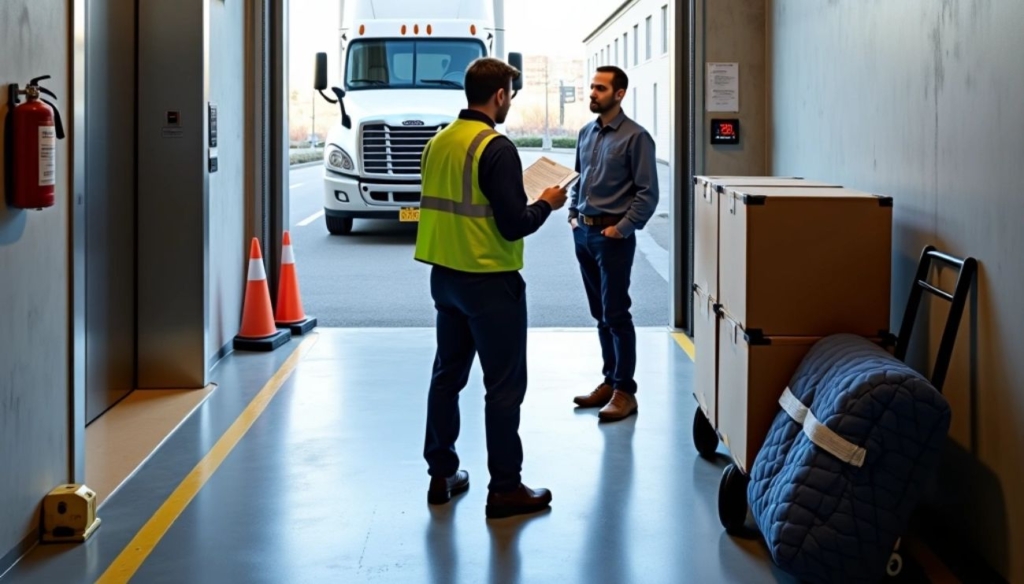
Luxury Seaport Boston apartments demand precise coordination: Certificate of Insurance moving documentation, freight elevator reservation windows and strict loading dock protocols. Your whole move-in day can derail if you miss even one requirement.
We've created this detailed guide to walk you through every critical requirement for apartment moving in Boston's most exclusive towers. You'll learn what building managers expect and how to deliver it flawlessly, from COI liability limits to underground garage clearances.
Certificate of Insurance (COI) Requirements for Boston High-Rise Moves
What is a COI and Why Seaport Buildings Require It
A Certificate of Insurance (COI) is a one-page document that your moving company's insurance carrier issues. It confirms active general liability coverage and names your Seaport building as an additional insured for your move date. Most residential buildings with Boston high-rise construction and more than six units require one before granting service entrance or freight elevator access.
Building management requires this documentation for one operational reason: it moves financial responsibility for move-related damage from the building's insurance policy to your moving company's policy. Buildings that incur damage without a COI on file face only two recovery paths: pursuing you or filing against their master policy, which raises premiums for all residents.
The risk a COI addresses is concrete. Elevator interior panels cost $500 to $3,000 to repair. Lobby flooring marble repair runs $1,000 to $5,000 per damaged section, and hallway wall repairs range from $200 to $800 per damaged section. These represent the most commonly damaged areas during Boston high-rise moving projects.
Standard Liability Coverage Limits ($1M/$2M Explained)
Standard general liability coverage requires $1 million per occurrence. Some luxury Seaport Boston apartments specify $2 million minimum coverage. Verify your building's exact requirements stated in your lease or move-in policy document before requesting documentation from professional movers.
How to Get a COI from Your Moving Company
Contact your moving company at least 2-3 days before your scheduled move. You'll need building contact details, manager information and specific insurance requirements. Professional movers charge $45 per building for Certificate of Insurance moving documentation. Your moving company contacts their insurance provider to prepare the certificate and then sends the completed document to your building manager.
What Happens If You Show Up Without Proper Insurance
Buildings hold the right to deny moving crews access to elevators and service entrances if a COI is rejected or missing on move day. Common rejection reasons include certificate holder names that don't match the building's legal management entity, coverage limits below building minimums and policy periods that don't cover your actual move date. Missing additional insured endorsements or late submission also cause rejection. Rejection means same-day correction for minor issues or full rescheduling if your building requires 24 to 48 hours advance notice.
DIY Moves vs. Professional Movers: The COI Reality
Buildings cannot issue COIs to individual residents. Only licensed, insured moving companies with active general liability policies can produce this documentation, which eliminates DIY apartment moving Boston options in managed high-rise properties.
Navigating Loading Docks and Low-Clearance Parking Bays
Understanding Underground Garage Dimensions in Boston High Rises
Residential apartment complexes maintain clearance heights between 6 feet 8 inches and 7 feet, substantially lower than commercial parking structures. Underground parking facilities accommodate 6 to 8 feet of vertical clearance, which creates immediate challenges for standard moving truck access during Boston high-rise moving projects.
Vehicle Height and Width Restrictions
One Boston Place specifies 16 feet overhead clearance at its loading dock with a maximum truck length of 30 feet. Atlantic Wharf restricts trucks to 35 feet in length and 13 feet in height. The middle bay at 500 Boylston allows 13.6 feet while side bays provide only 13.2 feet of clearance.
Standard loading spaces require minimum dimensions of 12 feet by 35 feet with a clear height of 14 feet 6 inches. Access roads leading to these areas must maintain at least 14 feet 6 inches of clearance along their entire length.
When You Need a Shuttle Truck
Residential underground garages cap clearances at 7 feet and standard moving trucks exceed this height. Shuttle trucks become necessary if buildings lack street-level loading dock access. Professional movers deploy smaller vehicles that fit underground restrictions and transfer items from a larger truck parked at street level or in a nearby staging area.
Loading Dock Reservation Process
Loading dock parking during business hours (6:00 AM to 6:00 PM, Monday through Friday) limits you to 30 minutes. Deliveries that require extended time must be scheduled at least 24 hours in advance for non-business hours. Atlantic Wharf enforces this through its tenant services portal, while 500 Boylston charges security detail fees for after-hours access. Reservations for Seaport Boston apartments follow similar protocols. Tenant representatives must submit requests with specific dates, times and special needs.
Freight Elevator Windows: Planning Your 2-3 Hour Move Sprint
How Seaport Boston Apartments Schedule Elevator Time
Most buildings restrict freight elevator reservation periods to 2-3 hours maximum, with approved windows running Monday through Friday from 9:00 AM to 6:00 PM, and Saturday through Sunday from 10:00 AM to 6:00 PM. Some properties extend this to 4-hour blocks, especially when you have larger unit configurations. Book your reservation 2-3 weeks in advance, especially during peak leasing turnover periods when slots fill faster.
Buildings assign exclusive elevator access during your reserved window, which means other residents cannot access the freight elevator until your time expires. So strict adherence to your scheduled block protects building operations and neighbor relations.
Optimizing Your Inventory for Fast Loading
Pre-stage boxes near your unit door the night before your move. Prioritize heavy furniture and bulky items for elevator transport first, reserving smaller boxes for secondary trips or stairwell alternatives if time runs short. Break down furniture ahead of time and use rolling dollies to reduce carry time from your unit to the elevator. One crew member stationed at the truck and another at the elevator creates a quick relay system.
What to Do If You Run Over Your Time Window
Running over your allotted window can result in loss of elevator access, even if movers haven't finished. Buildings may impose additional fees or lock out the elevator if another resident holds the next reservation. Build a 30-minute buffer into your time estimate to account for hallway congestion and final walk-through inspections.
Peak vs. Off-Peak Moving Days in High-Rise Buildings
The busiest moving months run May through September, with the highest concentration at month's end when leases turn over. Midweek moves, Tuesday through Thursday in particular, offer better elevator availability than Mondays or Fridays. Most buildings prohibit Sunday and holiday moves.
Additional Building Rules and Move-Day Preparation
Floor and Wall Protection Requirements
Elevator padding, floor coverings, and wall protection represent non-negotiable requirements during apartment moving Boston projects. Buildings mandate these protective materials to prevent damage, with fines issued to movers who fail compliance. Some properties provide elevator pads, while others require your moving company to supply protection materials. Confirm who supplies these items during your original building management contact.
Building Access Badges and Security Protocols
Reception sign-in, visitor passes, and access fobs control entry to Seaport Boston apartments. Share your mover details with reception if required and arrange lift keys or fobs for your booking window. Professional movers arriving without proper credentials face delays at the front desk while your paid crew time continues.
Prohibited Moving Hours and Days
Most buildings restrict moves to business hours, usually 8 AM to 5 PM or 9 AM to 6 PM Monday through Friday. Weekend moves face limitations or require special approval. Beverly Hills properties enforce 8 AM to 6 PM windows, with some HOA communities prohibiting Sunday moves.
Deposits and Fees for Apartment Moving Boston
Refundable damage deposits run into the hundreds of dollars and must be secured weeks in advance. Missing your reserved time slot can result in denial of building access and mandatory rescheduling. Fines for unpermitted activity start at $75 to $150 and escalate to $300 or more for commercial vehicles without proper permits.
Moving into a luxury tower in the Seaport? Don't let paperwork delay your day. Connect with Lifetime Moving Co. for premium Boston high-rise moving services that easily coordinate COIs and loading dock protocols.
Conclusion
Boston high-rise moving success depends on preparation and professional coordination. You now understand the critical requirements: Certificate of Insurance documentation, loading dock clearances, freight elevator windows, and building-specific protocols.
Without doubt, missing even one element creates expensive delays and rescheduling headaches. Start your COI process early and verify your building's exact specifications. Work with experienced movers who guide Seaport Boston apartments daily. Your smooth move-in experience begins with understanding these requirements before your scheduled date arrives.
Key Takeaways
Moving into Boston's luxury high-rise buildings, especially in the Seaport district, requires navigating strict building protocols that go far beyond simply hiring movers.
• Certificate of Insurance (COI) is mandatory – Seaport buildings require $1M-$2M liability coverage naming them as additional insured; obtain this 2-3 days before your move to avoid access denial.
• Underground garage clearances are restrictive – Most residential garages limit height to 6'8"-7', requiring shuttle trucks when standard moving vehicles can't access loading docks.
• Freight elevator windows are strictly enforced – Buildings typically allow only 2-3 hour reservation blocks; running over your time can result in immediate lockout and additional fees.
• Book reservations 2-3 weeks ahead – Secure your loading dock and elevator slots early, especially during peak moving season (May-September) when September 1st sees the highest concentration of moves.
• DIY moves are effectively impossible – Buildings cannot issue COIs to individuals, only to licensed moving companies, eliminating self-move options in managed high-rise properties.
Professional coordination isn't optional for Boston high-rise moves—it's the only way to ensure your move-in day proceeds without costly delays, denied access, or rescheduling headaches.
FAQs
Q1. What qualifies as a high-rise building in Massachusetts? In Massachusetts, a high-rise building is defined as any structure that reaches 70 feet or more above ground level when measured to the roof. This classification is important for moving purposes as these buildings typically have stricter insurance and access requirements.
Q2. Why do Seaport buildings require a Certificate of Insurance for moves? Buildings require a COI to shift financial responsibility for any move-related damage from the building's insurance policy to your moving company's coverage. This protects the building from costly repairs to elevators, lobbies, and hallways, which can range from hundreds to thousands of dollars, and prevents premium increases for all residents.
Q3. How far in advance should I reserve a freight elevator for my Boston high-rise move? You should book your freight elevator reservation 2-3 weeks in advance, especially during peak moving season from May through September. Most buildings only allow 2-3 hour time windows, and slots fill up quickly during month-end lease turnovers.
Q4. Can I do a DIY move in a Boston high-rise apartment building? DIY moves are effectively impossible in managed high-rise properties because buildings cannot issue Certificates of Insurance to individual residents. Only licensed, insured moving companies with active general liability policies can produce the required COI documentation needed for building access.
Q5. What happens if my moving truck is too tall for the underground garage? If your moving truck exceeds the typical 6'8"-7' clearance height of residential underground garages, you'll need a shuttle truck service. Professional movers use smaller vehicles that fit the height restrictions to transfer items from a larger truck parked at street level or in a nearby staging area.