Living in Brookline means enjoying historic brownstone architecture, but moving out without damaging these century-old treasures requires expertise. Brownstones aged 130 years or more feature narrow winding staircases and original hardwood floors that weren't designed for modern furniture. Tight entryways and historic structural quirks mean your Brookline MA brownstone move demands white-glove techniques. We'll walk you through understanding winding staircase blueprints and preserving historic common areas. Professional antique moving services Brookline teams use mechanical advantages like structural padding and wall corner guards to protect both your belongings and architectural details. This piece will give your move the respect it deserves, whether you're in Remington Brownstones or moving from an apartment in Boston's historic districts.
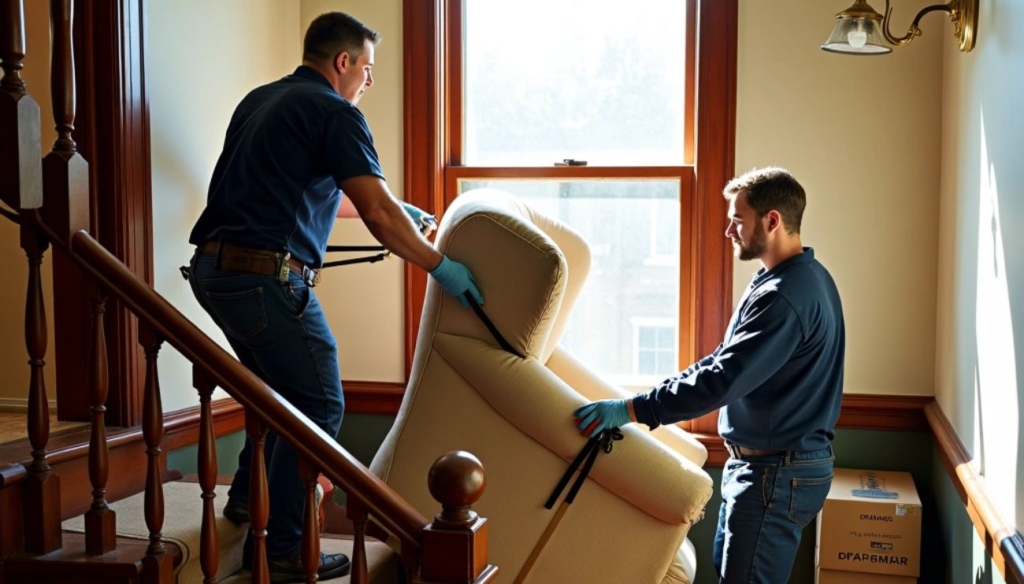
Understanding the Winding Brownstone Staircase Blueprint
Most Brookline brownstones feature residential staircases measuring between 36 and 42 inches wide, but older buildings often present narrower passages. Stairs as narrow as 32 inches still meet minimum residential codes, though anything below 36 inches creates measurable furniture clearance problems. Building codes mandate a minimum 36-inch stairway width, yet many subdivided brownstone apartments incorporate spiral staircases to conserve floor space in tight layouts.
Spiral staircases appear frequently in brownstones on account of their compact footprint. They require by a lot less floor area than traditional straight-run designs, but their narrower treads and curved geometry make furniture navigation much harder. Professional movers conduct preliminary walk-throughs to assess narrow stairwells, low ceilings and sharp corners before moving day. This advance measurement prevents damage to both furniture and irreplaceable architectural millwork.
Your piece's diagonal depth must measure less than the doorway width to pass furniture successfully. Correspondingly, removing doors from hinges adds two to three critical inches of clearance. When planning your Brookline MA brownstone move, measure stairwell width at the narrowest point between handrails or walls, then calculate vertical clearance from each tread to the ceiling above. These precise measurements determine whether Structural Padding and professional tight staircase moving hacks become safeguards.
Preserving Historic Common Areas During Your Move
Historic plaster walls adorned brownstones built before WWII and remain vulnerable during moves. Plaster, a decorative coating of lime and sand with occasional fibers, provides beautiful texture with sculptural depth but cracks easily under physical contact. Professional crews protect these surfaces using quilted moving blankets that measure 72 inches by 80 inches with woven polyester construction and reinforced stitching. Quilted blankets provide superior protection from physical damage but cost USD 10.00 to USD 20.00 individually, while light-duty textile blankets run approximately USD 3.00 each when purchased in packs. Rental options drop costs to USD 1.00 per blanket.
Moving blankets hang over doorways, elevators, and walls to prevent dents and gouges beyond furniture wrapping. Door jamb protectors and temporary corner guards shield high-traffic areas where turns create collision risks. Red rosin paper offers affordable protection for hardwood during your apartment moving Boston project for floor safeguarding, while Floor Shield provides thicker, non-slip, self-adhering coverage for prefinished surfaces. Carpet film applies like plastic wrap without leaving residue when removed within 30 days. Note that painter's tape secures protective materials without damaging delicate historic finishes, unlike regular masking tape that leaves residue.
Professional antique moving services Brookline teams layer these protections before transporting a single piece.
The Mechanical Advantage of Professional Crews
Professional movers bring specialized lifting systems that revolutionize difficult brownstone moves into controlled operations. Hydraulic furniture jacks lift corners of heavy pieces with minimal effort. Furniture lifting straps move the load from back muscles to stronger leg muscles. Shoulder dolly systems can handle up to 800 lbs by distributing weight across shoulders and legs, keeping hands free to grab handrails or balance objects. Electric stair climbers are essential for furniture exceeding 100 kg. Tracked models need less physical effort than wheeled versions.
Training distinguishes professional crews from DIY attempts. Movers learn body mechanics and teamwork coordination before touching furniture. Team lifting requires standardized commands and synchronized movements to prevent injuries and property damage. Professional antique moving services Brookline crews establish clear communication protocols during multi-person operations.
Disassembly services simplify tight staircase moving hacks by reducing bulk. Professionals photograph each disassembly step and label hardware bags, attaching them to corresponding furniture pieces. Bed frames, dining tables and modular furniture require disassembly for safe passage. Bespoke Crating protects delicate antiques during transport after proper documentation.
Moving out of a classic Brookline brownstone? Don't risk damage to your antique furniture or your historic building's walls. Contact Lifetime Moving Co. for specialized, careful brownstone moving assistance.
Conclusion
You now have everything to protect your Brookline brownstone's historic features during your move. Professional expertise, specialized equipment, and protective materials make all the difference when you navigate narrow staircases and delicate plaster walls. Successful brownstone moves combine advance planning with mechanical know-how and white-glove handling techniques.
Partner with experienced movers who understand century-old architecture. Your antiques and irreplaceable architectural details deserve protection that only trained professionals can provide.
Key Takeaways
Moving out of a historic Brookline brownstone requires specialized knowledge and equipment to protect both your belongings and irreplaceable architectural features that are over 130 years old.
• Measure twice, move once: Brownstone staircases range from 28-42 inches wide with spiral turns—measure furniture diagonally and stairwell clearances before moving day to prevent damage.
• Layer protective materials strategically: Use quilted moving blankets, door jamb protectors, corner guards, and Floor Shield to safeguard delicate plaster walls, original woodwork, and historic hardwood floors.
• Professional equipment makes the difference: Hydraulic jacks, shoulder dolly systems (handling up to 800 lbs), and electric stair climbers provide mechanical advantages that protect both movers and historic features.
• Disassembly is often essential: Professional crews photograph each step, label hardware, and systematically disassemble large furniture to navigate tight passages without damaging ornate moldings or balustrades.
• Advance planning prevents costly mistakes: Conduct preliminary walk-throughs to assess narrow passages, low ceilings, and sharp corners—removing doors adds 2-3 inches of critical clearance for furniture passage.
Protecting century-old brownstone architecture demands more than DIY effort. Partnering with experienced movers who understand historic buildings ensures your antiques and irreplaceable architectural details remain intact throughout your transition.
FAQs
Q1. Can you successfully move furniture out of a 100+ year old brownstone without causing damage? Yes, moving out of a historic brownstone without damage is entirely possible with proper planning and professional expertise. The key is using specialized protective materials like quilted moving blankets, door jamb protectors, and floor coverings, combined with precise measurements of narrow staircases and doorways before moving day. Professional movers trained in handling antique buildings use mechanical equipment such as furniture lifting straps and hydraulic jacks to safely navigate tight spaces while protecting delicate plaster walls, original woodwork, and historic floors.
Q2. Why are brownstone staircases so difficult to navigate during a move? Brownstone staircases present unique challenges because they're often narrower than modern standards—typically 28-42 inches wide—and frequently feature spiral turns to conserve space in compact layouts. These winding staircases have tight corners, low ceiling clearances, and narrow treads that weren't designed for moving large modern furniture. The curved geometry of spiral staircases makes maneuvering bulky items particularly difficult, requiring careful measurement and often furniture disassembly to ensure safe passage.
Q3. What protective materials should be used to safeguard historic brownstone features? The most effective protection involves layering multiple materials: quilted moving blankets (72x80 inches) for furniture and wall coverage, door jamb protectors for high-traffic areas, temporary corner guards for collision-prone turns, and specialized floor coverings like Floor Shield for hardwood or carpet film for carpeted areas. Painter's tape should be used instead of regular masking tape to secure protective materials without damaging delicate historic finishes or leaving residue on original plaster walls and woodwork.
Q4. Is furniture disassembly necessary when moving out of a brownstone? Furniture disassembly is often essential for navigating brownstone staircases and doorways safely. Professional movers photograph each disassembly step, label all hardware bags, and attach them to corresponding furniture pieces to ensure proper reassembly. Bed frames, dining tables, and modular furniture routinely require disassembly because a piece's diagonal depth must be smaller than the doorway width for passage—and removing doors from hinges only adds 2-3 inches of clearance, which may not be sufficient for large items.
Q5. Why do professional movers cost more for historic brownstone moves? Professional movers charge premium rates for brownstone moves because they require specialized equipment (hydraulic jacks, shoulder dolly systems handling up to 800 lbs, electric stair climbers), extensive training in period architecture, and significantly more time for protective setup and careful maneuvering. The cost reflects the expertise needed to preserve irreplaceable architectural details like original plaster walls, ornate moldings, and antique balustrades while safely transporting your belongings through challenging spaces that weren't designed for modern furniture.