Planning a move to Newton MA? You should know that living costs here run about 80% higher than the national average. We tell every client this upfront because transparency matters when you're making such an important decision.
This Boston suburb houses 87,381 residents across 13 distinct villages. Each neighborhood has its own personality, from Auburndale to West Newton. Together, they create one of Massachusetts' most sought-after communities.
Many families choose Newton for its 7-mile proximity to Boston or the exceptional schools. Others love the village atmosphere. Whatever draws you here, understanding the differences between Newton's villages helps you find the right home. With median home values at $1.5 million and average sale prices around $1.6 million, location matters more than ever.
We've helped hundreds of families relocate to Newton MA over the years. Our local expertise covers all 13 villages, and we know what makes each one special. This guide shares everything we've learned about Newton's neighborhoods, housing market, schools, and transportation. We want your move to be smooth and stress-free.
Why do so many people choose Newton despite the premium price? What makes each village unique? We'll answer these questions and more to help you make the best decision for your family.
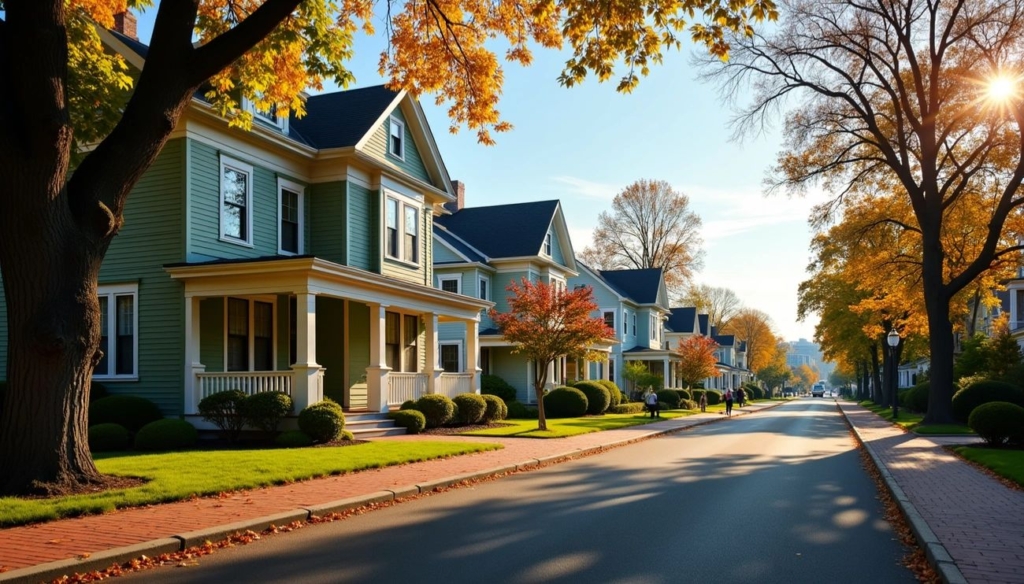
Why People Choose Newton MA
Newton delivers what families and professionals want most - easy access to Boston with quiet suburban living. After helping hundreds of families move here, we see the same reasons again and again.
Close to Boston, away from the noise
Newton sits just seven miles from downtown Boston. Commuters have multiple options that work. The MBTA Green Line runs right through Newton, making city trips simple. The commuter rail offers comfortable seating and reliable schedules for daily travelers.
Drivers appreciate Interstate 90 access - most trips to Boston take about 15 minutes. You get all the job opportunities of a major city without the urban hassles.
Newton maintains 1,200 acres of parks, playgrounds, and green spaces. That's why they call it "The Garden City". Tree-lined streets and peaceful neighborhoods give families the environment they're looking for.
Schools that deliver results
Parents move to Newton for the schools, and they get their money's worth. Newton Public Schools consistently rank among Massachusetts' best, with test scores in the top 10% statewide.
The numbers tell the story - 97% graduation rate. Both Newton North and Newton South send students to Ivy League schools every year. The district runs fifteen elementary schools, four middle schools, and two high schools. All focused on academic excellence.
Private school families have options too, including Newton Country Day School. No matter what fits your child's needs, Newton provides choices.
Safe neighborhoods with character
Each of Newton's thirteen villages has its own personality. Waban feels different from Newton Center, which feels different from West Newton. You can find the community vibe that works for your family.
Most homes are single-family properties with classic New England architecture like Queen Anne and Colonial Revival styles. Yes, housing costs more here. But Newton earned recognition as #1 in Massachusetts and #12 nationally as the best place to live in 2018.
Safety makes the difference. Newton's violent crime rates run 83% lower than the national average. Combined with active community life, residents actually know their neighbors and feel connected to where they live.
Understanding the 13 Villages of Newton
Most cities have one downtown area. Newton works differently. The city has 13 distinct villages, each with its own personality and center. This creates a unique living experience we help clients understand before they move.
What makes each village unique
Newton's villages developed around railroads, rivers, mills, and houses of worship. Each kept its individual character over the centuries. Most villages have their own downtown centers, post offices, and unique zip codes. This gives residents a small town feel within a larger city.
When you're moving to Newton MA, you're really choosing between 13 different neighborhoods. Each offers specific advantages:
- Auburndale - Home to Lasell University with excellent Mass Pike access and public transportation options
- Newton Center - Contains Newton's largest downtown area with upscale shopping and dining
- Chestnut Hill - Known for historic mansions, Boston College, and spanning into Boston and Brookline
- Nonantum - The most densely populated village with strong Italian-American heritage
- Waban - Developed in the 1880s with the arrival of the Boston and Albany Railroad
Housing varies significantly between villages too. West Newton has the prestigious Brae Burn Country Club. Newton Upper Falls offers riverside living near Hemlock Gorge Reservation. Thompsonville, sometimes called "the forgotten village," houses only about 3,000 residents but provides easy Route 9 access.
How the villages shape Newton's identity
This village structure makes Newton feel like connected small towns rather than one big city. Residents usually identify with their specific village first, then Newton overall. We see this constantly when helping families relocate.
The village system creates both challenges and benefits for newcomers. Understanding differences between places like Newton Highlands and Newton Upper Falls takes time. But this diversity lets families find neighborhoods that match their exact lifestyle needs. Some want bustling village centers. Others prefer quiet residential streets.
Daily life revolves around your village. Each has local shopping districts, community events, and school assignments. Villages maintain their own traditions too, from Nonantum's St. Mary's Day parade to farmers markets throughout the different areas.
Cost of Living in Newton MA
Before moving to Newton MA, you need realistic budget expectations. Newton costs about 80% above the national average. Financial planning matters when you're considering this move.
Housing prices and rent trends
Housing represents your biggest expense in Newton. Home prices hit extraordinary levels, with median values around $1.5 million. Housing costs run 248% higher than national averages.
Here's what buyers face today:
- Single-family median sale prices reached $1.67 million in 2023
- Median price per square foot sits at $588
- Homes sell about 1% below list price
- Nearly 60% of single-family homes sell over $1.5 million
- About 70% of Newton real estate transactions are cash purchases
Renters pay premium prices too. Average Newton apartment rent runs $3,933 per month. Unit size affects pricing:
- Studio apartments: $2,405/month
- One-bedroom units: $2,976/month
- Two-bedroom units: $3,856/month
- Three-bedroom units: $5,394/month
Utilities, groceries, and taxes
Daily expenses exceed national averages across all categories. Utility costs run 53% higher than average, with monthly energy bills around $316.91.
Grocery prices run 7% above national levels. Expect to pay:
- $4.23 for bread
- $5.03 for milk
- $3.81 for eggs
Property taxes add significant costs. Newton uses split tax rates:
- Residential: $9.80 per thousand assessed value
- Commercial: $18.34 per thousand
A median-valued home (assessed at $1,418,800) generates about $13,904 in annual property taxes.
First-time Newton buyers often experience sticker shock. The exceptional schools, safety, and community amenities justify these premium costs for families who can afford them.
Real Estate Market Facts
Newton's housing market stays competitive year-round. Buyers face tough conditions right now - homes get about 3 offers on average and sit on the market for 41 days, up from just 25 days last year. We see this firsthand when helping families time their moves.
Should you buy or rent in Newton?
Buying requires serious money upfront. The median selling price sits around $1.5 million, which means you need roughly $300,000 for a typical 20% down payment. That's real money for most families.
Renting costs about $3,855 monthly on average. Chestnut Hill rents run around $5,000 monthly, while West Roxbury offers more affordable options at $2,626.
Here's what matters: Newton property values have gone up for 14 straight years. When you buy, you build equity. When you rent, that monthly payment just covers your housing costs with no ownership benefits.
Where the competition gets fierce
Chestnut Hill and Newton Center see the most action. Luxury homes often sell above asking price. Oak Hill commands the highest rents at $6,800 monthly.
Properties under $2 million create bidding wars - they're "extremely coveted". In February 2023, homes sold on average $106,000 above list prices after just 19 days.
Want to compete? Here's what works:
- Use escalation clauses that automatically bump your offer when others bid higher
- Get pre-approved financing to show you're serious
- Know your budget ceiling before you start looking
Finding the right agent
Ask potential agents these questions: Do you know the specific villages I'm considering? Neighborhood knowledge varies a lot. How many Newton homes have you closed in the past six months? How quickly do you respond to calls and texts?
Agent fees typically run 5-6% of the sale price. The right agent saves you money through smart negotiation and local market knowledge. They know which villages fit your budget and lifestyle needs.
Schools Make Newton Worth the Investment
Families relocate to Newton MA for one primary reason: the schools. After helping countless families make this move, we see the same pattern repeatedly. Parents research Newton's education system and decide the premium price pays off for their children's future.
Public Schools That Deliver Results
Newton Public Schools consistently rank among Massachusetts' best districts. The numbers speak for themselves: elementary students hit 64% proficiency in reading and 65% in math, while middle schoolers reach 68% and 71% respectively. High school students achieve 82% proficiency in both subjects.
The district serves 11,990 students across 15 elementary schools, 4 middle schools, and 2 high schools. With an 11:1 student-to-teacher ratio, your children get the attention they deserve.
Newton North and Newton South High Schools rank #35 and #24 statewide respectively. Both schools maintain 98-99% graduation rates, and students regularly get accepted to Ivy League universities. Individual elementary schools like Mason-Rice and John Ward place in the top 5-10% statewide.
Private School Options
Newton Country Day School offers an 8:1 student-teacher ratio for families seeking private education. The Fessenden School provides another excellent choice. Brimmer and May School maintains a 6:1 student-faculty ratio, with 80% of teachers holding advanced degrees.
Charter school families often consider Roxbury Preparatory Charter School and Match Charter Public School. Massachusetts charter schools operate under five-year state charters with strict accountability standards.
College Town Benefits
Lasell University calls Newton home, offering 60+ undergraduate and graduate programs. Their new Tuition Commitment guarantees full tuition for eligible Massachusetts families earning under $100,000 annually.
The surrounding area contains 59 colleges and universities within 20 miles. This creates exceptional opportunities for continuing education and cultural enrichment after you settle into Newton.
Getting Around Newton
When you're relocating to Newton, knowing your transportation options helps with daily planning. This suburb offers several ways to get to Boston and around the region.
Public transit options
The MBTA Green Line (D Branch) serves Newton with seven stations: Riverside, Woodland, Waban, Eliot, Newton Highlands, Newton Center, and Chestnut Hill. Trains run directly to downtown Boston, typically every 10 minutes.
The Framingham/Worcester Commuter Rail provides another option through three Newton stations: Auburndale, West Newton, and Newtonville. This service gets you to South Station in about 24 minutes from Newtonville.
Good news for commuters - the MBTA is upgrading all three commuter rail stations. The improvements include accessible, double-sided platforms for all-day service. You'll get:
- Elevators and ramps to platforms
- Benches and weather protection
- Bike racks and designated pickup areas
Driving and traffic
Driving to Boston from Newton covers 8.6-10 miles, taking about 16 minutes in good traffic. Most drivers use Interstate 90 (the Mass Pike), which runs through Newton.
Rush hour changes everything. Expect longer commutes heading east in the morning and west in the evening. If you want to skip driving completely, Newton offers Park 'n Pedal spots where you can park your car and bike the rest of the way.
Walking and biking
Newton's walkability depends on your village. The city scores 57 out of 100 on the Walk Score, meaning you can handle some errands on foot. Newtonville and Newton Center are the most walkable, scoring 71 and 68 respectively.
Biking infrastructure needs work - assessments call it "minimal". Newton is working on this through a bicycle network master plan. Recent additions include a protected two-way path on Washington Street connecting West Newton and Newtonville.
The MBTA puts bike racks on buses, but bikes aren't allowed on Green Line trains. Most stations have bike racks if you want to combine biking with transit.
Job Market and Economy
Newton's economy supports a strong job market that attracts professionals from across the region. The highly educated workforce creates opportunities across multiple industries, making this an important consideration for your relocation planning.
Top industries and employers
Two sectors dominate Newton's employment landscape. Nearly 40% of the city's employment focuses on Healthcare/Social Assistance and Educational Services. The city houses more than 4,000 private, public, and nonprofit enterprises, including these major employers:
- Healthcare - Newton-Wellesley Hospital, Newton-Wellesley Hospital, and Clearview Healthcare Partners
- Education - Boston College, Lasell University, and Newton Public Schools
- Professional Services - Karyopharm Therapeutics, Labshares, and Paytronix Systems
- Finance and Real Estate - Village Bank, Mark Development, and Northland Investment Corp
Professional, Scientific & Technical Services leads employment with 9,929 people, followed by Educational Services at 8,387 people, and Healthcare & Social Assistance at 7,655 people. Finance & Insurance offers the highest pay scales, with average salaries reaching $193,750.
Commuting to Boston for work
Most Newton residents work elsewhere, which affects daily commute patterns. The average Newton resident commutes 26.7 minutes, faster than both Massachusetts averages (29.9 minutes) and Boston metro averages (31.1 minutes).
Commuting methods break down this way:
- 49.6% drive alone to work
- 28.7% work from home
- 8.75% use public transit
About 93% of Newton workers commute to jobs outside the city, primarily to Boston and surrounding areas. This confirms Newton's role as a residential suburb rather than an employment center.
Median income and employment rates
Newton residents earn significantly more than regional and national averages. Median household income reaches $184,989, which represents:
- More than 1.5 times the Boston-Cambridge-Newton metro area ($110,697)
- Nearly double the Massachusetts average ($99,858)
Per capita income stands at $95,839, reflecting the area's affluent status. The unemployment rate holds steady at 3.3%, well below the national average of 4.5%. This indicates healthy job market conditions for families relocating to the area.
Weather and Seasonal Living
Newton experiences four distinct seasons that affect daily life throughout the year. Understanding these weather patterns helps you prepare for your new home in this New England community.
What to expect in winter and summer
Winter brings cold temperatures and significant snow to Newton. January is the coldest month with average lows of 22°F (-6°C). Temperatures drop below freezing about 126.8 days annually. Newton gets an average annual accumulation of 49.6 inches of snow, which is more than most Massachusetts communities.
Summer provides relief from winter's cold. July averages highs of 82.8°F. The city sees about 10.7 days annually when temperatures exceed 90°F. June, August, and September offer the most comfortable weather for enjoying Newton's parks and outdoor spaces.
Preparing for snow and storms
Winter storms in Newton range from moderate snowfall to severe Nor'easters with blizzard conditions. The city's Department of Public Works maintains over 320 miles of roadways and 80 miles of sidewalks. Their goal is clearing all streets within eight hours after storms.
Newton homeowners must handle certain responsibilities:
- Clear sidewalks next to your property within 30 hours after storms
- Follow winter parking restrictions from December 1-March 31, with no overnight street parking between 2-6 a.m.
Before storm season, charge your devices, stock emergency supplies, and prepare for possible power outages. If you're new to New England winters, invest in proper snow removal equipment for comfortable living in any of Newton's 13 villages.
Exploring Newton's 13 Villages
We've moved families to every single one of Newton's 13 villages. Each neighborhood has its own character and advantages. After years of helping people relocate to Newton MA, we know what questions to ask to help you find the right fit.
Village Quick Guide
Auburndale: Charles River location with village center and Mass Pike access.
Chestnut Hill: Boston College area with upscale shopping and historic homes.
Newton Center: Largest downtown district with dining options and Crystal Lake.
Newton Corner: Busy area with highway access where major streets meet.
Newton Highlands: Small village center with local shops and Green Line access.
Newton Lower Falls: Oldest village along the Charles River with historic buildings.
Newton Upper Falls: Home to Hemlock Gorge and Echo Bridge.
Newtonville: Central location with business district on Washington Street.
Nonantum: Known as "The Lake" with Italian-American heritage.
Oak Hill: Residential village with larger homes near Cold Spring Park.
Thompsonville: Smallest village between Newton Center and Chestnut Hill.
Waban: Stately homes, good schools, and charming village center.
West Newton: Growing restaurant scene and historic cinema.
Choosing Your Village
First, think about your commute. Newton Corner and Newtonville offer easy Mass Pike access. Waban and Newton Highlands have direct Green Line service.
Budget matters too. West Newton and Nonantum typically cost less than Waban and Chestnut Hill.
School assignments vary by neighborhood, so check which schools serve each area if you have children.
We help families think through these decisions every day. Village choice comes down to what matters most to your family—commute, budget, school district, or neighborhood feel. Each area has its own appeal while still being part of Newton.
Ready to explore specific villages? We can coordinate tours and help you understand the practical differences between neighborhoods during your move planning.
Outdoor Activities and Parks
Newton offers incredible outdoor spaces that many families don't expect when relocating to this area. We always tell our clients about these natural amenities because they become such an important part of daily life here.
Crystal Lake, Hemlock Gorge, and more
Crystal Lake serves as Newton's main water recreation spot—a 33-acre natural pond where residents swim, fish, kayak, and paddleboard. The city runs a designated swimming area with docks and a sandy beach, plus picnic tables in shaded areas. Residents can buy seasonal swimming memberships for $60-85 depending on age.
Hemlock Gorge Reservation offers something different—23 acres of wild space along the Charles River with steep, hemlock-covered banks and waterfalls. Echo Bridge sits at the center of this reservation, providing great views from its walkway and creating amazing echoes from the platform below.
Don't overlook Webster Woods, Newton's largest contiguous forest at 130+ acres, with trails perfect for hiking, birdwatching, and nature walks.
Hiking, biking, and seasonal fun
The Charles River Pathway gives you miles of scenic trails for walking, jogging, and cycling right along the water. You can access this peaceful area from multiple points throughout Newton.
Newton maintains over 20 miles of bike lanes and paths. Recent additions include bike lanes on Parker Street and Beacon Street, with new projects starting on Needham Street and Washington Street.
Crystal Lake changes with the seasons—summer swimming becomes winter ice skating. The Upper Falls Greenway provides a nice rail-trail that starts behind National Lumber on Needham Street and ends at the Charles River.
When you move to Newton MA, these outdoor spaces connect all 13 villages and become part of what makes living here special.
Arts, Culture, and Community Events
Newton's cultural scene makes this community special for families relocating here. We often tell our clients about these cultural opportunities because they help you feel at home faster in your new neighborhood.
Local galleries and theaters
The Newton City Hall Galleries offer free exhibition spaces showcasing original artworks, mostly from local artists. You can visit anytime and see high-quality work from your new neighbors. For contemporary art lovers, the New Art Center runs multiple galleries throughout Newton, including the New Art Corridor that stays open 24/7.
Film enthusiasts enjoy the historic West Newton Cinema, which shows both mainstream movies and independent films. It's a great way to spend an evening after settling into your new home.
The Newton Free Library hosts twelve rotating art exhibits each year in their Main Hall. The Mayor's Gallery also features engaging exhibitions, including oil paintings by international artists.
Annual festivals and traditions
Newton celebrates throughout the year with community events that welcome newcomers. Family FunFEST happens May 17, Independence Day Festivities on July 4, and Harvest Fair October 19. These events help new residents meet neighbors and feel connected to their village.
The Italian-American Festival (July 16-20) draws over 10,000 people annually! Historic Newton's Hayfest on September 28 offers a fun glimpse into 19th-century life with apple cider pressing and candle dipping.
Nature lovers should mark September 13 for the Newton Monarch Festival at Wellington Park, featuring butterfly encounters and educational exhibits.
When we help families move to Newton MA, we always mention these cultural opportunities. They're part of what makes each of the 13 villages feel like home.
Safety and Crime Rates
Safety is one of the top questions families ask when we help them move to Newton MA. We always share Newton's excellent safety record because it's one of the strongest selling points for this community.
How safe is Newton?
Newton ranks as the #2 safest city in America to raise a family according to SafeWise's 2022 report. The numbers tell the story clearly. Newton has the third-lowest property crime rate at 5.51 per 1,000 residents and fourth-lowest violent crime rate at 0.54 nationwide.
Newton's violent crime rate sits 75% below the national average. Your chances of experiencing violent crime here are just 1 in 1,668. When families are relocating to Newton MA, we explain that your overall chance of becoming a crime victim is only 1 in 162, compared to 1 in 44 nationally.
This creates peace of mind that's hard to find elsewhere.
Neighborhood comparisons
Even within Newton's 13 villages, safety levels vary slightly. The northwest section tends to be the safest, with a 1 in 60 chance of experiencing crime versus 1 in 38 in northeast neighborhoods. The north parts of Newton see about 107 crime incidents annually, while southern areas record just 29.
We tell clients that even Newton's "less safe" areas remain remarkably secure compared to surrounding communities. When you're choosing between villages, safety shouldn't be your primary concern because all areas maintain excellent security records.
Moving to Newton Made Simple
Ready to start your Newton move? We've helped hundreds of families relocate to this community, and we know exactly what makes the difference between a stressful move and a smooth one.
Working with Newton Moving Companies
Newton's narrow streets and historic properties need movers who know the area. We've seen too many moves go wrong when companies don't understand local challenges. Several reputable companies specialize in Newton relocations:
William C. Huff offers services including art and antique moving with climate-controlled storage options. Their process involves an initial inquiry, customized estimate, and on-site evaluation for complex moves.
For convenience, consider scheduling a virtual walkthrough via Google Meet with Poseidon Moving for a precise assessment without an in-person visit. Many Newton movers provide full-service packages including packing assistance and furniture assembly.
Getting Your Permits Ready
Plan ahead for permits! For overnight parking during your move, visit Newton Police Headquarters (1321 Washington Street) to obtain a Resident Parking Permit. This costs $25 per sticker with a maximum of two stickers per household.
Need to place a moving container? You'll need a special permit that costs approximately $100 per calendar day. During Boston's September 1st moving rush, special Boylston Street Moving Permits may be required.
Meeting Your New Community
After you arrive, get familiar with Newton's block party process. There's no application fee, but neighbors affected by street closures must sign the permit form indicating their approval. This gives you a perfect opportunity to meet your new community while celebrating your arrival in one of Newton's 13 villages.
We make sure every Newton move goes smoothly. Our local expertise helps you avoid the common mistakes that can turn moving day into a headache.
Conclusion
Moving to Newton MA gives you access to one of Massachusetts' most desirable communities. We've helped hundreds of families relocate to all 13 villages, and we understand what makes this area special.
Newton delivers exceptional value despite the premium costs. The school system ranks among the state's best. You get easy access to Boston through multiple transportation options. Crime rates stay remarkably low. Each village offers its own unique character while contributing to Newton's overall appeal.
Choosing the right village matters for your family's happiness. Newton Center offers bustling commercial districts. Waban provides quiet, tree-lined streets. Chestnut Hill features upscale amenities. Your priorities determine which neighborhood fits best.
We know Newton's narrow streets and competitive housing market can create challenges during your move. Our local expertise helps families navigate these issues smoothly. We handle everything from securing proper permits to moving furniture through historic doorways.
Ready to make Newton your new home? Contact us today for your free moving quote. We'll work with you to plan your move fully and prioritize giving you a stress-free moving experience. No matter which of Newton's 13 villages you choose, we'll ensure your transition is smooth and successful.
Get A Moving Quote
Key Takeaways
Moving to Newton MA means choosing from 13 unique villages, each offering distinct character while maintaining exceptional quality of life in this prestigious Boston suburb.
• Newton offers premium suburban living at a premium price - Expect housing costs 248% above national average with median home values around $1.5 million, but you'll gain access to top-rated schools and ultra-low crime rates.
• Choose your village strategically based on lifestyle needs - From bustling Newton Center with major shopping to peaceful Waban with stately homes, each of the 13 villages offers different amenities, commute options, and price points.
• Excellent transportation connects you to Boston opportunities - Multiple MBTA Green Line stations and commuter rail stops provide 15-30 minute commutes to downtown Boston, plus easy Mass Pike access for drivers.
• Plan your move carefully with local expertise - Newton's narrow historic streets and competitive housing market (homes average 3 offers) require experienced local movers and pre-approved financing to succeed.
• Safety and schools justify the investment - Newton ranks #2 safest city in America for families with violent crime rates 75% below national average, while public schools consistently place in Massachusetts' top 10%.
The village structure creates a unique "small town within a city" experience that attracts families seeking both community connection and urban accessibility, making Newton an ideal choice for those who can afford its premium lifestyle.
FAQs
Q1. Which village in Newton, MA is considered the most expensive? Oak Hill is generally regarded as the most expensive village in Newton, with a median home listing price of around $3.1 million. However, prices can vary significantly across all 13 villages depending on specific properties and market conditions.
Q2. What makes Chestnut Hill a desirable neighborhood in Newton? Chestnut Hill is highly sought-after due to its prime location straddling Newton and Boston, offering a blend of upscale residential options and amenities. Its proximity to urban centers, coupled with a prestigious atmosphere, makes it particularly attractive to buyers seeking a high-quality living environment.
Q3. Can you name the 13 villages that make up Newton, MA? Newton comprises 13 distinct villages: Auburndale, Chestnut Hill, Newton Center, Newton Corner, Newton Highlands, Newton Lower Falls, Newton Upper Falls, Newtonville, Nonantum, Oak Hill, Thompsonville, Waban, and West Newton. Each village has its own unique character and amenities.
Q4. Is Newton, MA considered an affluent area? Yes, Newton is widely recognized as an affluent area. With a median household income of around $185,000, which is significantly higher than both state and national averages, Newton consistently ranks among the wealthiest communities in Massachusetts and the United States.
Q5. How do Newton's public schools compare to others in Massachusetts? Newton Public Schools are consistently ranked among the top school districts in Massachusetts. The system boasts high proficiency rates in reading and math across all grade levels, with both high schools placing in the top 35 statewide. The district's commitment to academic excellence is a major draw for families moving to the area.
References
[1] - https://havokjournal.com/culture/family/life-family/moving-to-newton-ma-a-step-by-step-guide/
[2] - https://rutledgeproperties.com/neighborhoods/newton
[3] - https://suburbanjunglegroup.com/town-spotlight-newton-massachusetts/
[4] - https://www.apartmentguide.com/blog/pros-and-cons-of-moving-to-newton-ma/
[5] - https://joes.homes/14-things-you-need-to-know-before-moving-to-newton-ma/
[6] - https://www.newtonma.gov/about
[7] - https://en.wikipedia.org/wiki/Newton,_Massachusetts
[8] - https://homeandmoney.com/blog/moving-to-newton-ma/
[9] - https://www.newtonma.gov/Home/Components/News/News/652/15
[10] - https://www.newtonma.gov/government/historic-newton/research/newton-history/villages
[11] - https://en.wikipedia.org/wiki/List_of_villages_in_Newton,_Massachusetts
[12] - https://columbusandover.com/the-13-villages-of-newton/
[13] - https://www.newtonma.gov/government/assessing/tax-rate
[14] - https://brendasellsboston.com/blog/the-villages-of-newton
[15] - https://www.payscale.com/cost-of-living-calculator/Massachusetts-Newton
[16] - https://www.redfin.com/city/11619/MA/Newton/housing-market
[17] - https://www.newtonbeacon.org/cash-buyers-have-driven-newtons-home-prices-into-the-cosmos/
[18] - https://www.rentcafe.com/average-rent-market-trends/us/ma/newton/
[19] - https://www.apartments.com/rent-market-trends/newton-ma/