Cambridge Street Bridge construction is causing major headaches for Allston commuters. If you're planning a move, you need to know what you're up against.
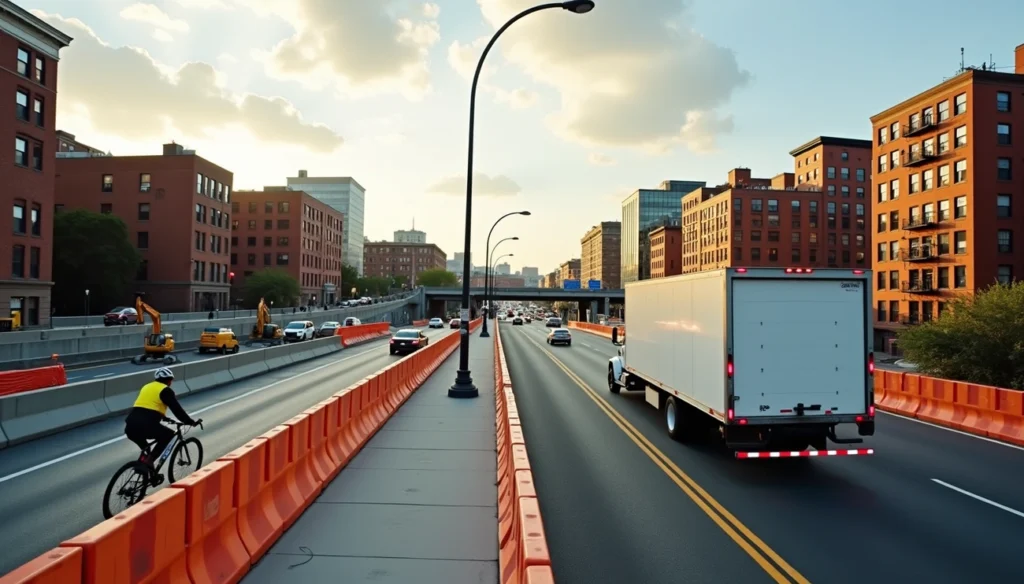
MassDOT's $1.9B Allston Multimodal Project has reduced westbound lanes to a single lane over I-90 and created major bottlenecks for moving trucks and daily traffic. These Allston detours affect everything from bike lane access to sidewalk closures that have been in place since 2010.
We've put together this piece to guide you through the I-90 bridge closure and construction work. You'll find approved alternative routes, optimal timing windows and practical strategies for moving in Allston without losing hours to construction delays.
Understanding Cambridge Street Bridge Construction Status
Current Lane Closures and Traffic Restrictions
Workers closed the right lane of Cambridge Street southbound in January 2026 to support ongoing construction activity. This closure restricts westbound car traffic to a single lane through the MassDOT Project Area and will remain in place until October 2026. Cambridge Street carries 38,000 vehicles daily. This lane reduction proves especially disruptive for commuters and commercial traffic.
The contractor performs work during specific windows. Daytime hours run Monday through Friday from 6:00 a.m. to 6:00 p.m. Nighttime closures occur Monday through Saturday from 9:00 p.m. to 6:00 a.m.. Federal holidays including Memorial Day and Juneteenth may affect typical work schedules.
Construction activities include concrete substructure repairs and cleaning the steel bridge structure. Workers also prime the structure, install bridge shielding and brackets, and remove existing fencing.
Sidewalk and Bike Lane Limitations
The sidewalk on the Cambridge Street overpass has been closed since 2010 or 2011. This affects pedestrian access for over a decade. Construction barriers blocked the southbound Cambridge Street bike lane and the southern entrance to the Franklin Street Footbridge over I-90.
Community advocacy through a public petition prompted action. MassDOT rearranged the construction zone and reopened bike lanes west of the Franklin Street footbridge for southbound and westbound traffic. The agency installed physical separation barriers with flexposts spaced 30 feet apart instead of the planned 60-foot spacing.
The work zone continues to occupy the sidewalk and bike lane on the northern westbound side of the bridge through October.
Construction Timeline Through October 2026
Our Allston movers at Lifetime Moving Co. track this preservation project schedule closely. The Cambridge Street Bridge construction runs through October 2026. Work includes deck patching, substructure repairs, and steel beam work to extend the bridge's lifespan until full replacement occurs around 2030.
Effect on Moving Trucks and Large Vehicles
The Cambridge Street Bridge construction eliminated over 30 parking spaces near Harvard Avenue where moving trucks parked. Combined with single-lane westbound restrictions, this creates challenges for moving in Allston with commercial vehicles. Traffic updates are available through Allstonia for immediate Allston detours.
Best Alternative Routes for Moving Trucks in Allston
Using Brighton Avenue as Your Main Detour
Brighton Avenue is the most reliable parallel route when Cambridge Street bottlenecks slow your moving schedule. This corridor runs east-west through Allston and maintains consistent clearances for standard rental trucks. Parking restrictions appear periodically on the north side outbound roadway between Malvern Street and Harvard Avenue. Check current restrictions before your move date.
Brighton Avenue accommodates commercial traffic without height limitations, unlike restricted parkways. Our Allston movers at Lifetime Moving Co. route trucks through this corridor to bypass construction delays near the MassDOT Project Area.
Western Avenue Configuration for Large Vehicles
Western Avenue features two general travel lanes, an intermittent painted bike lane, and on-street parking. The street experiences frequent congestion that causes delays on MBTA route 86 and route 70 busses. Large vehicles share space with bus traffic and parked cars during peak hours because of this configuration.
Future reconfiguration plans would restrict private cars to single one-way lanes and redirect cut-through traffic to Soldiers Field Road. Western Avenue stays available but requires careful navigation during high-traffic periods for now.
Avoiding Cambridge Street Bottlenecks
Bottlenecks occur where short sections have much less capacity than the rest of the road. The single-lane restriction on Cambridge Street creates exactly this scenario. Motorists can cut down queuing delay costs when alternate routes around bottlenecks are available and used.
Route Planning for 20-to-26-Foot Moving Trucks
Standard moving trucks measure 12'6" in height. Storrow Drive bridges reach only 10 feet high and make this route completely off-limits. Commonwealth Avenue or Beacon Street work as parallel east-west routes. The Massachusetts Turnpike (I-90) remains the biggest reliable east-west corridor planned for heavy vehicles.
Truck-specific GPS systems like SmartTruckRoute account for bridge heights, load limits, and sharp turns. Up-to-the-minute Allston detours and MassDOT updates help you avoid unexpected closures.
Timing Your Move to Avoid Construction Delays
Early Morning Time Windows (6 AM - 9 AM)
Scheduling your move between 6 AM and 9 AM gives you the best chance to avoid Cambridge Street Bridge construction delays. MassDOT work schedules show that daytime construction runs Monday through Friday from 6:00 a.m. to 6:00 p.m.. Crews arrive right as early movers hit the road.
You'll be on the road before peak congestion builds if you start at 7 AM. Boston's morning rush hour runs from 7:00 AM to 9:30 AM on weekdays, and the heaviest delays occur between 7 a.m. and 9 a.m.. A 10-mile drive that takes 20 minutes at 7 AM can stretch into an hour-long ordeal by 9 AM. Parking becomes easier by a lot during early morning hours, with loading zones available before the city wakes up.
Peak Traffic Periods to Avoid
Weekday mornings build around 7:00 AM and continue until 9:30 AM. Evening congestion starts at 3:30 PM and lasts until 6:30 PM. The most significant afternoon congestion occurs between 4 p.m. and 6 p.m..
Thursdays rank as the worst day to travel in Boston and add an average 5.3-minute delay per 30-minute commute. Mondays offer the best conditions with only 3.8-minute average delays. Friday mornings are light, but traffic can increase in the afternoons as people start their weekends.
How Local Business Delivery Schedules Affect Routes
Midday hours between 10 a.m. and 3 p.m. experience lighter traffic, but commercial delivery trucks saturate Allston streets during this window. Our Allston movers schedule around these patterns to minimize conflicts with delivery vehicles competing for the same loading zones affected by Cambridge Street Bridge construction.
Step-by-Step Navigation Guide for Allston Detours
Step 1: Check Current I-90 Bridge Closure Updates
Mass511.com should be your first stop before the move date to check official I-90 bridge closure updates and lane restrictions. MassDOT posts live construction schedules that affect Cambridge Street construction access points.
Step 2: Map Your Route Before Loading
Consumer GPS platforms like Google Maps and Waze direct trucks onto prohibited routes because DCR parkways offer fast car transit times but don't account for commercial restrictions. Truck-specific navigation applications like Trucker Path and SmartTruckRoute work better.
Step 3: Communicate with Your Moving Team
Share your planned route with drivers before they arrive. Our Allston movers coordinate route details with teams to prevent confusion at the last minute when trucks reach restricted areas.
Step 4: Plan for Extra Travel Time
Your estimated travel time needs an extra 30-45 minutes when moving in Allston during construction periods. Single-lane restrictions create delays that standard route calculators won't capture.
Step 5: Identify Backup Routes
Two alternative paths should be ready in case Allston detours close without warning. Know whether your backup uses Brighton Avenue or Commonwealth Avenue before loading begins.
Step 6: Monitor Live Traffic Conditions
Traffic cameras throughout Boston provide live visual information to help you avoid congested areas. MassDOT traffic updates and Allstonia should both be checked during your move.
Conclusion
Right now, you have what you need to get through Cambridge Street Bridge construction without losing hours to traffic delays. Brighton Avenue offers a reliable bypass route, while early morning time windows between 6 AM and 9 AM give you the clearest path through Allston.
Monitor MassDOT updates and use truck-specific GPS to avoid prohibited routes. With proper planning and these alternative corridors, moving in Allston stays manageable through October 2026.
Key Takeaways
Navigate Cambridge Street Bridge construction like a pro with these essential strategies for Allston commuters and movers dealing with ongoing disruptions through October 2026.
• Use Brighton Avenue as your primary detour route - it's the most reliable parallel corridor that accommodates moving trucks without height restrictions or commercial vehicle bans.
• Schedule moves between 6 AM and 9 AM to avoid peak traffic and construction crews, as this window offers the clearest path before congestion builds.
• Plan 30-45 extra minutes for travel time due to single-lane westbound restrictions that create unpredictable delays standard GPS won't capture.
• Use truck-specific GPS apps like SmartTruckRoute instead of consumer platforms that direct trucks onto prohibited DCR parkways with low bridges.
• Monitor real-time MassDOT updates and have backup routes ready since construction schedules and lane closures can change unexpectedly during the project timeline.
The key to successful navigation during this $1.9B construction project is preparation and flexibility. With Cambridge Street reduced to a single westbound lane and over 30 parking spaces eliminated, early planning and alternative routing become essential for avoiding costly delays.
FAQs
Q1. When will the Cambridge Street Bridge construction be completed? The Cambridge Street Bridge preservation project is scheduled to run through October 2026. This work includes deck patching, substructure repairs, steel beam work, and joint replacement to extend the bridge's lifespan until a full replacement occurs around 2030.
Q2. What are the best alternative routes for moving trucks during the construction? Brighton Avenue serves as the most reliable detour route for moving trucks, as it runs parallel to Cambridge Street and maintains consistent clearances for standard rental trucks without height restrictions. Commonwealth Avenue and the Massachusetts Turnpike (I-90) are also dependable alternatives for large vehicles, while Storrow Drive should be completely avoided due to its 10-foot bridge heights.
Q3. What time of day is best to move through Allston during construction? The optimal time window is between 6 AM and 9 AM, before peak congestion builds. Weekday morning rush hour runs from 7:00 AM to 9:30 AM, and afternoon congestion occurs between 4:00 PM and 6:30 PM. Thursdays are the worst days for traffic, while Mondays typically offer the best conditions.
Q4. How has the construction affected parking for moving trucks? The Cambridge Street Bridge construction eliminated over 30 parking spaces near Harvard Avenue where moving trucks previously parked. Combined with single-lane westbound restrictions, this creates significant challenges for commercial vehicles. It's recommended to check current parking restrictions before your move date and arrive during early morning hours when loading zones are more readily available.
Q5. What type of GPS should I use when navigating with a moving truck? Use truck-specific GPS applications like SmartTruckRoute or Trucker Path instead of consumer platforms like Google Maps or Waze. Consumer GPS systems don't account for commercial vehicle restrictions, bridge heights, load limits, and sharp turns, which can direct trucks onto prohibited routes with low clearances.