A home office or exercise room can stop working long before the room itself runs out of space. The desk may face glare from a window, storage may crowd the chair, or a treadmill may occupy the only practical walkway. In many cases, the solution is not a renovation or a new address. It is a better layout and a carefully planned in-home move.
Rearranging a room sounds simple until a large desk, bookcase, exercise bike, treadmill, or weight rack must pass through a narrow doorway or travel between floors. A successful project starts with measurements and decisions—not lifting. This guide explains how Northborough homeowners can plan the room, prepare furniture and equipment, and determine when professional help makes sense.
Define the Room's Primary Purpose
Begin by deciding what the room needs to support most often. A spare bedroom that serves as an office 48 weeks of the year should work well as an office first, with a practical plan for occasional guests. A basement shared by exercise equipment and household storage needs clear zones so one use does not interfere with the other.
Write down the room's essential functions. For a home office, that may include focused computer work, video calls, document storage, and occasional meetings. For a home gym, it may include strength training, cardio, stretching, and safe equipment access.
Separate necessities from preferences. Natural light may be desirable, but avoiding screen glare could matter more. A television may be convenient in a gym, but it should not force a machine into an awkward or structurally questionable location.
Measure Before You Change the Layout
Create a simple floor plan with the room's length and width. Mark doors, windows, radiators, vents, outlets, ceiling changes, and built-in storage. Then measure every item that will move, including its height, width, depth, and approximate weight.
Do not measure only the destination. Check the entire route:
- Door and hallway widths
- Stair width, ceiling height, turns, and landings
- Railings, light fixtures, and removable doors
- Floor transitions and raised thresholds
- Space available for people to turn and control the item
Measure removable components separately. A desk, treadmill, shelving unit, or weight rack may fit only after manufacturer-approved disassembly. Keep the manual, hardware, and model information available before anyone starts taking the item apart.
Planning a More Functional Home Office
Place the Workstation Around Daily Tasks
Start with the desk and chair because they determine how the rest of the room functions. Position the primary monitor in front of the user, leave adequate leg space, and keep frequently used devices within comfortable reach. The OSHA computer-workstation guide provides practical considerations for monitor, desk, keyboard, chair, and lighting placement.
Test the proposed position at the time of day when the room is normally used. A layout that looks ideal in the evening may produce strong screen glare in the morning. Check the view behind the desk if video calls are important, but do not sacrifice a comfortable workstation merely to create a decorative background.
Choose Storage That Supports the Work
Move active files and daily supplies close to the desk. Less frequently used materials can occupy higher shelves or a separate cabinet. Avoid filling the area beneath the desk with boxes, computer towers, or paper storage that limits legroom.
Tall bookcases and cabinets should be placed on a suitable surface and secured when appropriate for the product and household. Before moving a loaded bookcase, remove books, shelves, drawers, and loose parts. Never assume that a large storage unit can be safely carried while full.
Plan Cables and Power Without Improvising
Map power and data needs before positioning heavy furniture. Keep cords away from walking routes and moving chair wheels. Use cable-management products according to their instructions, and avoid overloading outlets or concealing power equipment in ways the manufacturer prohibits.
If the proposed layout requires new outlets, dedicated circuits, or permanent wiring, consult a qualified electrician rather than relying on extension cords as a permanent solution.
Improve Privacy and Sound Carefully
Soft furnishings, rugs, curtains, and upholstered seating can reduce the hard surfaces that contribute to echo. A solid door and appropriate weatherstripping may also reduce sound transmission. Permanent wall treatments, changes near heat sources, and materials with fire-safety implications should be selected and installed with suitable professional advice.
Planning a Safer Home Gym Layout
Start With the Equipment Instructions
Record the make, model, assembled dimensions, weight, and disassembly instructions for every large machine. Follow the manufacturer's current guidance for moving, disconnecting, stabilizing, and reinstalling equipment. Warranty and service terms can change, so confirm them directly rather than relying on a third-party article.
Remove loose accessories, weight plates, pins, screens, and other detachable components when the manufacturer permits it. Pack and label hardware by machine so that parts are not mixed during reassembly.
Verify the Floor and the Destination
Do not rely on a generic pounds-per-square-foot figure to approve a home-gym location. Equipment can create concentrated loads, and the capacity of a floor depends on the home's construction, condition, framing, span, and the position of the load.
If you are placing a heavy machine, loaded rack, or free-weight station on an upper floor—or if you have any doubt about the structure—consult a Massachusetts-licensed structural professional before the move. Movers can transport equipment, but they do not replace a structural assessment.
Leave Space to Use the Equipment
The footprint of a machine is not the same as the space required to operate it. Follow the manufacturer's clearance requirements and account for access, moving parts, emergency dismounts, doors, storage, and other users. Keep equipment away from sump systems, utilities, and areas that need maintenance access.
Check ceiling height for overhead movements and raised platforms. Review lighting and ventilation under realistic workout conditions. A qualified electrician or HVAC professional should address permanent electrical or ventilation changes.
Plan for Floors and Moisture
Select flooring that is appropriate for the equipment, subfloor, and type of exercise. Mats can help protect finishes and manage vibration, but they do not correct an inadequate structure or unstable machine.
Basements and garages may have moisture, temperature, or drainage conditions that affect equipment. Resolve water intrusion and confirm the manufacturer's environmental requirements before relocating electronics or upholstered gym components.
Prepare the Route Before Moving Day
Once the new layout is confirmed, clear the route completely. Remove small furniture, rugs, wall decorations, plants, and other obstacles. Keep children and pets away from the work area, and reserve enough space at the destination for controlled placement.
Photograph the furniture, equipment, route, and destination. Note existing marks on walls or floors and identify especially delicate surfaces. Protecting a home involves more than adding a blanket to the item; the crew needs room to use equipment and communicate throughout the move.
Do not create a universal DIY lifting limit. Weight is only one factor. Shape, grip, stairs, distance, posture, and the number of repetitions all affect risk. The NIOSH lifting guidance shows why a lifting task must be evaluated using several variables rather than one simple threshold.
When In-Home Moving Help Makes Sense
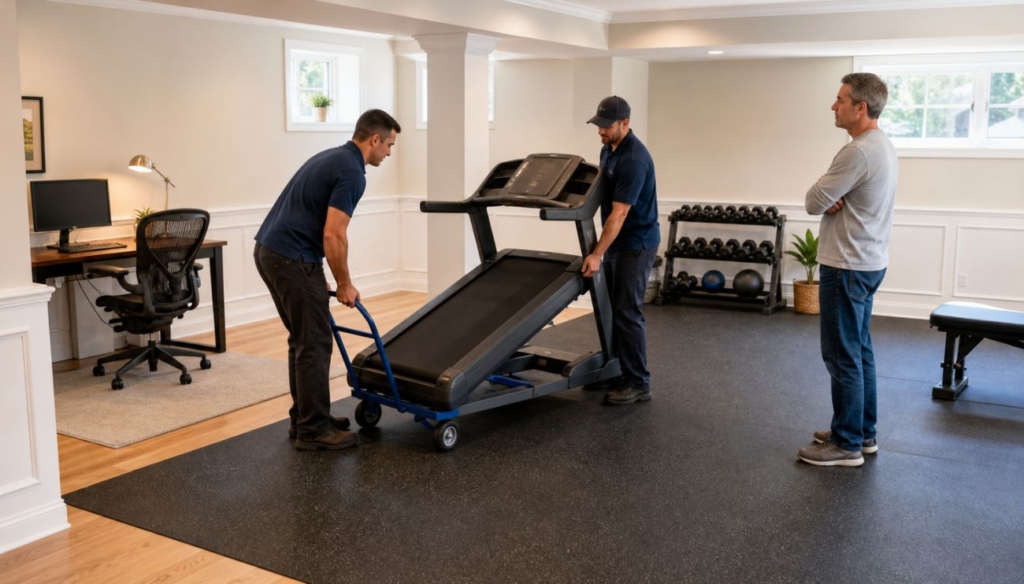
Professional assistance is worth considering when an item is bulky, fragile, hard to grip, difficult to disassemble, or located on another floor. It can also help when the route includes tight turns, finished stairways, delicate flooring, or limited space for helpers.
Lifetime Moving Co's residential moving services specifically include furniture rearranging and in-home moving. The company states that it can move furniture and belongings to other rooms, basements, attics, storage units, or containers, depending on the project.
Before booking, confirm that the crew will handle the particular desk, exercise machine, rack, or specialty item. Ask who is responsible for disassembly, reassembly, calibration, wall anchoring, and testing. Some equipment may require a manufacturer-authorized technician.
What to Include When Requesting an Estimate
A clear request helps the mover assess the work accurately. Provide:
- Photos of each item and its model information
- Approximate dimensions and weight
- Photos of stairs, landings, doorways, and tight turns
- The current room and intended destination
- Known disassembly or technician requirements
- Parking, building-access, or scheduling restrictions
Ask how pricing is calculated, what protection applies to an in-home project, and which exclusions or customer responsibilities affect the job. Do not assume that interstate valuation options or a homeowner's policy automatically cover a same-address rearrangement.
Homeowners can review Lifetime Moving Co's current Northborough moving page and then confirm the exact scope and availability for their address.
Frequently Asked Questions
Can movers rearrange furniture without transporting it to another address?
Yes, some moving companies offer in-home furniture rearranging. Confirm that the service includes the specific rooms, floors, furniture, or exercise equipment involved in your project.
Should I disassemble my desk before the movers arrive?
Ask first. Some desks can move intact, while others require disassembly because of their construction or the route. If disassembly is needed, determine whether the mover, homeowner, furniture installer, or manufacturer-authorized technician should perform it.
Can movers relocate a treadmill or connected exercise bike?
It depends on the model, route, service scope, and manufacturer requirements. Provide the exact model when requesting an estimate and confirm who will disconnect, disassemble, reassemble, calibrate, and test it.
How do I know whether an upstairs floor can support gym equipment?
Do not decide from a generic online weight limit. For heavy or concentrated loads, obtain advice based on the home's actual structure from an appropriately licensed structural professional before placing the equipment.
Does moving-company coverage apply to an in-home move?
Coverage and exclusions vary by company and job type. Ask the mover to explain in writing what applies to the furniture, equipment, home surfaces, disassembly, and reassembly involved in your project.
Plan the Layout First, Then Move
A better home office or gym begins with a workable destination and a verified route. Measure the room, follow equipment instructions, address structural and electrical questions before moving day, and decide who is responsible for every stage of the work.
If your Northborough project involves heavy furniture or exercise equipment, contact Lifetime Moving Co with photos, measurements, model information, and access details to discuss the current service scope and request an estimate.