Rearranging antique furniture inside a home can be more complicated than moving ordinary household items. A grand piano, heirloom dresser, china cabinet, or solid-wood table may be heavy, fragile, difficult to grip, and too large for the most direct route through the property.
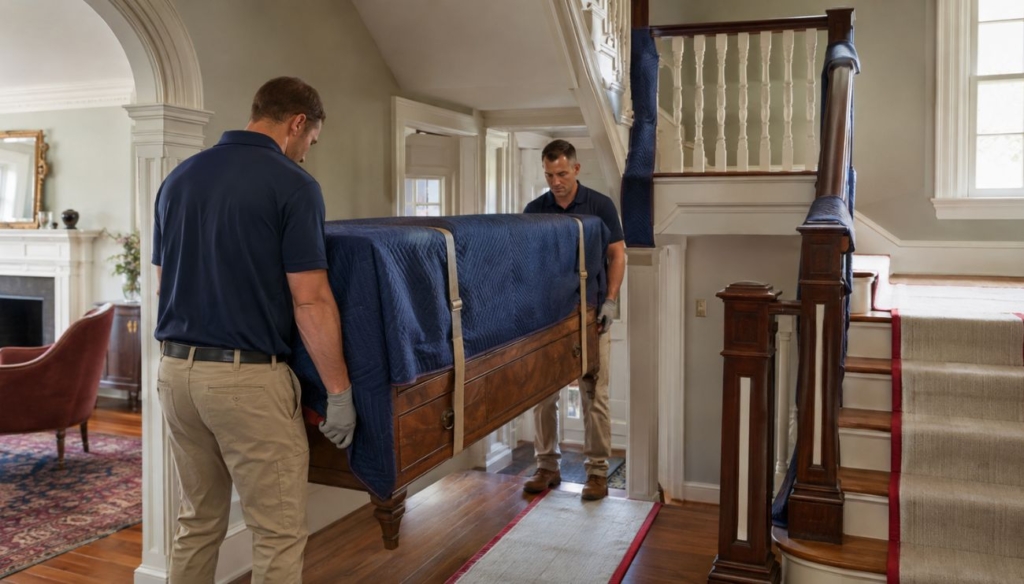
These challenges can be especially important in historic Brookline homes, where narrow staircases, original hardwood floors, detailed trim, and tight landings require careful planning. Professional in-home moving services in Brookline, MA can help homeowners relocate furniture between rooms or floors without transporting it to another property.
This guide explains how to prepare the route, protect antique furniture and architectural details, and decide when professional assistance is the safer choice.
Why Historic Brookline Homes Require Additional Planning
Brookline contains homes representing several periods and architectural styles. According to the Town of Brookline, the Crowninshield Local Historic District includes a cohesive collection of primarily early-20th-century residences. The town’s description of the Cottage Farm Local Historic District highlights mid-19th-century development and architectural styles that include Gothic Revival, Queen Anne, and Georgian Revival.
Although every property is different, older homes may present moving challenges such as:
- Narrow doorways and hallways
- Staircases with tight turns or limited overhead clearance
- Original floors that may scratch or dent easily
- Decorative moldings, banisters, and plaster walls
- Uneven surfaces or changes in floor height
- Limited space for rotating large furniture
Never assume a piece will fit because it entered the home previously. It may have been disassembled, brought through a different entrance, or moved before later renovations changed the available route.
Why Antique Furniture Needs Careful Handling
Antique furniture may contain aged adhesives, traditional joinery, thin veneers, delicate finishes, or decorative elements that do not respond well to twisting and uneven pressure. A piece can look sturdy while still having weakened joints or previously repaired components.
The Canadian Conservation Institute’s guidance for handling heritage objects recommends assessing an object before moving it, planning the route, preparing the destination, and using appropriate equipment.
Before lifting an antique:
- Inspect it for loose joints, cracked wood, lifting veneer, or unstable hardware.
- Remove unsecured drawers, shelves, doors, and decorative components when doing so will not damage the piece.
- Do not lift chairs by their arms, backs, or crest rails.
- Do not use handles, drawer pulls, or ornamental trim as lifting points.
- Avoid applying adhesive tape directly to finished wood.
- Consult a conservator when a valuable piece is visibly unstable.
For additional preparation guidance, review these professional tips for packing and protecting antique items.
Equipment for Protecting Furniture and the Home
The appropriate equipment depends on the item, its condition, the flooring, and the route through the home. Lifetime Moving Co.’s residential moving services include furniture rearranging, in-home moving, loading and unloading, and furniture assembly assistance.
Floor Runners
Use clean, non-slip runners intended for the flooring surface. The covering should lie flat and remain secured so it does not become a tripping hazard. Check the underside for grit before placing it over hardwood.
Additional preparation recommendations are available in the company’s Massachusetts floor protection guide.
Moving Blankets and Furniture Pads
Use clean, padded blankets to protect finished surfaces, corners, and carved details. Secure the padding around the furniture without allowing straps or fasteners to rub against exposed wood.
Doorway and Railing Protection
Pad door jambs, banisters, newel posts, and vulnerable wall corners along the route. Protection should be securely attached without using materials that could pull away paint or damage historic finishes.
Furniture Sliders and Dollies
Furniture sliders can help reposition certain pieces across level floors when the slider material is appropriate for the surface. Dollies should have adequate capacity, stable platforms, and non-marking wheels.
A standard furniture dolly should not be used on stairs unless it was specifically designed for that purpose and is operated by someone trained to use it.
Lifting Straps
Properly rated lifting straps can help trained movers control some bulky items. They are not a substitute for sufficient staffing, a clear route, or an accurate assessment of the furniture’s condition.
How to Move Antique Furniture Between Floors
Step 1: Inspect the Furniture
Check the entire piece before moving it. Look underneath and behind it for loose components, repairs, weak legs, unstable joints, and detached trim. Photograph its condition so existing marks or damage are documented.
If the piece feels unstable, stop and consult an antique furniture specialist before proceeding.
Step 2: Measure the Furniture and Route
Measure the furniture’s height, width, depth, and diagonal dimensions. Then measure:
- Doorway openings
- Hallway widths
- Stair widths
- Ceiling clearance above the stairs
- Landings and turning spaces
- Space around railings and fixed fixtures
Consider how the furniture’s dimensions will change if it is tilted or rotated. Identify a backup route before lifting begins.
Step 3: Prepare the Destination
Decide exactly where the furniture will be placed. Clear the destination and mark the approximate position so the moving team does not have to hold the item while placement decisions are made.
Step 4: Clear and Protect the Route
Remove rugs, wall decorations, lamps, small furniture, pets, and other obstacles. Confirm that stair railings are secure and that lighting is adequate throughout the route.
Clean the floors before installing runners or sliders. Small pieces of dirt trapped underneath protective materials can scratch finished surfaces.
Step 5: Remove Safe-to-Detach Components
Empty the furniture and remove loose shelves, drawers, and other unsecured parts. Only disassemble structural components when you understand the original construction and can do so without damaging aged wood, hardware, or joinery.
Place hardware in labeled containers and photograph unfamiliar assemblies before taking them apart.
Step 6: Wrap and Secure the Furniture
Cover the piece with clean moving blankets while keeping delicate projections free from direct pressure. Straps should secure the padding rather than compress fragile furniture components.
Particularly delicate or valuable pieces may benefit from professional custom packing and crating.
Step 7: Plan the Lift
Assign one person to direct the move and agree on simple commands such as “lift,” “stop,” “turn,” and “lower.” Everyone should understand the route, their position, and where controlled pauses can occur.
The Occupational Safety and Health Administration’s materials-handling guidance recommends seeking help when a load is too bulky to grasp properly, blocks the carrier’s view, or cannot otherwise be handled safely.
Step 8: Move Slowly Through Stairs and Corners
Maintain clear communication and stop whenever a mover loses grip, visibility, or stable footing. Do not force furniture through a tight opening or improvise a risky pivot while people are supporting its weight.
If the planned route does not provide adequate clearance, return the piece to a stable position and reassess the approach.
Step 9: Reassemble and Inspect
Lower the furniture in a coordinated manner while keeping hands and feet away from pinch points. Reinstall the labeled components, confirm that the piece is stable, and inspect the furniture and surrounding surfaces for damage.
When to Hire Professional In-Home Movers
Professional help is worth considering when:
- The furniture is unusually heavy, oversized, fragile, or valuable.
- The piece must be carried on stairs or around a tight landing.
- The route contains delicate floors, plaster, trim, or railings.
- The furniture blocks the carriers’ view.
- Proper moving equipment is not available.
- The item requires careful disassembly or protective packing.
- The property has building rules or insurance requirements for movers.
- Anyone involved is uncertain about safely controlling the load.
Pianos, safes, marble-top furniture, large armoires, and structurally delicate antiques may require specialized equipment or expertise beyond a standard furniture rearrangement.
What Affects the Cost of In-Home Moving?
There is no reliable flat price that applies to every in-home furniture move. Pricing may depend on:
- The number and type of items
- The number of movers required
- The number of floors involved
- The difficulty of the route
- Disassembly and reassembly requirements
- Protective materials or custom crating
- Building access and scheduling restrictions
- Travel time and minimum service charges
Provide photographs, measurements, floor information, and details about the stairs when requesting an estimate. This information helps the moving company plan the crew and equipment more accurately.
Frequently Asked Questions
Can movers rearrange furniture without transporting it to another home?
Yes. In-home moving can include moving furniture between rooms, carrying pieces to another floor, rearranging a room, or temporarily relocating furniture for flooring and renovation projects.
Should antique furniture be completely wrapped before moving?
Protective padding is generally appropriate, but it should not press against fragile carvings, loose veneer, or projecting components. Avoid applying adhesive tape directly to finished furniture.
Can furniture sliders be used on antique hardwood floors?
Only use clean sliders designed for the specific flooring surface. Inspect the floor and slider first because trapped dirt, incorrect materials, or uneven weight distribution can cause damage.
Is it safe to move a heavy dresser with the drawers inside?
Loose drawers and their contents should generally be removed before moving. This reduces loose movement and makes the piece easier to control. Confirm that removing a drawer will not damage an antique stop or locking mechanism.
When does antique furniture need custom crating?
Custom crating may be appropriate when a piece is exceptionally valuable, unstable, highly ornamented, unusually shaped, or being transported beyond the home. An assessment can determine whether padding alone provides adequate protection.
Plan Your In-Home Furniture Move
A successful furniture rearrangement begins before anyone lifts the item. Inspect the piece, measure the complete route, protect vulnerable surfaces, use suitable equipment, and stop if the load cannot be controlled safely.
For help moving antique furniture, pianos, dressers, or other heavy pieces inside your Brookline home, contact Lifetime Moving Co. with photographs and details about the route to request an estimate.