Moving a dresser, sectional, treadmill, or other bulky item between floors can be more complicated than moving it across town. Basement stairs may be narrow or poorly lit, while attic routes can include low ceilings, tight turns, and limited landing space.
A successful in-home move starts with measuring the route, evaluating the item, protecting the property, and deciding whether the move can be completed safely. For difficult projects, experienced Dedham movers can assess the route and recommend an appropriate plan before lifting begins.
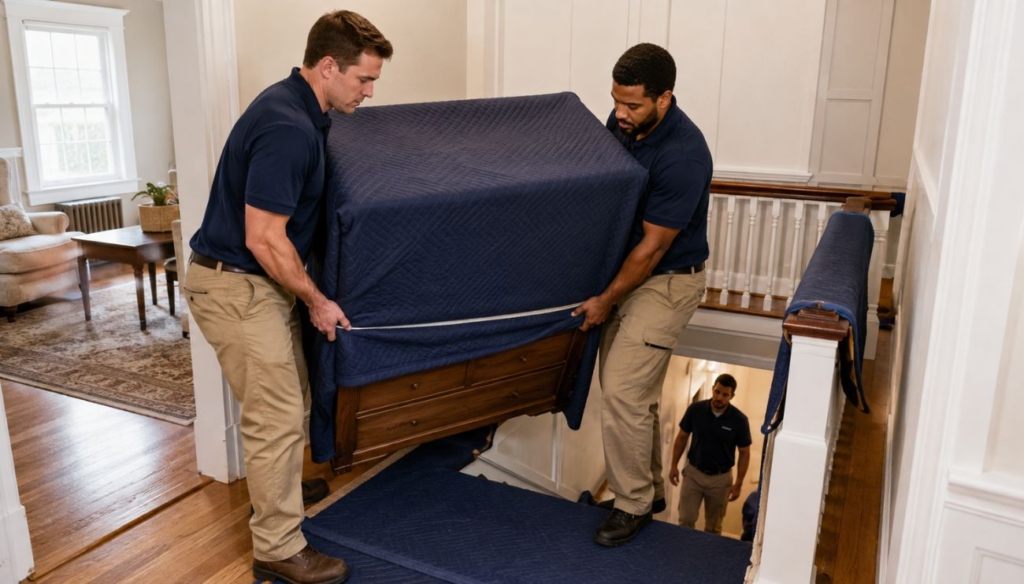
Why Basement and Attic Moves Require Extra Planning
A straight, open staircase may accommodate an item that cannot pass through a narrow stairwell with a sharp turn. The weight of the furniture is only one consideration. Its dimensions, shape, balance, available handholds, and the condition of the route all affect how difficult the move will be.
Common challenges include:
- Narrow doorways or stair openings
- Low attic ceilings and sloped walls
- Sharp turns at landings
- Uneven, steep, or short stair treads
- Limited space for movers to reposition
- Fragile railings, trim, floors, or finished walls
- Poor lighting in basements and storage areas
- Furniture without secure gripping points
These conditions can force people into awkward positions or make it difficult to keep a load under control. The Occupational Safety and Health Administration recommends planning material-handling tasks carefully, improving access, using appropriate equipment, and avoiding twisting while lifting. OSHA also advises seeking help when a load is too bulky or cannot be handled safely. Review OSHA’s heavy-lifting guidance for additional safety information.
Assess the Route Before Moving Anything
Do not rely on visual estimates alone. Measure the item and every part of the route before deciding how it should be moved.
Measure the furniture
Record the item’s height, width, and depth. Measure it again after identifying any removable legs, shelves, cushions, doors, drawers, or other components. For irregularly shaped items, note the widest and deepest points.
Measure the route
Check every doorway, stair opening, landing, ceiling, and turn between the item’s current and intended locations. Include:
- Door width and height
- Stair width at its narrowest point
- Ceiling clearance above the stairs
- Landing depth
- Space around corners
- Clearance around railings and newel posts
- The final room’s doorway and placement area
Compare the measurements while considering how the item may need to rotate. A piece that fits through each individual opening may still be unable to make a turn between them.
Inspect the condition of the stairs
Loose treads, unstable railings, damp basement floors, clutter, and inadequate lighting should be addressed before work begins. Keep children and pets away from the route and remove doors only when doing so is appropriate and the hardware can be stored safely.
Decide Whether Disassembly Is Necessary
Disassembly can reduce weight, improve clearance, and create better gripping points. Depending on the item, preparation may include removing:
- Table and sofa legs
- Drawers, shelves, and cabinet doors
- Bed frames and headboards
- Sectional sofa components
- Mirrors attached to dressers
- Glass panels or shelves
- Detachable components from exercise equipment
Place screws and small hardware in labeled bags and photograph the item before taking it apart. Avoid forcing joints that were not designed to separate.
Exercise equipment requires special care. Unplug powered equipment, secure moving parts, and follow the manufacturer’s instructions for folding, disassembly, transportation, and reassembly. If the manual is unavailable, locate the instructions for the exact model instead of following generic directions.
Fragile, unusually valuable, or difficult-to-handle pieces may benefit from custom packing and crating rather than standard blanket wrapping alone.
Protect the Furniture and the Home
Property protection should be installed before the item enters the stair route. The materials must remain secure underfoot and should not create a new tripping or slipping hazard.
A protection plan may include:
- Secured floor runners appropriate for the flooring surface
- Moving blankets around furniture
- Corner protection for walls and trim
- Padding on vulnerable railings and newel posts
- Door-jamb protection at tight openings
- Additional lighting in dark stairwells
Do not drag furniture directly across finished floors or allow loose blankets, plastic, or cardboard to shift on the stairs. For additional surface-preparation ideas, see the Massachusetts floor protection guide.
Use Equipment That Matches the Item and Route
Moving straps, furniture dollies, stair-climbing equipment, and other tools can help only when they are suitable for the item, the environment, and the people using them. Equipment should be inspected, properly rated, and used according to its instructions.
A standard furniture dolly is useful on level surfaces but may not be appropriate on stairs. Improvised ropes, unsecured ramps, window hoisting, or unverified anchor points can create serious hazards and should not be treated as shortcuts.
The National Institute for Occupational Safety and Health explains that lifting risk depends on more than weight. Hand position, travel distance, body angle, frequency, duration, and grip quality all matter. Its lifting-risk guidance helps illustrate why a simple universal “safe weight” does not apply to every moving situation.
Plan Communication Before the Lift
Everyone involved should know the route, final placement, and their role before the item is lifted. Choose one person to coordinate commands, and agree on simple instructions such as “lift,” “stop,” “step,” and “set down.”
No one should move before the full team confirms that they are ready. If a mover loses grip, visibility, footing, or control, the team should stop at the nearest safe position instead of trying to rush through the problem.
Rest points must be identified in advance. A narrow stair tread or tight turn may not provide enough space to set an item down safely.
When to Hire Professional In-Home Movers
Professional help is worth considering when:
- The item is too heavy or awkward for the available helpers
- The route includes steep stairs or tight turns
- The item must be disassembled and reassembled
- The furniture is antique, fragile, or especially valuable
- Walls, floors, or architectural details require extensive protection
- The item lacks secure handholds
- Specialized equipment may be required
- The move involves a treadmill, safe, large appliance, or gym machine
A professional assessment may also reveal that an item cannot be moved through the intended route safely. In that situation, the appropriate solution may be further disassembly, a different placement location, a specialist service, or not proceeding with the move.
Lifetime Moving Co provides residential moving services for household projects, including moves that require careful planning around stairs, interior finishes, and bulky furniture.
What Affects the Cost of an In-Home Move?
There is no reliable flat rate that applies to every basement or attic move. The price depends on the actual labor and complexity involved. Important factors include:
- Number and size of the items
- Required crew size
- Number and configuration of staircases
- Disassembly and reassembly work
- Protection materials
- Special handling or equipment requirements
- Travel, scheduling, and company minimums
- Whether packing, transportation, or storage is also needed
For a useful estimate, provide photographs of the furniture, staircases, landings, and doorways. Include measurements, model numbers for exercise equipment, and details about fragile or valuable pieces.
Questions to ask before booking
- Is the estimate based on the photographs and measurements provided?
- How many movers are expected to be needed?
- Are disassembly and reassembly included?
- What property-protection materials are included?
- Are there minimum labor charges or additional fees?
- Are there items or access conditions the company cannot handle?
- What should be prepared before the crew arrives?
How to Prepare for Moving Day
- Confirm the route and measurements.
- Empty drawers, shelves, and cabinets unless instructed otherwise.
- Remove loose décor and breakable items from nearby areas.
- Clear the entire path, including landings and the destination room.
- Provide bright lighting along the route.
- Reserve space for removed hardware and components.
- Keep children and pets in a separate, secure area.
- Tell the crew about damaged stairs, loose railings, or other hazards.
- Confirm the intended placement and orientation of each item.
If the project is part of a larger relocation, these packing and preparation tips can help organize the rest of the move.
Frequently Asked Questions
Can movers relocate furniture within the same house?
Yes. Many residential movers handle in-home projects such as moving furniture between floors, rearranging rooms, or clearing space for renovations. Confirm the scope and item list when requesting the estimate.
Can every piece of furniture be moved into a basement or attic?
No. The item must fit through the complete route and be controllable throughout the move. Restricted access, structural limitations, item construction, or unsafe conditions may make a proposed move impractical.
Should drawers stay inside a dresser?
Removing drawers usually reduces weight and prevents them from sliding open. However, some furniture should be handled according to its construction and the mover’s preparation instructions.
Will movers disassemble exercise equipment?
Capabilities vary by company and machine. Provide the manufacturer, model number, photographs, and manual before booking. Some equipment may require a manufacturer-authorized technician.
How far in advance should an in-home move be scheduled?
Availability varies by company, season, crew requirements, and project complexity. Contact the mover as soon as the item list and intended date are known, especially when an on-site assessment or special equipment may be needed.
Plan Your Dedham In-Home Move
Basement and attic furniture moves should be approached as planned handling projects, not casual lifting jobs. Accurate measurements, a clear route, appropriate protection, controlled communication, and a realistic assessment of the item can help prevent avoidable problems.
For help evaluating a difficult staircase or bulky item, contact Lifetime Moving Co and provide photographs, measurements, and a complete item list for a project-specific estimate.