Moving heavy furniture between floors in Cambridge, MA starts with an access plan. A dresser that fits through a bedroom door may still be too large to turn on a stair landing. An elevator may have enough room inside but a doorway that limits what can enter.
Whether you are rearranging a house or moving furniture within an apartment building, use this guide to document your items, check the route, and coordinate the job with your movers. Lifetime Moving Co offers moving services across Massachusetts, including help with furniture rearranging.
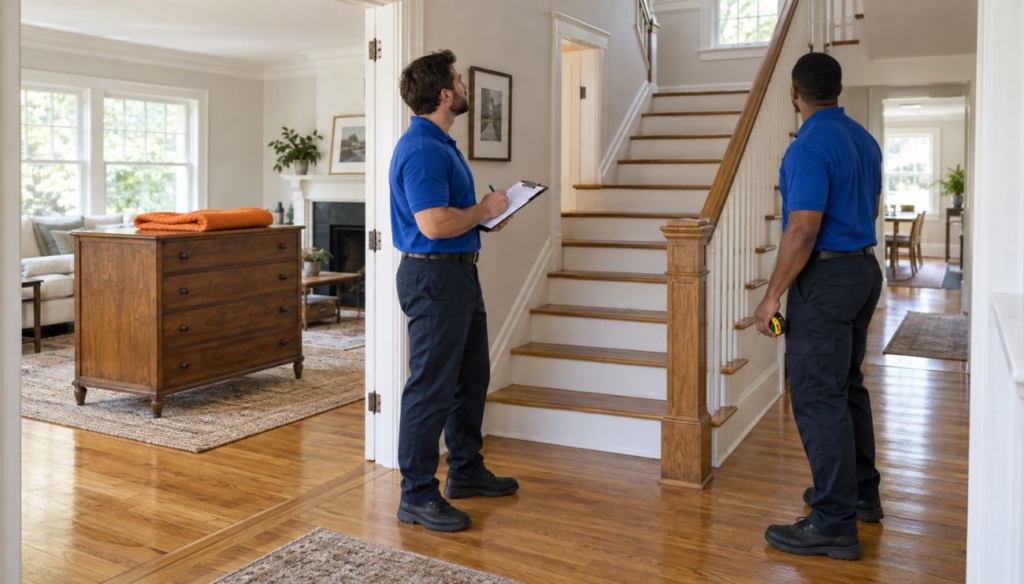
1. Make a Furniture and Destination List
List each item, its current floor and room, and where you want it placed. Record its width, depth, and height, including protruding handles, arms, and feet. Add the model or manufacturer when known, and use a documented weight if available rather than guessing.
Photograph existing scratches, loose joints, glass panels, and other fragile features. Also photograph the route, including stair turns and the approach to each doorway. These records help explain the job and document condition; they do not guarantee coverage for damage.
For an indoor-only job, explain that you need in-home furniture moving rather than transportation to another address. Include any basement or attic access and whether the furniture must be moved back after renovations.
2. Measure the Whole Route Between Floors
Check the path from the item's starting position to its final location. A single doorway measurement or diagonal furniture measurement cannot confirm that the entire route will work.
- Doorways: Measure the usable width with the door open and the clear opening height. Account for handles and trim.
- Hallways: Record the narrowest width and the space before and after each turn.
- Stairs: Measure the narrowest usable width between walls and handrails, and photograph the stair shape.
- Landings: Record both dimensions and any doors that open into the turning space.
- Overhead clearance: Note low ceilings, soffits, and lights along the stair run and at turns.
- Fixed obstacles: Include radiators, newel posts, and other projections.
Share these details before booking. Your movers should assess the furniture, protective wrapping, handling space, and complete route together. If clearance is uncertain, ask whether an on-site assessment is needed.
Do not remove handrails, building fixtures, or doors on your own to make a piece fit. Discuss any proposed changes with the mover and property owner or building manager first.
3. Agree on Disassembly and Protection
Some furniture can be reduced in size, but detachable parts vary by model. Check manufacturer instructions before removing sofa legs, recliner backs, table legs, shelves, or drawers. Tell the movers about delicate finishes, damaged joints, and furniture that has been assembled or repaired before.
Confirm who will empty, disassemble, protect, and reassemble each piece. Keep hardware in labeled bags stored with the job's supplies; avoid sticking tape directly to finished furniture.
For antiques, glass tops, mirrors, or marble components, discuss suitable protection in advance. Lifetime Moving Co's custom packing and crating services address fragile and valuable items, although not every move between floors needs a crate.
4. Confirm Elevator Access and Building Rules
If you live in a managed building, ask whether furniture moves between floors require a reservation, even when nothing leaves the property. Get the building's own instructions instead of assuming a standard booking window, fee, or insurance limit.
- Which elevator and entrance are approved for the move?
- What are the clear door opening, usable cab dimensions, and posted load capacity?
- What dates, hours, and reservation periods are available?
- Is a certificate of insurance required, and what exact details must the mover provide?
- Who supplies elevator padding and protection for floors and common areas?
- Are there forms, deposits, fees, or staff-supervision requirements?
The load assessment must include furniture, equipment, and people. A larger-looking elevator is not proof of sufficient capacity, and fitting inside the cab does not guarantee that a piece can pass through its doors.
Arrange any service operation with building staff. Never force elevator doors or hold them with your body. The New York City Department of Buildings' general elevator safety guidance recommends using the door-open button instead. Your Cambridge building's access rules still need separate confirmation.
5. Prepare the Route and Arrival Details
Clear loose rugs, cords, shoes, toys, and boxes from the agreed route. Keep children and pets away from the work area, and arrange suitable protection with the crew without creating loose or slippery surfaces.
Keep exits accessible throughout the job. The U.S. Fire Administration's home fire escape guidance emphasizes keeping doors and windows unblocked. Do not wedge fire doors open or leave furniture stored in an escape route.
Send the movers your inventory, route photos, building instructions, and an on-site contact number. Arrange entry with the building or share any necessary access details through an agreed private channel.
Check Parking Only Where It Applies
If the job requires reserved curb space for a moving vehicle, review Cambridge's official street occupancy and moving van permit information. The city's moving van permit reserves street space for a vehicle while goods move into or out of a building. It is not a blanket permission requirement for rearranging furniture indoors. Confirm the appropriate parking arrangement for the vehicle attending your job.
6. Let the Crew Assess Heavy Stair Carries
There is no universal rule that the taller person belongs at the bottom of the stairs or that two people and lifting straps are enough for every dresser. The item, route, equipment, and crew's capabilities determine the handling plan.
NIOSH identifies forceful lifting and awkward postures among risk factors for musculoskeletal injuries. For a heavy or awkward stair move, have a trained, appropriately equipped crew assess the job before lifting begins. If an item does not fit or access changes, stop and reassess rather than forcing it through.
Example: Planning a Dresser Move Upstairs
Suppose a dresser needs to move from a first-floor bedroom to a second-floor room. Empty its contents, document its condition, and confirm with the mover whether its drawers or other parts should be removed. Share measurements and photos of both bedroom doors, the stairs, and the landing.
Agree on the final position before the carry. After placement, arrange any necessary furniture anchoring before returning the room to use. Follow the manufacturer's instructions and the CPSC's Anchor It guidance on preventing furniture tip-overs.
7. Get a Quote Based on Your Actual Access
A generic per-floor charge cannot tell you what your job will cost. Ask for a written quote that explains the furniture included, stairs or elevator access, disassembly, protection, and any minimum charge or other applicable fees.
Lifetime Moving Co's moving FAQs explain that pricing depends on the job and that the company offers flat and hourly rates. Confirm the pricing method for your specific in-home move.
To plan a furniture move between floors in Cambridge, contact Lifetime Moving Co for a quote. Provide your item list, destination rooms, route measurements, and building requirements so the team can review the scope.
Key Takeaways
- Measure furniture and the full route, including stair turns and overhead clearance.
- Confirm disassembly, protection, elevator access, and building paperwork before moving day.
- Keep exits clear and let the crew decide how to handle heavy stair carries.
- Get job-specific pricing instead of assuming a fixed stair surcharge.
Frequently Asked Questions
Can movers help if my furniture stays in the same home?
Yes. Lifetime Moving Co lists furniture rearranging and in-home moving among its residential services. Describe the items and floors involved so the team can assess the work.
Do I need to reserve an elevator for an indoor furniture move?
Ask building management. A reservation or other approval may apply even if the furniture remains in the building. Use the property's confirmed schedule and requirements.
What if the furniture will not fit around a stair landing?
Stop and have the movers reassess. Manufacturer-approved disassembly or an approved alternative route may help. Some items cannot use the available route without additional specialist planning.
How much does moving heavy furniture between floors cost?
The price depends on the job's scope and access. Request a written quote that includes any applicable stair charges, minimum booking, disassembly, and protection costs. Ask the mover to confirm which charges apply to your specific job.
What should I check before the crew leaves?
Confirm placement and agreed reassembly, inspect the furniture and route, and account for all hardware. Make sure exits are clear and any necessary anchoring is completed before the furniture is used.