Moving a sofa across a room may be straightforward. Moving a loaded armoire, refrigerator, piano, safe, or oversized sectional through a narrow hallway or between floors is a different project. The weight matters, but so do the item's shape, balance, construction, route, and destination.
For Shrewsbury homeowners, an in-home move may be needed during a renovation, flooring project, room redesign, appliance replacement, or accessibility update. Careful planning can protect the people doing the work, the item itself, and surfaces throughout the home. This guide explains how to prepare and what to confirm before anyone begins lifting.
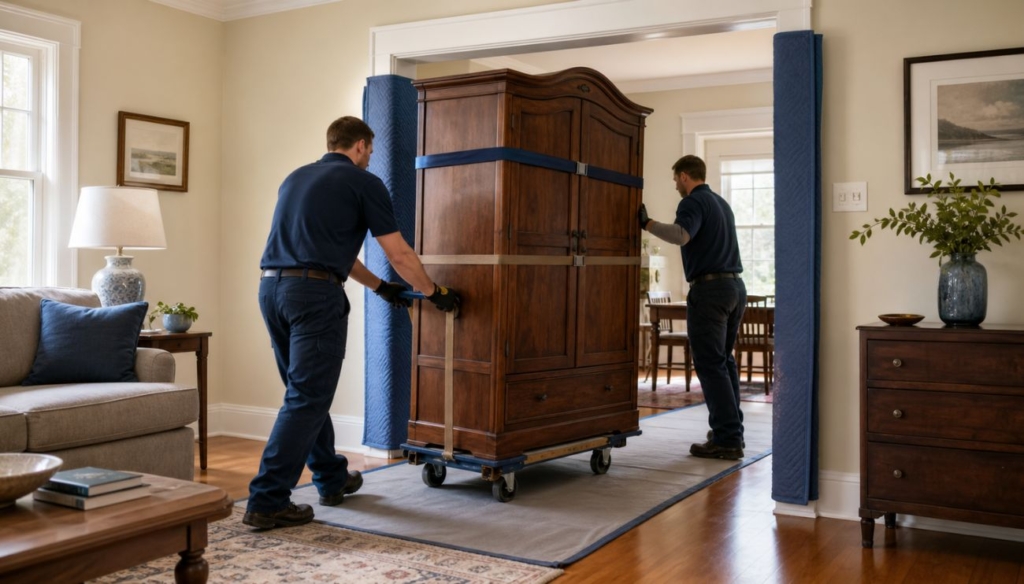
Why Heavy In-Home Moves Need a Project-Specific Plan
A product's advertised capacity does not prove that a particular item can be moved safely. Equipment ratings apply under defined conditions, while a real home introduces stairs, turns, thresholds, sloped floors, limited headroom, delicate finishes, and objects with uneven centers of gravity.
Weight is only one part of lifting risk. The NIOSH Revised Lifting Equation considers factors such as hand position, travel distance, twisting, frequency, duration, and grip. Although that tool is designed for occupational assessments, it illustrates why there is no universal DIY weight limit.
Before requesting an estimate, gather the information a mover needs to evaluate the entire task rather than only the object.
Document the Item Before It Moves
Record the make, model, approximate weight, and assembled dimensions. Photograph all sides, including the base, feet, doors, drawers, controls, glass, decorative trim, and existing damage. If the item has a manual, locate the manufacturer's current instructions for transport, disconnection, disassembly, and reinstallation.
Tell the mover about:
- Stone, glass, mirrored, antique, or unusually delicate components
- Removable shelves, doors, drawers, legs, cushions, or hardware
- Internal mechanisms that must be locked or stabilized
- Anchors, plumbing, gas, electrical, or ventilation connections
- Known manufacturer or technician requirements
- Unusually high value or sentimental importance
Do not assume the moving crew will disconnect an appliance, unbolt a safe, tune a piano, or recalibrate electronic equipment. Those tasks may require another qualified professional and should be assigned before moving day.
Measure the Full Route
Measure the item in its transport configuration, not only as it currently stands. Then inspect the route from the starting position to the exact destination.
Important measurements and conditions include:
- Door openings after accounting for handles, trim, and hinges
- Hallway width and space available at turns
- Stair width, pitch, landings, railings, and overhead clearance
- Thresholds and transitions between flooring materials
- Low light fixtures, wall-mounted objects, and ceiling changes
- Whether doors or railings may be removed and who may remove them
- The floor condition and open working space at both ends
Photos are useful, but they do not replace measurements or an on-site assessment when the route is tight. An item that fits through each doorway separately may still be unable to make a hallway or stairway turn.
Prepare the Starting Room and Destination
Clear both rooms before the heavy item is handled. Remove rugs, lamps, plants, small furniture, wall decorations, toys, and other obstacles. Keep children and pets outside the work area. Identify a temporary staging location for removable parts and label the hardware for each item.
Mark the final placement with painter's tape only if it is safe for the surface, or use a paper floor plan. Check that doors, drawers, appliance vents, equipment controls, and service panels will remain accessible after placement.
For an appliance, confirm that the destination has the correct utility connections and required clearances. A qualified plumber, electrician, gas technician, appliance installer, or HVAC professional should handle work that falls within their trade.
Match Protection to the Home's Surfaces
Protection should be selected for the actual floor, object, route, and moving equipment. A material suitable for a clean hardwood floor may not perform the same way on carpet, tile, a staircase, or a wet entry.
Floors
Before the move, clean the route so grit cannot become trapped beneath protective material. Floor coverings should lie flat, remain stable, and be appropriate for the surface. Sliders, dollies, runners, boards, and other systems must be compatible with the item and used within their instructions.
Dragging an item directly across a finished floor is not a safe substitute for proper equipment. The mover should determine how the load will be supported and how turning or braking forces will affect the surface.
Walls, Doors, and Trim
Door jambs, corners, railings, and stair landings deserve special attention because they reduce the space available for controlled movement. Depending on the route, protection may include padded covers, moving blankets, corner protection, or rigid barriers. These materials must be secured without damaging paint or finishes and without creating a trip hazard.
The Item Itself
Loose parts should be removed or secured according to the manufacturer's instructions. Glass, stone, mirrors, finished wood, controls, and protruding hardware may require different protection. Wrapping should not place harmful pressure on fragile components or block required grip points.
Heavy Items That May Need Specialized Handling
Large Cabinets, Armoires, and Bookcases
Empty these pieces before moving them. Remove loose shelves and drawers, protect glass and mirrors, and determine whether the furniture was designed to be disassembled. Antique or custom furniture may need a specialist who understands its joinery and finish.
Sectional Sofas and Oversized Seating
Identify how the sections connect and whether legs, backs, or arms are removable. Do not force concealed connectors. The model information or manufacturer's instructions may be needed to separate and reassemble the piece without damaging its frame or upholstery.
Refrigerators and Other Large Appliances
Appliances may involve water, electricity, gas, drainage, ventilation, sensitive electronics, or manufacturer-specific transport rules. Confirm who will disconnect, stabilize, move, reconnect, level, and test the appliance. Protect floors from both the load and any residual water.
Pianos and Large Musical Instruments
A piano's weight, finish, internal mechanism, and balance make it a specialty item. Provide the exact type and dimensions when requesting an estimate. Confirm that the mover accepts that piano and whether a separate technician should inspect or tune it after relocation.
Safes and Secured Storage Cabinets
Safes can create concentrated loads and may be anchored to the structure. Their contents, access controls, and internal components also require advance planning. Disclose the exact model, estimated weight, anchoring method, destination, and every stair or threshold.
Ask whether the moving company handles that category of safe. Arrange the lawful handling of firearms, ammunition, documents, medications, cash, jewelry, and other restricted or irreplaceable contents separately; do not assume they can remain inside during the move.
Stairs Change the Risk and Equipment Requirements
A straight, level route and a staircase are not equivalent projects. Stairs introduce changes in elevation, restricted footing, overhead clearance, railings, landings, and the possibility of an uncontrolled load.
Do not select a stair-moving method from a generic online tutorial. The crew must match its process and equipment to the item's weight, shape, stability, grip points, staircase construction, and available working space. Some combinations of item and route may require a specialty mover, temporary access changes, or a different destination.
What Professional In-Home Movers Can Do
Lifetime Moving Co lists furniture rearranging and in-home moving among its residential moving services. Its website describes moving furniture and belongings to other rooms or floors and clearing items for renovations.
That does not mean every heavy or specialty item is automatically included. When requesting help, disclose the complete inventory and route. Ask the company to confirm in writing:
- Whether it accepts each specific item
- Whether an on-site assessment is required
- Who handles disassembly, disconnection, anchoring, and reinstallation
- What the homeowner must complete before arrival
- How floors, walls, doors, stairs, and the item will be protected
- How pricing, minimum charges, and additional labor are calculated
- What coverage, exclusions, and claims process apply to an indoor-only move
Do Not Assume Insurance Terms
Homeowners policies, moving-company coverage, valuation options, and third-party products have different terms and exclusions. Rules discussed for interstate transportation may not apply to furniture rearranged at one address.
Ask the moving company for the terms that govern the exact job. If the item or home surface is especially valuable, discuss the scenario with your insurer before work begins. Keep photographs, model information, estimates, and written confirmations with the project records.
Frequently Asked Questions
Can movers rearrange one heavy item within my home?
Some movers accept single-item and room-to-room projects. Availability, minimum charges, item eligibility, and access requirements vary, so provide the complete details when requesting an estimate.
Should I empty furniture before the movers arrive?
Remove ordinary contents from cabinets, bookcases, drawers, and wardrobes unless the mover gives different written instructions. Ask before removing built-in components or disassembling furniture.
Can movers take a heavy safe or piano upstairs?
Possibly, but the answer depends on the exact item, route, structure, and mover's specialty capabilities. An assessment may determine that a different destination or specialist is needed.
Will movers disconnect and reconnect an appliance?
Do not assume so. Confirm the scope for the exact appliance and arrange qualified trade or manufacturer-authorized service when required.
Does standard moving coverage apply inside one home?
Terms vary by company, contract, and job. Request a written explanation of the coverage and exclusions that apply to the item, home surfaces, disassembly, and reassembly.
Prepare the Item, Route, and Questions
A safer in-home move begins before the crew arrives. Document the item, measure the full route, clear both rooms, identify specialty requirements, and resolve utility or structural questions in advance.
Shrewsbury homeowners can contact Lifetime Moving Co with photos, measurements, model information, and access details to confirm current service availability and request an estimate.