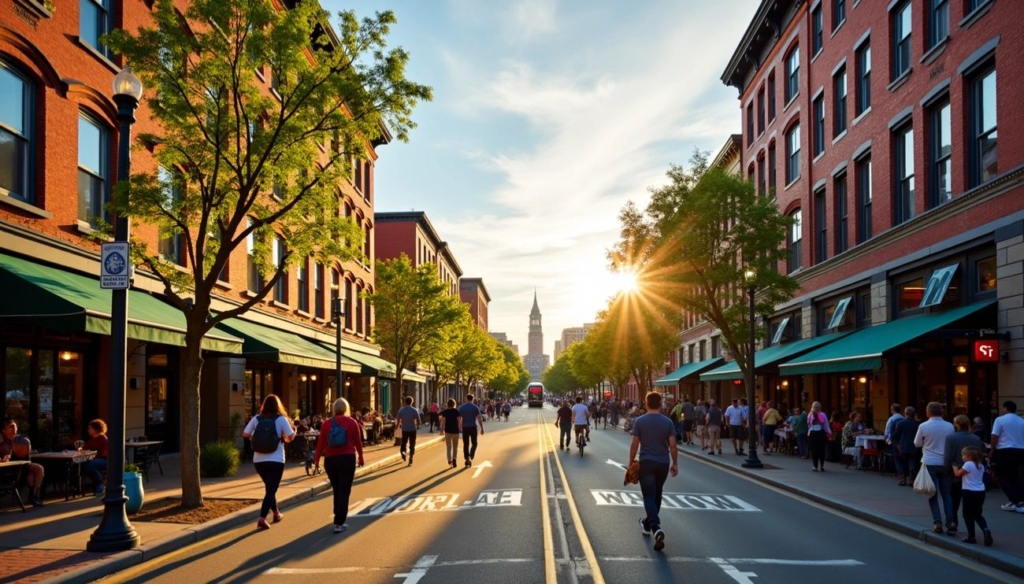
Thinking about moving to Somerville MA in 2025? This city packs 82,140 people into just 4.1 square miles, creating one of Greater Boston's most connected communities. Walk Score of 86 and Bike Score of 88 mean you can actually walk or bike to most places you need to go.
Somerville attracts young professionals and families for good reason. The median age is 32.6—20% younger than the Massachusetts average. Crime rates sit 46% lower than national numbers, making it a safe choice for families. The median home value stands at $861,806, with projections hitting $1.1 million by 2025. Most residents rent instead of buy, with 68% choosing rental housing.
We've helped hundreds of families move to Davis Square, Union Square, and neighborhoods throughout Somerville. The narrow streets and triple-decker buildings require movers who know the area. Our local expertise means we understand exactly what it takes to make your Somerville move smooth and stress-free.
This guide covers everything you need to know about living in Somerville. From the Green Line Extension to choosing the right neighborhood for your lifestyle, we'll walk you through what makes this city special and how to plan your move here successfully.
What makes Somerville different from Boston and Cambridge
Located between Boston and Cambridge, Somerville gives you the best of both cities while keeping its own character.
Proximity without the price tag
Just three miles from downtown Boston, Somerville delivers city access without the premium costs. Living in Boston costs 5.5-7.4% more than Somerville, with rent running 10.1% higher. While Somerville's real estate stays competitive—median single-family homes hit $1 million in 2023—you get more value here. Renovated two-bedroom condos sell under $700,000. Three-family buildings go for around $1.5 million.
Getting to work? The Green and Red Lines put you downtown in under 30 minutes. No need to pay Boston prices when you can live here and commute easily.
A creative and community-first culture
Somerville has one of the highest concentrations of artists per capita in the United States. You see this creativity everywhere. ArtBeat Festival brings Davis Square to life. The historic Somerville Theater shows films you won't find elsewhere. The Center for the Arts at the Armory creates opportunities for artists and brings people together.
The community embraces diversity. Immigrants from Brazil, Haiti, and other countries call Somerville home. Public schools teach students who speak over 50 languages. Residents stay involved in city planning, working to keep the city accessible and affordable.
Why young professionals and families choose Somerville
Somerville earned the #1 spot as America's most family-friendly city in 2023. Why? Every resident lives within a 10-minute walk of one of the city's 60 parks. Young professionals find plenty of job opportunities, especially with startups and research companies connected to nearby universities.
Families enjoy the LEGO Discovery Center, movie theaters, and bowling at Assembly Row. The Green Line Extension improved access to Union Square and East Somerville. You get urban amenities with a real sense of community—something harder to find in bigger cities.
Getting around Somerville: Transportation and walkability
Getting around Somerville is easy. The city ranks as the 7th most walkable city and 9th most transit-friendly city in America. When you're planning your move here, knowing your transportation options helps make settling in smoother.
MBTA Red and Green Line access
The MBTA subway system connects Somerville to the rest of Greater Boston. Davis Square sits on the Red Line, with about 12,000 daily boardings before the pandemic. You get direct connections to Cambridge and downtown Boston.
The Green Line Extension changed everything for Somerville transit. New stations opened at East Somerville, Gilman Square, Magoun Square, Ball Square, Medford/Tufts, and Union Square. This means better access to neighborhoods that were harder to reach before.
Bus service covers the city with 14 MBTA routes that averaged 16,000 weekday boardings pre-pandemic. The city offers free transit passes for students, low-income residents, and city employees.
Bike lanes and pedestrian-friendly streets
Somerville earned its "Biker's Paradise" reputation. The city plans 30 miles of protected bike lanes by 2030, with 3.28 miles going in during 2025.
The current 30-mile bike network will expand to 88 miles of connected routes. For walking, Somerville scores an impressive Walk Score of 89. Most errands can be done on foot. About 12.5% of residents walk to work—11th highest in the U.S..
Parking permits and car-free living options
Many residents go car-free in Somerville. If you need a car, parking permits are available:
- Resident permits (costs vary)
- Visitor permits ($20 for 2-day; $40 for 3-day)
- Extended visitor permits ($25 for 3-7 days; $35 for 30 days)
Car-free living works well here, but has some limits. Getting to suburbs with poor transit can be tough. Areas like Winter Hill and Ten Hills have fewer transit options. Still, the city keeps improving transportation infrastructure to make car-free living more practical.
Where to live: A breakdown of Somerville neighborhoods
Each Somerville neighborhood has its own personality. Understanding these areas helps you find the right fit for your lifestyle and budget.
Davis Square: Lively and transit-connected
Davis Square transformed completely when the Red Line arrived in 1984. What was once a rough area is now Somerville's most exciting neighborhood. You'll find boutique shops, entertainment venues, and the historic Somerville Theater showing indie films. Transit options are excellent, with multiple bus lines (87, 88, 89, 90, 94, and 96) connecting you to Boston.
Housing costs reflect the area's popularity. Davis Square is the most expensive part of Somerville, with home values climbing 10-13% annually. Expect to pay around $2328 for a studio, $2497 for a one-bedroom, and $3191 for a two-bedroom in 2025. Properties sell fast, often above asking price.
Union Square: Up-and-coming with GLX access
The Green Line Extension changed everything for Union Square. This neighborhood now draws food lovers from across Boston—locals say you'll find the city's best donuts here. Bow Market brings together indie retailers, creating a unique shopping experience.
Development is booming. Union Square's development includes 2.4 million square feet of lab, office, housing, and retail space. The 10 Prospect building, delivering in Q3 2023, shows how the area is growing into an innovation hub.
Winter Hill: Quiet and residential
Winter Hill feels more residential than other Somerville areas. The neighborhood keeps some connection to the city's industrial past while offering tree-lined streets, parks, and historic homes. Families love it here—89% call it dog-friendly and 56% say kids play outside regularly.
Housing stays more affordable than Davis Square. Median single-family home values sit at $816,000, with condos averaging $596,000. Two new Green Line stations nearby have made the area more attractive. Most shops and restaurants line Broadway, including Winter Hill Brewing Company.
East Somerville: Diverse and affordable
East Somerville is one of the city's oldest neighborhoods. The diversity stands out—50.6% white and 35.9% Hispanic residents. With a diversity score of 68 out of 100, it's more diverse than most U.S. neighborhoods. Food lovers should check out the annual East Somerville Foodie Crawl.
Community involvement runs strong here. The East Somerville Initiative brought together over 350 residents to plan improvements while "minimizing displacement of diverse populations".
Assembly Row: Modern living and shopping
Assembly Row offers something completely different. This newer development has 500 units in the 24-story Miscela building and over 70 shops and restaurants. The Orange Line gets you to downtown Boston in just 7 minutes.
The six-acre riverfront park includes the LEGO® Discovery Center, Paintbar, and AMC theater complex[203]. Curbed named it "Neighborhood of the Year" twice, making it one of Somerville's most sought-after places to live.
What to expect when moving to Somerville
Planning your Somerville move means understanding the practical details that make the difference between a smooth relocation and a stressful one. We've helped families navigate these challenges for years.
Cost of living and rent trends
The cost of living in Somerville is 58% higher than the national average. Housing costs hit 152% above national figures. Current average rent stands at $3,265 monthly, with studios around $2,779 and two-bedrooms reaching $4,080. Home buyers face a median price of $899,400. Rent increased 1.2% this past year, adding about $39 monthly.
Is Somerville MA safe?
Somerville offers good safety for a dense urban area. Crime rate sits at 16.57 per 1,000 residents, with property crime (14.12 per 1,000) much more common than violent crime (2.45 per 1,000). Your odds of violent crime are 1 in 408. The city ranks safer than 42% of American cities. Safety varies by neighborhood, with northwest areas typically the safest.
Tips for working with Somerville movers
Professional movers charge $140-$149 per hour for two-person crews. Three-person teams run about $190 hourly. Book your move 2-4 weeks ahead, especially during busy seasons. Experienced movers know how to handle Somerville's narrow streets and local requirements.
We understand these streets inside and out. Our crews can navigate the tightest corners and know exactly which permits you'll need for a stress-free move.
How to get a moving truck permit
Somerville requires a Street Occupancy Permit for moving trucks. Apply at least 2 weeks before your move date. Permits cost $40 daily (up to three days) plus $5 for parking signs. Metered spots add $35 per day. Post your "No Parking" signs 48 hours before moving.
Best time of year to move
Fall and winter offer the best rates and availability. Weekdays mean less traffic and congestion than weekends. Summer brings high competition for rentals and moving services—plan 1-2 months ahead for summer moves.
Our team can help you time your move perfectly and handle all the permit paperwork that makes moving day successful.
Conclusion
Somerville offers the perfect balance between city living and community feel. The walkable streets, excellent transit, and vibrant neighborhoods make it an ideal choice for young professionals and families.
Each neighborhood has its own character. Davis Square brings energy and transit connections. Union Square offers great dining and new developments. Winter Hill provides quiet residential streets. East Somerville delivers cultural diversity. Assembly Row gives you modern shopping and entertainment.
We know moving to Somerville presents unique challenges. Those narrow streets and triple-decker buildings require movers who understand the area. The higher costs mean you need to plan your budget carefully.
Our team has successfully completed moves to every Somerville neighborhood. We handle the moving truck permits, navigate the tight streets, and time your move to avoid the busiest seasons. These details make the difference between a stressful move and a smooth one.
Somerville continues attracting people who want urban convenience without losing that neighborhood feeling. The city's focus on walkability and public transit means you can enjoy Greater Boston while still having your own community space.
Ready to make Somerville your new home?
We provide services for all types of Somerville residential moves. Our local moving experts know every street in Davis Square, Union Square, and throughout the city. We understand exactly how to handle those historic triple-deckers and can walk you through the permit process.
Keep your Somerville move on schedule, on budget, and stress-free!
Key Takeaways
Moving to Somerville in 2025 offers exceptional urban living with strong community connections, but requires careful planning for costs and logistics.
• Somerville delivers big-city amenities at lower costs than Boston—5.5-7.4% cheaper overall with excellent transit access to downtown • The city ranks #1 for family-friendliness with 60 parks, Walk Score of 86, and crime rates 46% below national average • Each neighborhood offers distinct advantages: Davis Square for nightlife, Union Square for dining, Winter Hill for families, Assembly Row for modern living • Expect higher living costs (58% above national average) with median rent at $3,265/month and home prices around $899,400 • Book movers 2-4 weeks ahead and secure street occupancy permits ($40/day) at least 2 weeks before moving day
With its impressive bike infrastructure, Green Line Extension access, and thriving arts scene, Somerville represents the sweet spot for those wanting urban convenience without sacrificing community spirit. The city's commitment to walkability and public transit makes car-free living genuinely viable for many residents.
FAQs
Q1. What makes Somerville stand out from other Boston-area cities? Somerville offers big-city amenities at lower costs than Boston, with excellent transit access, a thriving arts scene, and a strong sense of community. It's ranked as America's most family-friendly city, with numerous parks and a high concentration of artists per capita.
Q2. How easy is it to get around Somerville without a car? Very easy. Somerville has excellent public transportation with MBTA Red and Green Line access, extensive bike lanes, and highly walkable streets. It's ranked as the 7th most walkable and 9th most transit-friendly city in America, making car-free living a viable option for many residents.
Q3. Which Somerville neighborhood is best for young professionals? Davis Square is often considered ideal for young professionals. It's the most vibrant hub in Somerville, offering boutique shopping, entertainment venues, and excellent transit connections. However, it's also the priciest area in the city.
Q4. How much should I budget for housing in Somerville? As of 2025, the average rent in Somerville is around $3,265 per month, with studios costing approximately $2,779 and two-bedrooms reaching $4,080. For homebuyers, the median home price is about $899,400. Keep in mind that housing costs in Somerville are 152% above the national average.
Q5. What do I need to know about moving to Somerville? Plan your move well in advance, especially during peak seasons. Apply for a Street Occupancy Permit at least 2 weeks before moving day, which costs $40 per day. Consider moving during fall or winter for lower rates and better availability. Expect to pay around $140-$149 per hour for a two-person moving crew.