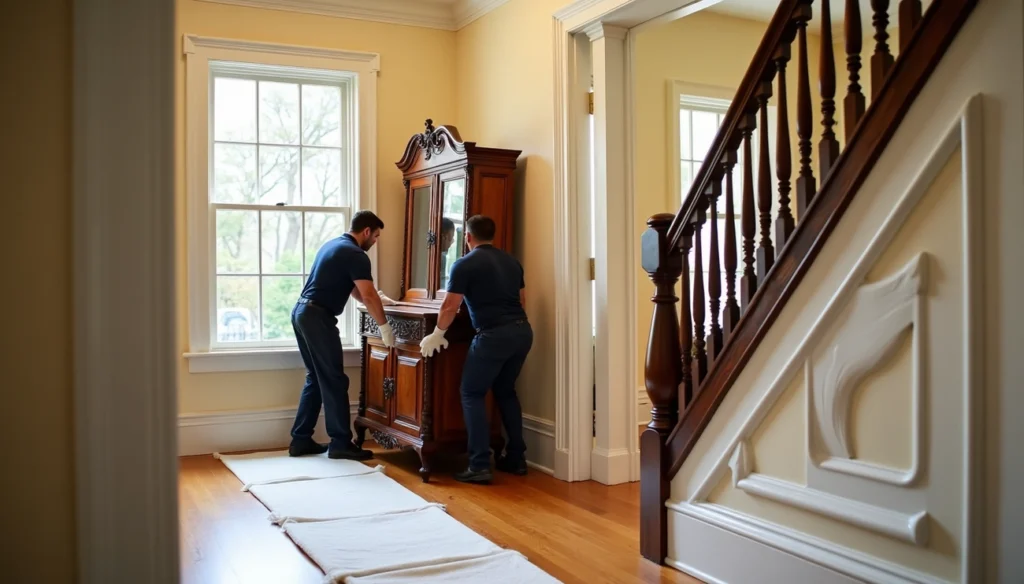
Specialized moving services Brookline homeowners trust become essential when protecting valuable antiques through narrow, winding staircases of century-old estates. Brookline's historic architecture presents unique challenges, from tight doorways to original hardwood floors that require careful protection during transport.
We understand that moving antiques in these homes demands more than standard relocation services. Our brookline movers use custom crating solutions and professional-grade floor runners to safeguard both your treasured items and the property's historic features. We coordinate timing with Buffer Zone school schedules to ensure smooth logistics.
This piece covers what you must know about protecting antiques during moves in Brookline's historic homes. You'll learn specialized packing techniques and property protection methods, along with timing considerations that make relocation successful.
Understanding Brookline's Historic Home Architecture
100-Year-Old Construction Features
Historic homes in Brookline were built with old-growth lumber that is different from materials available now. These trees, ranging from 100 to 500 years old, produced wood that was stronger and more rot-resistant than what we find in modern construction. Old-growth forests had high density and allowed trees to grow slowly. This created tighter growth rings and sturdier timber.
Dimensional lumber sizes changed over the decades. Homes built before the 1920s had 2x4-inch wall studs that measured exactly 2x4 inches when installed. Nominal 2x4 lumber shrank to 1-1/2 x 3-1/2 inches in actual dimensions by the 1960s. This variation affects how our [brookline movers](https://lifetimemovingco.com/brookline-movers/) guide through tight spaces and protect structural elements during relocations.
Narrow and Winding Staircases
Colonial and Federal style stairs, common in homes from the late 18th century to around 1830, present the biggest problems that antique movers MA specialists face. These staircases function as glorified ladders. They have narrow, small steps that are also deep. People of this era wanted to minimize room and created steep pitches that prove difficult when moving large items.
The pitch on these servant stairs can be so intense that people sometimes remove their socks to avoid slipping. Maneuvering antiques through these steep, narrow passages requires specialized equipment and technique that [brookline ma](https://lifetimemovingco.com/brookline-movers/) residents trust. Custom crating solutions become necessary when standard moving methods won't accommodate these architectural constraints.
Original Hardwood Flooring Considerations
Historic hardwood floors display character through slight color variations and softened edges. Wear patterns develop over decades. This patina tells a story but remains vulnerable to damage during moves. A 125-pound person in high heels exerts 2,000 pounds per square inch of impact. An exposed heel nail can generate 8,000 pounds per square inch.
Professional-grade floor runners protect these irreplaceable surfaces. Standing water can dull finishes and damage wood. It leaves discoloring residue. We avoid wet-mopping and sliding furniture. Instead we use protective materials that preserve original floors without compromising their historic integrity.
Doorway and Hallway Dimensions
Historic hallways measure narrower than modern standards. Current building codes require minimum 36-inch widths. Older homes sometimes feature hallways of only 30-36 inches. Standard residential hallways now run 36-42 inches wide, but Brookline's historic properties often fall below these dimensions.
Moving antiques in Brookline's Buffer Zone requires coordination with school schedules and careful planning. Visit Lifetime Moving Co. to discuss your specialized moving services Brookline needs.
Moving a piece of history? Trust Lifetime Moving Co. for specialized care of your Brookline antiques.
Specialized Moving Services for Antique Protection
Custom Crating Solutions for Fragile Items
Custom wooden crates provide protection that standard boxes cannot match. These structures get built to exact dimensions of individual pieces and account for weight distribution and vulnerable areas. Internal padding systems use archival-quality materials that prevent chemical reactions with historical finishes.
Professional movers assess each piece's condition before crating begins. The design gives special attention to loose joints, previous repairs and delicate inlays. Items like chandeliers or marble-topped tables need crates with foam inserts and suspension systems that prevent bending or cracking during transit.
Climate-Controlled Transportation Methods
Wood responds to humidity and temperature changes in ways that damage joints or crack finishes. Climate-controlled trucks maintain stable conditions throughout moves, whatever the outside weather. This protection becomes especially important for antique textiles and artwork sensitive to environmental fluctuations.
Air-ride suspension systems absorb road shock before it reaches your belongings. This pneumatic technology reduces vibration that damages delicate items. Combined with secure loading practices, air-ride trucks improve preservation during transport by a lot.
Professional Packing Materials and Techniques
Museum-grade materials differ from standard moving supplies in a big way. Acid-free tissue prevents chemical damage to painted or varnished surfaces. Moving blankets create buffers against scrapes, while corner protectors safeguard frames and mirrors.
Padding never gets placed against original finishes. Buffer materials sit between protective wrapping and historic surfaces to prevent adhesion or finish damage. Marble and stone inlays need extra protection that addresses vulnerability to chipping.
Insurance Coverage for High-Value Antiques
Basic coverage provides $.60 per pound per article. Antique collections need full value protection that covers items at their agreed-upon worth if damaged during transport. Professional appraisals determine accurate values and guide insurance decisions.
[Brookline moving company](https://lifetimemovingco.com/) specialists discuss valuation options before moves begin.
Floor and Property Protection During the Move
Professional-Grade Floor Runners
Neoprene floor runners measure 27 inches wide with 1/16-inch thickness. They create slip-proof surfaces on hardwood, tile, linoleum and laminate floors. The soft rubber backing stays in place without adhesives and allows historic floors to breathe while it protects them from moisture and spills. These reusable runners wipe clean with a damp cloth. You can roll them for storage.
Professional runners made from recycled plastic bottles provide eco-friendly protection. [Moving company Brookline](https://lifetimemovingco.com/) specialists create continuous pathways from entryways through hallways and up staircases. Available lengths include 15-foot, 20-foot, or 160-foot options.
Wall Corner Guards and Stairway Protection
Foam and plastic corner guards absorb impact at high-risk pinch points where furniture pivots around turns. Painter's tape attaches moving blankets to walls in stairwells. Coverage overlaps at turns and landings. Protective coverings wrap railings and are secured by tape or rope to prevent scratching and breaking.
Doorframe and Banister Safeguards
Quilted door jamb protectors measure 72 inches tall by 24 inches wide. Wire spring rings covered in polyester webbing position them. Three built-in springs hold them in place and protect doorways and entryways from scratches and scrapes.
Banister covers feature quilted microfiber with three hook-and-loop straps. They measure 13 inches wide and 72 inches long with a weight of just one pound. They wrap securely around railings to prevent dings during moves.
Timing and Logistics in Brookline's Buffer Zone
School Schedule Coordination Requirements
Back-to-school moving season runs mid-July through early September. Peak need occurs in the two weeks before local schools begin. Families should move 1-2 weeks before the school year starts. This allows them to settle in and children to adjust. School districts operate on varying schedules. Some start mid-August while others begin after Labor Day.
Parking Permit and Street Access Planning
Parking permits for moving trucks cost between $10 and $80. City requirements determine the cost. These permits reserve two neighboring on-street parking spaces for periods between 8:00 a.m. and 5:00 p.m.. You should apply no later than five days before your move. Two weeks ahead works better. Processing takes 7-14 business days. You will receive permits by mail. Temporary no-parking signs must be posted at least 48 hours before moving day.
Seasonal Considerations for Historic Homes
Height and weight regulations need verification from local authorities before moving historic buildings. Historic districts may restrict moving hours to maintain neighborhood peace. They also regulate where moving vans park.
Communication with Neighborhood Associations
Historic preservation authorities must receive advance notification about moves in protected areas. A tiered notification system at 90, 60, and 30 days ahead minimizes resistance to major changes. Specialized moving services Brookline providers handle these communications as part of complete planning.
Conclusion
Specialized moving services Brookline homeowners need go beyond standard relocation practices. Protecting antiques in historic homes requires custom crating and climate-controlled transport to preserve both your valuables and original architectural features.
Timing your move around Buffer Zone school schedules prevents logistical headaches. We coordinate every detail, from parking permits to neighborhood communications, and ensure your antiques arrive safely. Choose experienced professionals who understand Brookline's unique requirements for the best results.
FAQs
Q1. What items are prohibited from being transported by professional moving companies? Moving companies cannot transport hazardous materials including batteries (alkaline and lead-acid), household cleaning products, corrosive chemicals, poisons, lawn and garden chemicals, flammables, explosives, live animals or plants, gas and oil products, and compressed gas cylinders.
Q2. How should valuable antiques be packed for safe transportation? Valuable antiques require custom protection based on their specific characteristics. Paintings need bespoke wooden crates lined with conservation-grade foam, while antique furniture requires corner protection, blanket wrapping, and shrink film. Custom crating solutions with internal padding systems using archival-quality materials prevent damage to historical finishes during transport.
Q3. Why is climate-controlled transportation important for antique furniture? Wood responds dramatically to humidity and temperature changes, expanding and contracting in ways that can damage joints or crack finishes. Climate-controlled trucks maintain stable environmental conditions throughout the move, protecting antique textiles, artwork, and wooden pieces from fluctuations that could cause irreversible damage.
Q4. What type of floor protection is used during moves in historic homes? Professional-grade neoprene floor runners measuring 27 inches wide with 1/16-inch thickness create slip-proof surfaces across hardwood, tile, and laminate floors. These runners feature soft rubber backing that stays in place without adhesives, protecting historic floors from moisture, spills, and damage while allowing them to breathe.
Q5. How far in advance should parking permits be obtained for moving day? Parking permits should be applied for no later than five days before your move, though two weeks prior is more reliable. Processing typically takes 7-14 business days to receive permits by mail, and temporary no-parking signs must be posted at least 48 hours before moving day.