Most of what you own can go on a moving truck, but a short list of items should not. So what items do movers not move? Usually anything flammable, pressurized or corrosive, plus perishable food, live plants, firewood and things you cannot replace, such as cash and important papers. Some of these limits come from federal hazardous materials law. Others are simply each moving company's own rules. This guide explains the common categories, what to do with each one in Massachusetts and the questions to ask your mover before packing day.
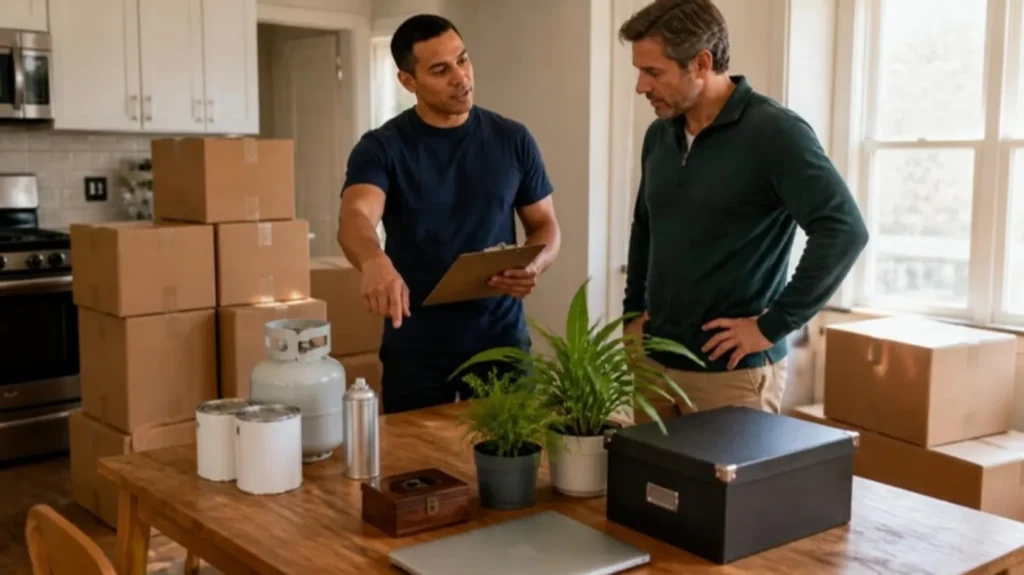
What Items Do Movers Not Move, and Why?
There is no single national "do not move" list for household goods. Three things shape what a mover will accept:
- Federal hazardous materials law. The consumer booklet that interstate movers must give you, Your Rights and Responsibilities When You Move, states that federal law forbids you to ship hazardous materials in your household goods boxes without informing your mover.
- Liability. The same booklet says packing perishable, dangerous or hazardous materials without your mover's knowledge can limit the mover's liability for loss or damage. In plain terms, if a hidden item causes a fire or a leak, your claim may not be covered.
- The mover's own policy. Each company sets its own list based on its insurance, equipment and experience. Two movers may answer the same question differently.
That last point matters most. Every mover sets its own list of items it will not carry, so always ask your mover for its list before you start packing. The categories below are the ones that come up most often.
Hazardous Items Moving Companies Usually Refuse
The Federal Motor Carrier Safety Administration groups hazardous materials as explosives, compressed gases, flammable liquids and solids, oxidizers, poisons, corrosives and radioactive materials. Its Protect Your Move guidance lists everyday examples such as nail polish remover, paints, paint thinners, lighter fluid, gasoline, fireworks, oxygen bottles and propane cylinders.
Around a typical Massachusetts home, that usually means:
| Category | Common examples | What to do instead |
|---|---|---|
| Flammable liquids | Gasoline, kerosene, lighter fluid, paint thinner, oil-based paint | Use up, give away or take to a household hazardous waste day |
| Compressed gases | Grill propane tanks, camping fuel canisters, scuba tanks, aerosols | Empty or return tanks; ask your town about collection |
| Corrosives and chemicals | Pool chemicals, drain cleaner, bleach, car batteries | Use up or take to a collection event |
| Explosives | Fireworks, flares, ammunition | Ask your mover; plan to transport or dispose of them yourself |
| Poisons | Pesticides, weed killer, rat poison | Use up or take to a collection event |
| Fuel in equipment | Lawn mowers, snow blowers, generators | Drain fuel before moving day, then ask how your mover handles the machine |
If you are not sure about an item, ask. Moving it quietly in a box is the one option federal guidance clearly warns against.
How to Dispose of Paint, Propane and Chemicals in Massachusetts
Moving is a good time to clear out the garage and basement shelves. Massachusetts has specific guidance on how to do it safely.
- Propane tanks. MassDEP's guidance on safely managing household hazardous products says never to put tanks that contain gas in the trash, because trash compactors can puncture them. Return small tanks to a retailer that takes them back, or bring them to a municipal collection program or a household hazardous waste day.
- Paint. Wet paint should not go in the trash either. Take it to a municipal paint collection program, save it for a household hazardous waste day, or offer usable paint to someone who can use it. Fully dried latex paint is handled differently, so check the same state guidance.
- Other chemicals. Pesticides, pool chemicals and solvents generally go to a household hazardous waste collection. Your town's recycling or public works department can tell you the next collection date, since many towns hold them only a few times a year.
Plan this two to four weeks before your move, since collection days are limited.
Do Movers Move Plants?
Many movers will not take houseplants, especially on longer moves, because a closed truck can get too hot or too cold and the mover cannot water or tend them. Some will carry plants on a short local move at your own risk. Ask your mover directly.
Rules also matter for longer moves. The USDA's Animal and Plant Health Inspection Service advises people never to mail or ship plants from areas under quarantine for an invasive pest, and to call the local USDA office to check whether a quarantine applies. If you are leaving Massachusetts, also check the plant rules in your destination state.
For most families, the simplest plan is:
- Move a few favorite plants in your own car, out of direct sun.
- Give larger or hardy plants to neighbors or friends.
- Take cuttings of plants you cannot bear to leave.
Don't Move Firewood
Firewood is easy to overlook in a garage or shed. Leave it behind. The state's emerald ash borer guide explains that this tree-killing beetle keeps spreading across Massachusetts through human-assisted movement, including ash firewood. The USDA's guidance is to buy firewood where you burn it. Offer your woodpile to the buyer or a neighbor instead.
Perishable Food and Pets
- Food. Refrigerated and frozen food can spoil in a truck, and perishable items packed without the mover's knowledge can affect your claim. Plan to eat down the freezer in the last two weeks, donate unopened nonperishables and move a cooler of essentials in your car.
- Pets. Pets always travel with you, never in a moving truck. Our guide to moving with pets covers how to keep them calm on moving day.
Firearms and Ammunition
Policies on firearms vary widely, so ask your mover before you pack. Many owners prefer to move them personally. If you do, follow state law: Massachusetts has specific rules for how firearms must be carried or secured in a vehicle, and other states have their own, so check the current law before you travel. Ammunition is a separate question because it falls under hazardous materials rules, so ask about it by name.
Valuables and Documents to Keep With You
Some items are allowed on a truck but are better in your own hands. The federal rights booklet defines an article of extraordinary value as anything worth more than $100 per pound, such as jewelry, silverware, china, furs and antiques, and says movers can limit liability for these items unless you list them on the shipping documents.
Keep these with you:
- Cash, jewelry and small collectibles
- Passports, birth certificates, Social Security cards, deeds, wills and tax records
- Laptops, external drives and phones
- Medications and prescriptions
- Keys, closing papers and your moving contract
For large valuables that do need to go on the truck, such as artwork, antiques or a glass tabletop, proper packing is what protects them. Lifetime Moving Co offers custom packing and crating for fragile and high-value pieces, and our guide to packing priceless antiques explains how crating works.
Questions to Ask Your Mover Before Packing Day
- Do you have a written list of items you will not move?
- Will you move plants, and on what terms?
- How do you handle lawn mowers, grills and other fuel-powered equipment?
- What is your policy on firearms and ammunition?
- Do I need to list high-value items on the paperwork?
- If you pack for me, will your crew set aside anything it cannot take?
If you are still choosing a company, our guide to verifying Massachusetts movers covers the licenses to check. For more packing ideas, see our time-saving packing hacks.
Key Takeaways
- There is no single list of what movers won't move. Each company sets its own, so ask for it in writing.
- Never pack hazardous materials without telling your mover. Federal law forbids it, and it can limit your claim.
- In Massachusetts, take propane tanks, wet paint and chemicals to a retailer take-back, town program or household hazardous waste day.
- Move plants in your own car, check quarantine rules for long moves and leave firewood behind.
- Keep cash, documents, medications and small valuables with you. Use crating for large fragile pieces.
Frequently Asked Questions
What items do movers not move?
It depends on the company, but most refuse hazardous materials such as gasoline, propane, paint thinner, fireworks and pool chemicals. Many also decline perishable food, plants, firewood and pets, and recommend you carry cash, jewelry and important documents yourself.
Do movers move plants?
Some do on short local moves, usually at your own risk, and many don't on long moves. Ask your mover. For interstate moves, check USDA quarantine guidance and the destination state's plant rules.
Can movers take a grill or lawn mower?
Often yes, once the fuel is removed. Disconnect and remove the propane tank from a grill, drain gas from mowers and snow blowers, and confirm your mover's policy ahead of time.
What happens if I pack something hazardous without telling the mover?
You break federal law, and the mover's liability for any resulting loss or damage may be limited. Hazardous items can also start fires or leak onto the rest of your belongings.
Does Lifetime Moving Co have a list of items it won't move?
Lists vary by company, so ask before you pack. Contact the team with your questions about specific items when you request your quote.
Want a crew that packs carefully and answers your questions up front? Lifetime Moving Co offers residential moving, packing and custom crating across Massachusetts. Get your free moving quote or call (508) 630-4292.