Do movers pack for you? Yes, if you book packing as part of the job. Packing is an add-on service, not something every move includes by default, so it has to be on your estimate. Movers commonly offer three levels: full packing (the crew packs the whole home), partial packing (the crew packs the rooms or items you pick) and packing materials only (you pack with the mover's boxes and supplies). If you are weighing the cost against doing it yourself, our comparison of packing services vs DIY moving breaks down the trade-offs.
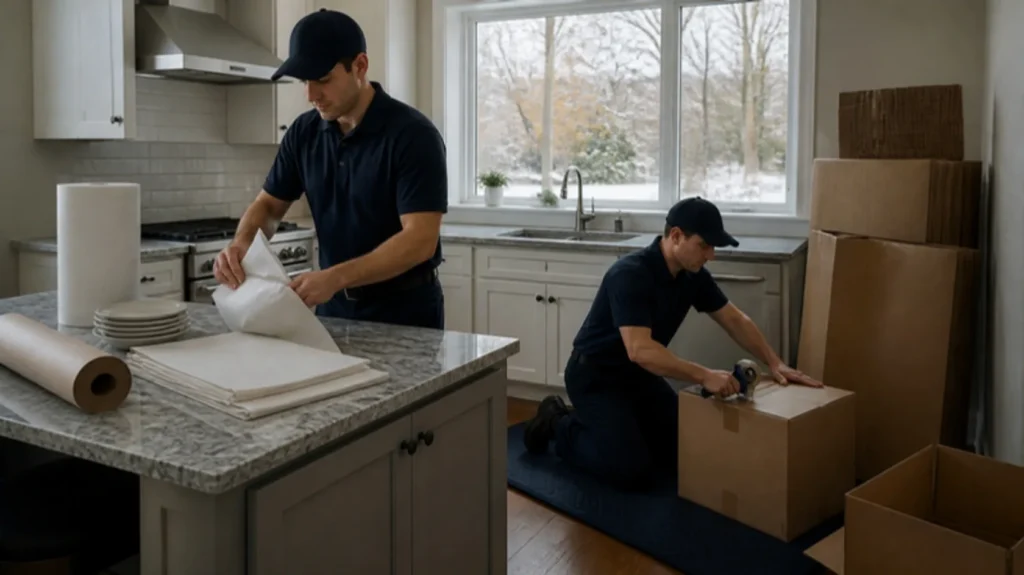
Full Packing vs Partial Packing vs Packing Supplies Only
| Option | Who packs | Good fit for | What to confirm |
|---|---|---|---|
| Full packing | The crew packs every room | Busy schedules, large homes, long-distance moves | Packing day vs moving day, materials included |
| Partial packing | The crew packs selected rooms or items | Kitchens, art, glassware, a garage you never got to | Exactly which rooms or items are on the list |
| Packing supplies only | You pack | Tight budgets, small apartments, plenty of time | Box sizes, paper, tape and delivery |
Whichever you pick, the written estimate should spell it out. The federal booklet Your Rights and Responsibilities When You Move, which applies to interstate moves, lists packing and unpacking among the extra services a mover may offer and says the written estimate must cover all charges, including those extra services.
When Movers Pack for You: What Full-Service Packing Includes
A full packing job usually covers the parts of a home that take the longest to pack well:
- Kitchens. Dishes, glasses, pots, small appliances and pantry items, each wrapped and boxed by weight.
- Closets. Clothes packed flat or hung in wardrobe boxes.
- Books and files. Small boxes so they stay liftable.
- Lamps, mirrors and wall art. Wrapped in paper and pads, or boxed in mirror cartons.
- Electronics. TVs and computers padded and packed upright.
- Furniture prep. Beds, tables and desks taken apart, with hardware bagged and labeled.
Lifetime Moving Co's residential moving crews disassemble and reassemble furniture, and the company offers custom packing and crating. If you would rather pack some or all of it yourself, Lifetime provides packing materials with free delivery. Every mover defines its packing service a little differently, so ask for a room-by-room list of what is included before you book.
What You Should Pack Yourself
Even with a full-service crew, some things should stay in your hands, in your car or in a bag you carry:
- Personal documents. Passports, birth certificates, Social Security cards, car titles, leases and closing papers.
- Valuables. Jewelry, cash and small collectibles.
- Medications. Enough for the first few days, plus prescriptions.
- Keys, chargers and devices. Laptops, phones, hard drives and the cables to run them.
- A first-night box. Bedding, towels, toiletries, a few tools and snacks.
The federal booklet also asks you to tell your mover about high-value items. It defines an article of extraordinary value as anything worth more than $100 per pound, with examples such as jewelry, silverware, china, furs, antiques, oriental rugs and computer software.
Items Movers Will Not Pack
Federal law forbids shipping hazardous materials in your household goods boxes without telling your mover, according to the booklet. Common examples to set aside are propane tanks, gasoline, paint thinner and pool chemicals. Our list of what items movers do not move covers the full list and what to do with each.
Crating for Fragile and High-Value Items
Some items need more than a box. Marble tops, glass tabletops, large mirrors, sculpture and antiques travel more safely in a crate built to their size. Custom crating from Lifetime Moving Co gives those pieces their own crate instead of a carton. Our guide on how to pack priceless antiques shows how the process works and how to prepare.
If You Pack Your Own Boxes
Packing yourself saves money, but it shifts some of the risk to you. For moves within Massachusetts, the Department of Public Utilities' guide to moving within Massachusetts answers this question directly: customers often pack the cartons while the mover protects the furniture, and if a box you packed arrives damaged, the insurance company will consider your packing method when deciding liability. The same guide says having the mover pack everything costs more, but the mover may then bear additional liability. On interstate moves, the federal booklet also lists improper packing of containers you pack yourself as something that can limit or reduce a mover's liability.
Pack firmly so nothing shifts, fill empty space, keep each box to a weight you could lift and label every box with its room. Our 27 time-saving packing hacks cover box sizes, labeling and how to tackle the kitchen. A practical middle ground is partial packing: you box the easy rooms such as books, linens and clothes, and the crew handles the kitchen, art and anything fragile.
How to Prepare for Packing Day
A packing crew works fastest when the home is ready for it:
- Sort first. Donate, sell or toss what you are not moving before the crew arrives, so you are not paying to pack it. In Massachusetts, mattresses and textiles can't go in the trash: MassDEP added both to its waste disposal bans on November 1, 2022, so check your town's recycling or donation options for old mattresses, clothes and linens.
- Set aside a do-not-pack zone. Clear a closet or a bathroom for the things you are carrying yourself and tell the crew lead it is off limits.
- Empty the fridge and freezer. Plan meals so there is little left by packing day.
- Point out the fragile pieces. Walk the crew through anything with sentimental or high value, and anything that needs a crate.
- Keep parking and building access clear. Reserve the elevator or curb space for packing day too, not only for moving day.
Check the Inventory on Moving Day
On an interstate move, the booklet says the mover must prepare an inventory of your shipment and list any damage or unusual wear on items. Walk through it with the crew lead before the truck leaves, and again at delivery before you sign. Note anything missing or damaged on the paperwork itself.
Key Takeaways
- Movers will pack for you when you book packing; it is an add-on that belongs on the written estimate.
- Choose full packing, partial packing or supplies only, and get the exact room or item list in writing.
- Keep documents, valuables, medications and devices with you, not on the truck.
- Tell your mover about anything worth more than $100 per pound, and crate fragile pieces.
- Boxes you pack yourself can reduce the mover's liability if they are packed poorly.
Frequently Asked Questions
Do movers pack everything for you?
With full packing, the crew packs the whole home. Most people still keep documents, jewelry, medications and devices with them. Hazardous materials such as propane and paint thinner are not packed.
Should I pack myself or hire movers to pack?
Packing yourself costs less in labor but takes far more of your time. On a move within Massachusetts, the DPU says the insurer will consider your packing method if a box you packed is damaged, while mover packing costs more but may shift more liability to the mover. Partial packing is a middle ground: pack the easy rooms and leave the kitchen and fragile items to the crew.
Do movers bring boxes and packing supplies?
Many do when packing is booked. Lifetime Moving Co provides packing materials with free delivery, whether the crew packs or you do.
Do movers pack the kitchen?
Yes, if the kitchen is part of the packing you book. It is one of the most common rooms to hand off because dishes and glassware take the longest to wrap.
How do I get a packing quote from Lifetime Moving Co?
Tell the team which rooms or items you want packed and anything that needs a crate. Lifetime offers flat and hourly rates and free quotes, with no hidden fees as long as you are upfront about your job.
Want the packing handled? Lifetime Moving Co offers custom packing and crating, with packing materials delivered free. Get your free moving quote or call (508) 630-4292.