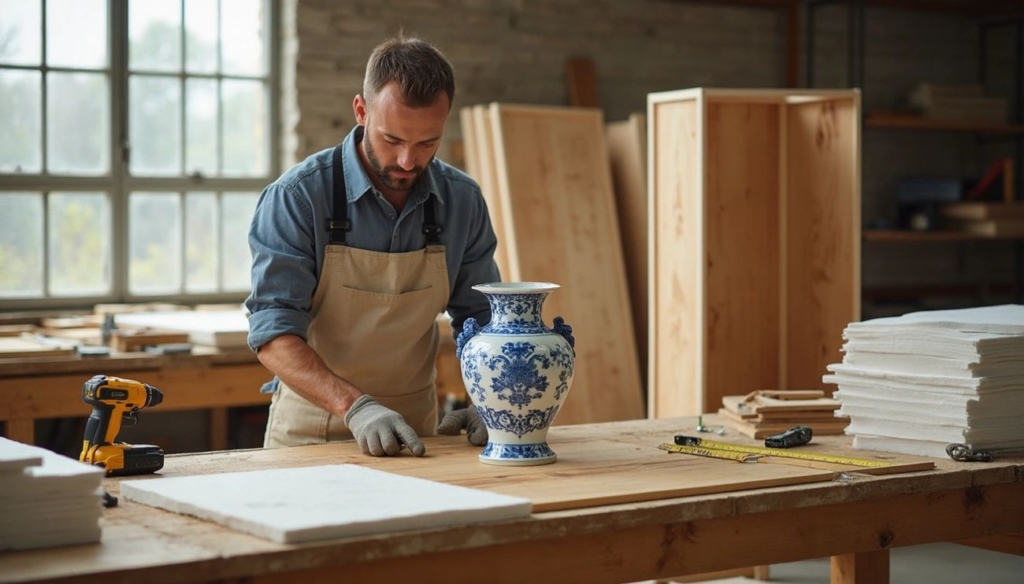
Are you worried about damaging your family's priceless heirloom during a move? Custom crating gives your most valuable possessions the best protection that standard moving boxes can't provide.
Your precious antiques, valuable artwork, and delicate electronics need specialized protection that regular packing materials can't match. Custom crating works best for items with irregular shapes, oversized pieces, or fragile items that need extra care during transport. We've seen how proper crating makes the difference between items arriving safely or getting damaged beyond repair at our custom crating company over the last several years.
Building a custom wood crate involves more than just making a box. The process requires careful design and construction of wooden crates that match your item's specific dimensions and requirements. Your possessions fit snugly in each crate to prevent movement inside. On top of that, the interior has shock-absorbing foam that protects against external forces.
In this piece, we'll show you how to protect your priceless antiques through professional custom crating. You'll learn everything from identifying items that need specialized crating to picking the right custom crating service. We'll guide you through each step.
What Items Need Custom Crating?
Custom crating isn't essential for everything in your home. Some possessions just need this special protection. Standard packaging won't cut it for items that can't be replaced, have high value, or could easily get damaged during transit.
Antiques and fine art
Precious antiques and artwork need exceptional care because of their historical value and delicate nature. Museums, auctioneers, and collectors keep using custom crating to transport valuable pieces across the country or internationally. These items are unique and react quickly to environmental changes. This applies to paintings, sculptures, and vintage furniture with detailed carvings. Custom crating shields these treasures from pressure, moisture, temperature changes, and physical damage that you can't fix.
Electronics and medical equipment
High-end electronics and medical devices are big investments that deserve top-level protection. Medical equipment like CT scanners, MRI machines, diagnostic tools, and surgical instruments cost a lot and break easily. These devices have sensitive parts such as lasers, lenses, and gages that need careful handling. The same goes for computers, servers, and tech equipment - they can get damaged by shock, static electricity, and moisture without proper crating. A custom crate with anti-static padding creates a safe environment that protects these valuable items during transport.
Oddly shaped or oversized items
Regular packaging can't handle items that exceed typical dimensions. Products bigger than the standard pallet size of 48 x 40 inches need custom crating. This includes industrial machinery, farm equipment, large compressors, and printing equipment. These items are heavy too, so they need reinforced crating that can handle loads over 2,205 pounds. Custom crates provide the strength needed to move these challenging items safely.
Heirlooms and collectibles
Family treasures with deep sentimental value deserve custom crating protection. Grandfather clocks, china, delicate decor, and unique collectibles get the perfect fit and cushioning from custom crates. Standard wrapping can't protect these one-of-a-kind items with their delicate parts or finishes properly. Custom crating gives you peace of mind when shipping items that mean more than money - they're part of your family's history.
Why Custom Crating Is the Safest Option
Standard packaging methods don't protect valuables well enough. Custom crating proves to be the best way to keep precious items safe during their trip.
Protection against shock and vibration
Items face constant vibration and unexpected impacts during transportation that can damage delicate components. Custom crating solves this problem by using specialized shock-absorbing materials. High-quality foam inserts and cushioned bases spread impact forces evenly to prevent focused damage to vulnerable areas. Custom crating substantially reduces the risk of electronic equipment and server components breaking loose during transit. Standard packaging can't match custom crates that withstand drops from heights of up to 42 inches when carried by humans. Heavier crates are built to handle 12-inch drops.
Tailored fit for each item
Custom crates' precision fit gives a vital advantage over standard packaging. Each crate matches your item's exact dimensions and specifications. This eliminates extra space that could let items shift dangerously during transport. The snug fit minimizes movement by up to 30% compared to standard packaging solutions. On top of that, it includes internal supports placed exactly where needed to brace fragile components. This creates a protective cocoon around your valuable possession.
Reusable and eco-friendly materials
Custom crating brings major environmental benefits beyond protection. Many custom crates work for multiple uses, which reduces waste and promotes sustainability. Craters & Freighters uses eco-conscious manufacturing techniques and responsibly sourced materials. They offer innovative options like cornstarch-based foam and biodegradable materials that protect items well while reducing environmental effects. Custom wooden crates use lumber certified by organizations like the Forest Stewardship Council (FSC). This ensures the wood comes from responsibly managed forests.
Compliance with shipping regulations
International shipping has strict rules that standard packaging might not meet. Custom crating meets all vital standards like the International Plant Protection Convention (IPPC). The wood in custom crates goes through heat treatment—a chemical-free, environmentally responsible process accepted worldwide for phytosanitary certification. This prevents customs delays, fines, or improper handling during transit.
How the Custom Crating Process Works

Image Source: Crate N Pack Solutions
Building a custom crate takes a methodical approach that will give a maximum protection to your valuables. The work starts well before anyone cuts wood or shapes foam.
Original assessment and measurements
Professional crating specialists evaluate your items thoroughly. They take precise measurements, check the weight, and identify fragile areas. This consultation helps them determine what your products need to stay secure during shipping. Experts verify compliance requirements like ISPM-15 regulations for international shipments.
Choosing the right materials
Your item's specific needs determine the material selection. The choices range from hardwoods like oak and maple for strength to softwoods like pine for lighter uses. Plywood, particle board, and oriented strand board (OSB) offer durability and budget-friendly solutions. Material quality stays crucial to protect items properly.
Building the custom wood crate
Custom crates come together with precise measurements and high-quality fasteners. Builders start with a lumber-supported base, add wood-framed side panels, and reinforce corners for strength. They prefer screws over nails for reusable crates because screws provide better strength and allow future disassembly if needed.
Internal padding and foam lining
Custom foam inserts play a vital role in protecting valuable items. Specialists use waterjet or CNC-cut foam that matches your item's shape perfectly. This creates a tight fit that stops movement during transit. Delicate electronics or antiques need high-density foam inserts, vibration-dampening liners, and shock-absorbing mounts for better protection.
Labeling and documentation
Clear labels help ensure proper handling during transportation. Key details include handling instructions, fragility warnings, and directional markers. International shipments require Bills of Lading and ISPM-15 compliance certification for wooden materials. These documents prevent customs delays and ensure careful handling.
Loading and transport handling
The final phase secures your item in the finished crate and prepares it for transport. Weight distribution and proper securing methods matter during loading. Crating specialists use specialized equipment like custom-sized forklifts. Your valuable item now sits fully protected and ready for its journey.
How to Choose the Right Custom Crating Company
Your choice of a custom crating partner can make or break how well your valuable items survive shipping. Here are some key factors to think about.
Look for experience with fragile items
Companies with proven expertise in handling items like yours should top your list. A provider who has packed and shipped fragile, oversized, or high-value items will know the unique challenges. Get into their track record with specific items—artwork, antiques, or electronics—because specialized knowledge makes all the difference.
Check for customization options
The right company should give you plenty of options to meet your specific needs. Make sure they use quality materials and proper cushioning based on your item's weight, fragility, and vibration sensitivity. Their willingness to adjust dimensions and add protective features shows their dedication to custom solutions.
Assess customer service and reviews
A full picture of company reviews can tell you a lot. Customer testimonials give you a good idea about reliability and service quality. Good crating companies communicate clearly, respond fast to questions, and have clear policies.
Ask about insurance and guarantees
Cargo insurance is a vital way to protect against damage. Ask about coverage options and what guarantees they provide. The best companies will explain different coverage levels based on what you're shipping.
Conclusion
Custom crating is the gold standard for protecting your most valuable possessions during transport. This piece explores how specialized wooden crates give exceptional protection for antiques, artwork, electronics, and family heirlooms that standard packaging can't handle.
Your irreplaceable items' protection should never be left to chance. Custom crates reduce damage risk by a lot. They eliminate movement inside the container and absorb external forces during transit. These tailored solutions also handle unique challenges of oddly shaped or oversized items that would be at risk during relocation.
The careful process will give your valuables the exact protection they need. Each step serves a vital purpose in safeguarding your possessions - from precise measurements and material selection to expert construction and proper cushioning. Your main priorities when picking a custom crating company should be their experience with similar items, customization options, and proper insurance coverage.
The cost of custom crating is nowhere near the price you'd pay for damaged antiques or family treasures. Without doubt, knowing your valuables are properly protected brings priceless peace of mind. Custom crating provides the exceptional care your cherished possessions deserve, whether you're moving across town or shipping internationally.
Planning to move valuable antiques or delicate items? Talk to professional custom crating specialists early in your planning. This head start gives enough time for a full assessment and crate construction. You'll avoid last-minute stress and won't need to compromise on protection quality.
Note that taking shortcuts with protecting what matters most ended up creating unnecessary risk. Let custom crating professionals handle your treasured possessions - they understand what's at stake and have the expertise to deliver them safely to their destination.
FAQs
Q1. What types of items typically require custom crating? Custom crating is ideal for antiques, fine art, delicate electronics, medical equipment, oddly shaped or oversized items, and family heirlooms. These items often need extra protection due to their value, fragility, or unique dimensions.
Q2. How does custom crating differ from standard packaging? Custom crating provides a tailored fit for each item, using high-quality materials and shock-absorbing padding. It offers superior protection against vibration, impact, and environmental factors compared to standard boxes or packaging materials.
Q3. What is the process for creating a custom crate? The process involves an initial assessment, precise measurements, selecting appropriate materials, building the wooden crate, adding internal padding and foam lining, proper labeling, and careful loading. Each step is tailored to the specific item being protected.
Q4. Are custom crates environmentally friendly? Yes, many custom crates are designed for multiple uses, reducing waste. Some companies use eco-friendly materials like biodegradable foam and responsibly sourced wood certified by organizations like the Forest Stewardship Council.
Q5. How do I choose the right custom crating company? Look for a company with experience handling items similar to yours, a range of customization options, positive customer reviews, and clear communication. Also, inquire about their insurance coverage and any guarantees they offer for added peace of mind.
References
[1] - https://www.thisoldhouse.com/moving/what-is-custom-crating
[2] - https://volcase.com/products/waterjet-cnc-cut-foam/
[3] - https://www.cratersandfreighters.com/shipping/medical-equipment-shipping/
[4] - https://formaspace.com/articles/material-handling/how-to-build-custom-shipping-crate/?srsltid=AfmBOoppXqik1Eq3iL_xqReVAQARng5bHfG-C9Wz3jX732DUEiV5qzW3
[5] - https://cdcpack.com/preventing-shock-and-vibration-damage-during-shipment/
[6] - https://guardiandatadestruction.com/services/it-packing-logistics/custom-crating-shock-pallets/
[7] - https://creopack.com/en/blog/benefits-of-custom-crating/
[8] - https://docksidelogistics.com/why-custom-crating-is-essential-for-safe-shipping-dockside-logistics-expertise/
[9] - https://www.cratersandfreighters.com/about/sustainability/
[10] - https://www.wasatchcontainer.com/sustainability/
[11] - https://www.dgm-us.com/ispm-export-crating/ispm-15-compliant-crating/
[12] - https://alltracon.com/how-custom-crating-solutions-reduce-damage-risks/
[13] - https://diapkg.com/blog/how-wooden-crates-ensure-safe-secure-transportation-of-heavy-goods/
[14] - https://www.palletone.com/a-savvy-buyers-guide-to-custom-crates/
[15] - https://cratethis.com/what-to-expect-during-the-custom-crating-process/
[16] - http://www.tristatecrating.com/blog/specifying-custom-wood-crates/
[17] - https://freightsidekick.com/resources/articles/post/shipping-custom-wooden-crates-best-practices
[18] - https://mugele.com/blog/top-5-things-to-do-before-you-buy-wooden-shipping-crates/
[19] - https://www.dcexport.com/what-are-the-international-requirements-for-shipping-crates/
[20] - https://www.cratersandfreighters.com/commercial/cargo-insurance/
[21] - https://www.cratersandfreighters.com/packaging/custom-crating/
[22] - https://www.mcs-crating.com/blogs/dallas-fort-worth-moving-custom-crating-services-blog/1057138-how-to-find-the-right-crating-company-for-your-needs
[23] - https://www.cratersandfreighters.com/2020/09/what-you-need-to-know-about-shipping-and-cargo-insurance/
[24] - https://www.acerelocation.com/resources/blog/custom-crating-protecting-fragile-items-during-your-move/
[25] - https://www.cratersandfreightersatlanta.com/crating/art-crating/
[26] - https://sterlinginterstate.com/custom-crating-for-moving-10-items-to-pack-with-extra-protection/
[27] - https://jfrholdingsinc.com/industry-standards/10-products-that-need-custom-crating-solutions/