A major home renovation often requires more than choosing finishes and coordinating contractors. Furniture, electronics, artwork, and personal belongings may need to be removed before work begins and returned only after the renovated space is ready.
Professional in-home movers in Brookline, MA can help relocate furniture to another room, a different floor, temporary storage, or another approved location. Planning both the initial clear-out and the final reset can protect your belongings while giving contractors room to work.
This guide explains how to coordinate a renovation move, choose temporary storage, protect furniture, and prepare your home for the return phase.
Plan the Renovation Move Before Work Begins
Confirm the Construction Schedule
Speak with the contractor before scheduling movers. Ask when demolition, flooring, painting, electrical work, and final cleaning are expected to begin and end.
Renovation schedules can change, so avoid planning the furniture return based only on an early completion estimate. Identify the tasks that must be finished before each room can be used again.
Your timeline should include:
- The final day each room will remain accessible
- The date contractors need the room completely cleared
- Items that require disassembly
- The proposed storage location
- An estimated storage period
- A flexible window for returning the furniture
Create a Room-by-Room Inventory
Walk through every affected room and record what must be moved. Photographs can help movers assess furniture size, access limitations, fragile items, and the equipment that may be required.
Divide belongings into practical categories:
- Move to another room: Items needed during the renovation that can remain safely inside the home
- Move to temporary storage: Furniture and belongings that will not be needed during construction
- Protect in place: Built-in or immovable items that the contractor confirms can remain
- Pack separately: Fragile, valuable, electronic, or sentimental items requiring additional protection
- Remove permanently: Items being donated, discarded, or replaced during the renovation
Schedule Movers Once the Scope Is Clear
Contact movers as soon as the renovation scope and approximate start date are known. Availability depends on the season, project size, access conditions, and number of movers required. Large clear-outs or projects involving storage usually need more planning than moving a few items between rooms.
Lifetime Moving Co.’s residential moving services include furniture rearranging, in-home moving, loading and unloading, furniture assembly, and storage options.
Check Building and Access Requirements
If you live in a condominium or managed building, ask management about:
- Approved moving hours
- Elevator reservations
- Loading or parking restrictions
- Required floor and wall protection
- Certificates of insurance
- Contractor or mover access procedures
The company’s guide to moving certificates of insurance and building rules provides a useful overview, but your property manager’s written requirements should control.
Decide Where the Furniture Will Go
Unused Rooms
Moving furniture into an unaffected room can work for a small renovation if the remaining space is large enough. Avoid creating blocked walkways, overloaded rooms, or stacks that prevent access to essential belongings.
The storage room should be separated from construction activity and should not interfere with ventilation, contractor access, emergency exits, or daily use of the home.
Garages and Basements
A garage or basement may be suitable for durable items during a short project, but these areas require careful evaluation. Moisture, temperature changes, pests, dust, and the possibility of water intrusion can damage wood, upholstery, paper, electronics, artwork, and sentimental belongings.
If you use a garage or basement:
- Keep furniture raised above the floor.
- Maintain airflow around stored items.
- Do not place belongings against damp exterior walls.
- Use breathable furniture covers where appropriate.
- Leave a clear path to utilities and stored items.
- Inspect the space regularly for moisture or pests.
Portable Storage Containers
A portable storage container can keep furniture nearby while freeing interior rooms for construction. Confirm that the property has enough legal and practical space for delivery, loading, contractor access, and collection.
If a container, moving box, dumpster, or related equipment will occupy a public street or other public way, review the Town of Brookline’s occupancy permit requirements. The town states that equipment stored or operated in the public way may require a permit and notes seasonal restrictions for moving boxes and dumpsters.
Requirements can change, so confirm current rules directly with the town before reserving a container or relying on public parking space.
Off-Site Storage
Off-site storage may be more suitable for longer renovations, whole-floor projects, or belongings that need a controlled environment. Ask about climate control, access hours, security, insurance requirements, billing terms, and how items will be inventoried.
Lifetime Moving Co. states that its residential moving options include overnight and monthly climate-controlled storage. Confirm availability and current terms when requesting an estimate.
Prepare Furniture for the Clear-Out
Clean and Inspect Each Item
Remove surface dirt before wrapping furniture. Inspect every piece for loose joints, broken hardware, existing scratches, lifting veneer, or unstable components. Photograph valuable items and existing damage before they are moved.
Disassemble When Appropriate
Removing detachable legs, shelves, drawers, and bed-frame components can reduce weight and make large pieces easier to navigate through a Brookline home. Do not disassemble antique or unfamiliar furniture unless you understand its construction.
Place hardware in labeled bags and attach each bag securely to the corresponding furniture without applying tape directly to finished surfaces.
Pack Smaller Belongings
Remove books, dishes, décor, electronics, lamps, and other loose objects from furniture before moving it. Use sturdy boxes and label them by room and priority.
These professional packing tips can help keep smaller belongings organized during the renovation.
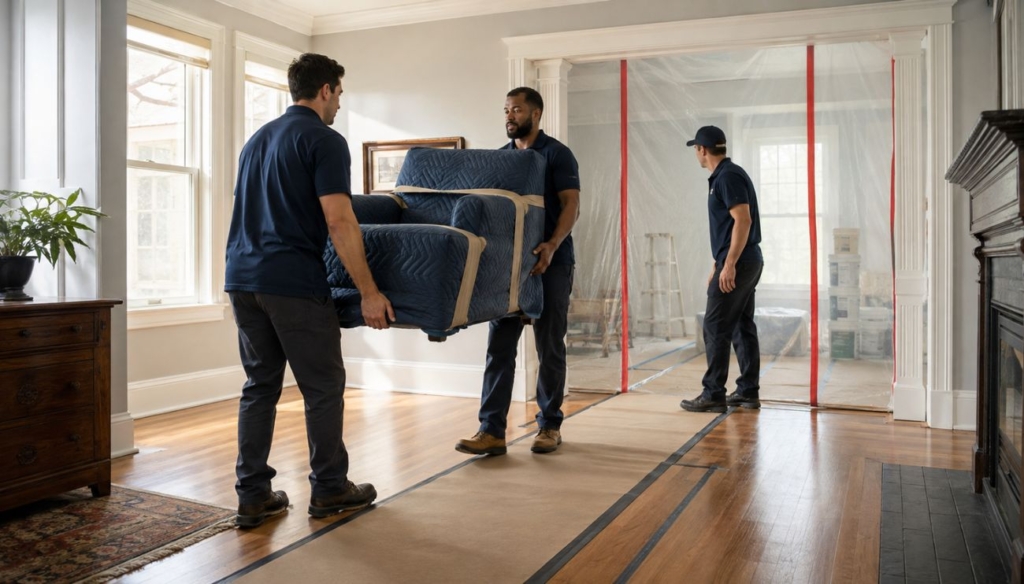
Use Appropriate Furniture Protection
Wrap furniture in clean moving blankets or pads and secure them without placing excessive pressure on fragile components. Electronics, artwork, glass, antiques, and other sensitive belongings may require additional packing or custom crating.
Avoid sealing wood or upholstered furniture in plastic for an extended period unless the wrapping method is appropriate for the item and storage environment. Trapped moisture can create additional problems.
Complete the First Moving Phase
The initial clear-out should leave contractors with unobstructed access to the work area. Before the moving crew arrives:
- Confirm which rooms and entrances movers may use.
- Remove small obstacles from hallways and stairs.
- Keep children and pets away from the moving route.
- Confirm where each item will be stored.
- Identify furniture that requires disassembly.
- Protect doorways, floors, railings, and corners.
- Ensure the contractor has not placed tools or materials in the moving path.
Movers should not be expected to carry furniture through active demolition, exposed wiring, loose debris, wet finishes, or unstable construction areas. Coordinate a safe access window with the contractor.
Control Dust and Protect Stored Belongings
Construction dust can travel beyond the room where work is taking place. The U.S. Environmental Protection Agency recommends using barriers and ventilation to help contain dust and other pollutants during remodeling. Review the EPA’s indoor-air-quality practices for home remodeling with your contractor.
The contractor should determine the appropriate containment and ventilation methods for the project. Do not seal vents or change ventilation arrangements without professional guidance, particularly in homes with combustion appliances.
Projects involving concrete, brick, block, stone, or mortar may also create respirable crystalline silica. OSHA provides specific construction silica-control requirements for employers and workers.
Prepare for the Post-Renovation Reset
Wait for Contractor Approval
Do not return furniture simply because the main construction crew has left. Ask the contractor to confirm that:
- Required inspections are complete.
- Debris and tools have been removed.
- Painting and touch-ups are finished.
- Flooring and finishes have completed their required curing time.
- Doors, railings, and fixtures are securely installed.
- The moving route is clean, dry, and accessible.
Follow the flooring, paint, adhesive, and finish manufacturers’ instructions before placing furniture or rugs on newly completed surfaces.
Complete Post-Construction Cleaning
Construction cleanup should be completed before furniture returns. Dust walls, trim, fixtures, cabinets, and other surfaces using methods appropriate for the installed materials. Vacuum floors and carpets with suitable equipment, and follow the contractor’s recommendations for ventilation and cleaning.
If the project created hazardous dust or involved lead, asbestos, mold, or substantial silica-producing work, use qualified professionals and follow the applicable containment and cleanup procedures.
Inspect Stored Furniture
Check each item before it enters the renovated area. Look for moisture, odors, dust, scratches, loose padding, shifted contents, or damage that may have occurred during storage.
Clean items according to the manufacturer’s care instructions rather than transferring storage dust into the finished room.
Return Essential Furniture First
Move the largest and most necessary furniture into place before smaller belongings. A practical return order may include:
- Large furniture that defines the room layout
- Beds and essential seating
- Tables, desks, and storage furniture
- Frequently used kitchen or household items
- Books, artwork, décor, and seasonal belongings
Confirm furniture placement before movers lower heavy pieces. Repeatedly repositioning large items increases handling time and the possibility of damaging new finishes.
Protect Newly Renovated Surfaces
New floors, paint, trim, and fixtures require careful protection during the reset. Use clean, non-slip runners appropriate for the flooring surface and secure them so they do not become tripping hazards.
Door jambs, corners, railings, and other vulnerable areas should also be padded. Furniture should be carried or moved with appropriate equipment rather than dragged across finished surfaces.
For additional preparation, review this Massachusetts floor-protection guide.
Questions to Ask Before Hiring In-Home Movers
- Do you handle furniture rearrangement and renovation clear-outs?
- Can you coordinate both the clear-out and return phases?
- What happens if the contractor changes the completion date?
- Do you provide furniture disassembly and reassembly?
- What packing and floor-protection materials are included?
- Are storage services available, and under what terms?
- Can you provide a certificate of insurance if the building requires one?
- What protection options apply while furniture is being moved or stored?
- Are there minimum service times, travel charges, or rescheduling fees?
Obtain the services, dates, costs, protection options, and storage terms in writing before the clear-out begins.
Frequently Asked Questions
How far in advance should I book movers for a renovation?
Contact movers as soon as the project scope and approximate start date are known. The amount of notice required depends on the season, project size, access conditions, storage needs, and crew availability. Avoid relying on a universal booking timeline.
Can furniture stay in a garage during a renovation?
A garage may be suitable for durable items during a short project, but it may expose belongings to moisture, temperature changes, pests, and dust. Delicate wood, upholstery, electronics, artwork, and sentimental items may need a more controlled environment.
Do I need permission for a portable storage container?
Possibly. A container placed entirely on private property may still be subject to property, association, or building rules. Equipment placed in the Brookline public way may require an occupancy permit. Confirm current requirements before reserving the container.
When can furniture return after renovation?
Wait until the contractor confirms that inspections, cleanup, touch-ups, and required curing times are complete. The room and moving route should be clean, dry, stable, and free of construction hazards.
How do movers protect newly renovated floors?
Depending on the flooring, movers may use clean floor runners, padding, suitable dollies, and coordinated lifting techniques. Protective materials must be appropriate for the surface and secured so they do not slide or create a tripping hazard.
Plan Your Brookline Renovation Move
A successful renovation move has two connected phases: clearing the work area and returning belongings after construction. Planning both phases before demolition begins can reduce confusion, protect furniture, and keep access routes organized.
To discuss furniture relocation, packing, storage, or a post-renovation reset, contact Lifetime Moving Co. with photographs, access details, and your contractor’s estimated schedule.