When people search "PODS vs movers," they usually want one answer: which option costs less for their move. The honest answer is that it depends on who does the lifting, how much time you have and, in the Boston area, where the container or truck will park. This guide compares a portable storage container (PODS-style), a rental truck you drive yourself (U-Haul-style) and a full-service moving company on labor, time, permits and liability, so you can pick the approach that actually fits a Massachusetts move.
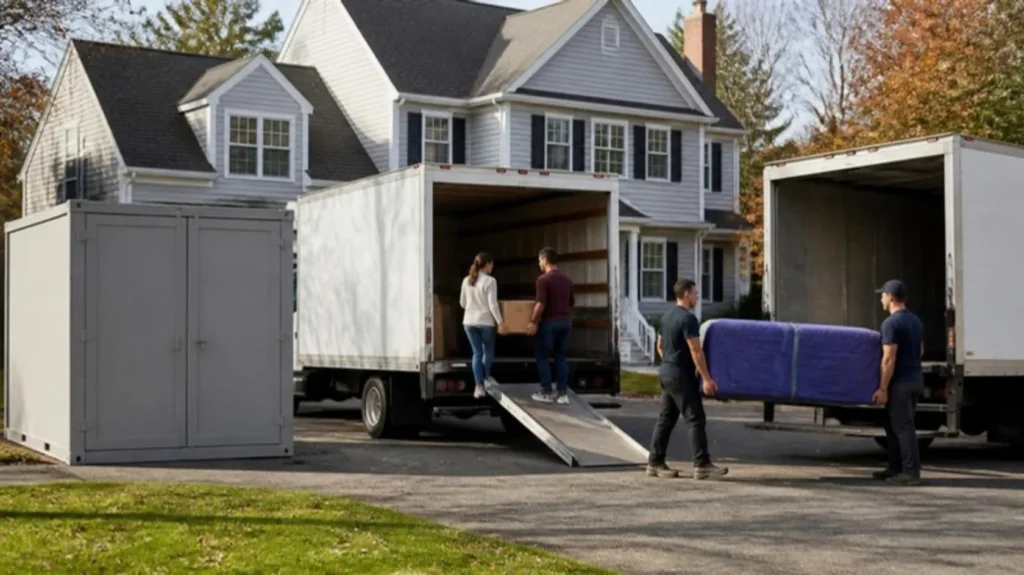
If you are only deciding between full-service movers and hired labor for a truck you rent, our guide to full service vs moving help covers that choice in detail. This post looks at all three approaches side by side.
The Three Options at a Glance
| Portable container | Rental truck (DIY) | Full-service movers | |
|---|---|---|---|
| Who packs and loads | You (or helpers you hire) | You (or helpers you hire) | The moving crew, plus packing if you book it |
| Who drives | The container company | You | The moving crew |
| Loading time pressure | Low: load over several days | High: truck is booked by the day | Low for you: crew works on move day |
| Street permit in Boston-area cities | Usually, if the container sits on the street | Recommended to reserve curb space | The mover can plan it with you |
| Furniture disassembly | You | You | Crew handles it |
| Main cost drivers | Container rental days, delivery and pickup, any help you hire | Truck rental, mileage, fuel, any help you hire | Crew size, hours or flat rate, packing services |
Labor: Who Does the Heavy Lifting?
Labor is the biggest difference between these options, and the one people underestimate most.
- Portable container: The company drops off an empty container and later moves it. Everything in between, from wrapping furniture to stacking boxes so they do not shift, is your job. A badly loaded container can mean damage that nobody else is responsible for.
- Rental truck: Same lifting as a container, plus you drive. Loading a truck well (heavy items low and forward, mattresses as buffers, everything strapped) takes practice.
- Full-service movers: A trained crew wraps, carries, loads and unloads. At Lifetime Moving Co, crews also disassemble and reassemble furniture and keep track of all the hardware, which is the part of a DIY move that tends to eat a whole evening.
Time: How Long Each Option Really Takes
A container gives you flexibility. Because it can sit at your home for several days, you can load at your own pace. That suits anyone who needs a gap between moving out and moving in.
A rental truck is the most time-pressured. You are paying by the day, so loading, driving, unloading and returning the truck all have to fit the booking. For apartments with stairs or long carries, that day gets long fast.
Full-service movers are fastest for you. Your time goes into packing (or none, if you add packing services), and the crew handles the move day itself.
Parking and Permits in Boston, Cambridge, Somerville and Brookline
This is where Greater Boston moves differ from most places. Both containers and trucks need curb space, and four of the busiest cities for moves have their own permit rules.
- Boston: The City says a permit for a moving truck is not required but guarantees you a legal parking spot for move day. A container placed on a Boston street is different: it generally falls under a street occupancy permit from Public Works, which involves its own application, bonding and fees. Ask the container company whether it handles that permit. Our Boston moving permit guide walks through signage and timing.
- Cambridge: The City issues separate street occupancy permits for a moving van and for a moving container or crate, through its street occupancy permit page. See our guide to getting a Cambridge moving permit.
- Somerville: The City's moving page covers reserving space for moving vans and containers, including buying and posting the required signs days before the move. Our Somerville moving permit guide has the steps.
- Brookline: The Town runs its own moving permit process, separate from Boston's, and overnight parking rules make planning ahead important.
In the suburbs, a container that fits entirely in your driveway may not need a street permit, but check with your town and any condo or HOA rules before you order one. In the city, a container can occupy a curb space for days, so a permit often has to cover the whole stay, not just one morning.
Rental trucks bring one more Boston-area risk: low bridges on parkways such as Storrow Drive. Read how to check moving truck heights in Boston before you book a truck.
Liability and Protection: What Happens If Something Breaks?
Coverage works differently depending on who is handling your belongings.
With a moving company on an interstate move, federal rules give you two levels of liability. Under the Federal Motor Carrier Safety Administration's valuation rules, the no-cost Released Value option limits the mover's liability to 60 cents per pound per item. Full Value Protection, which usually costs extra, makes the mover responsible for repairing, replacing or paying for a lost or damaged item. Neither is an insurance policy; they are levels of liability the mover accepts.
With a mover on a move inside Massachusetts, the mover should hold a Massachusetts DPU license. Our guide on how to verify intrastate movers in Massachusetts explains what to check. Lifetime Moving Co lists its credentials openly (USDOT 3378469, MASS DPU 31762) and is fully insured.
With a container or rental truck, you do the packing and loading, so damage from a shifted load is usually your problem. Read the rental agreement for what protection is offered and what it excludes, and ask your homeowners or renters insurer whether your policy covers belongings in transit. Do this before move day, not after.
Is U-Haul Cheaper Than Movers? It Depends on What You Count
A rental truck often looks cheaper on the booking screen, which is why "is U-Haul cheaper than movers" is such a common question. The rental price is only one line of the real cost. A fair comparison adds:
- Fuel, mileage and any insurance or protection add-ons
- Moving supplies: blankets, straps, dollies, boxes
- Paid help, if friends are not available
- Parking permits and signage
- Time off work, or a second rental day if loading runs long
- Damage risk you carry yourself
Do the same for a portable container: rental days, delivery and pickup, any permit, and help to load it. Then get a written quote from a mover for the same job. Lifetime Moving Co offers flat and hourly rates and free quotes, with no hidden fees as long as you are upfront about your job.
PODS vs Movers: Who Each Option Suits
A portable container suits you if:
- You need storage between homes or during a renovation
- You have a driveway, or a permit is easy to get on your street
- You want to load at your own pace and can do the heavy lifting
A rental truck suits you if:
- The move is small and local, such as a studio with no heavy furniture
- You are comfortable driving a large truck in city traffic
- You have reliable help and can finish in one day
Full-service movers suit you if:
- You have stairs, long carries, heavy or awkward furniture, or a tight timeline
- Your furniture needs disassembly and reassembly
- You would rather spend move week on work, kids or closing paperwork than on lifting
For residential moving in Massachusetts, many people end up with a mix: a container for storage, then a crew to load and unload it, or a full-service move with packing for the fragile rooms only.
Key Takeaways
- The real PODS vs movers question is about labor: with a container or truck, you do the lifting and carry the damage risk.
- Containers give you time; rental trucks put you on the clock; movers save you the most hours.
- In Boston, Cambridge, Somerville and Brookline, plan for street permits for both trucks and containers.
- Interstate movers offer Released Value (60 cents per pound per item) or Full Value Protection; for DIY options, check your rental agreement and insurance.
- Compare total costs, including help, supplies, permits and time, not just the rental price.
Frequently Asked Questions
Is a portable storage container cheaper than hiring movers?
Sometimes, especially when you need storage between homes and can load it yourself. Once you add delivery, pickup, permits and paid help to load, the gap can narrow. Get a written quote from a mover and compare totals.
Do I need a permit for a moving container in Boston?
If the container will sit on a public street, Boston generally handles it as a street occupancy permit through Public Works, so ask the container company how that permit is arranged. A container entirely on private property is a different situation.
What protection do I get if a mover damages my things?
On an interstate move, you choose between Released Value at 60 cents per pound per item and Full Value Protection, under FMCSA rules. Ask any mover to explain its coverage in writing before you book.
Which option is best for a move with stairs and heavy furniture?
Full-service movers, in most cases. Stairs, long carries and pieces that need disassembly are where DIY moves run long and where damage happens. Lifetime Moving Co crews disassemble and reassemble furniture and keep track of the hardware. Contact the team for a free quote.
Not sure which option fits your move? Lifetime Moving Co is fully insured, with offices in Sudbury, Brighton and Southborough. Get your free moving quote or call (508) 630-4292.