Brighton MA apartments in classic brick courtyard buildings offer undeniable charm with their pre-war architecture and tree-lined pathways. Most people underestimate how tough moving can be. These vintage structures near Commonwealth Ave and Cleveland Circle Brighton hide a logistical challenge that catches most renters off guard on moving day: the long-carry problem. Courtyard design and transit restrictions prevent trucks from pulling up to your front door. You must haul everything 100+ feet or more across cobblestone paths and through narrow passages.
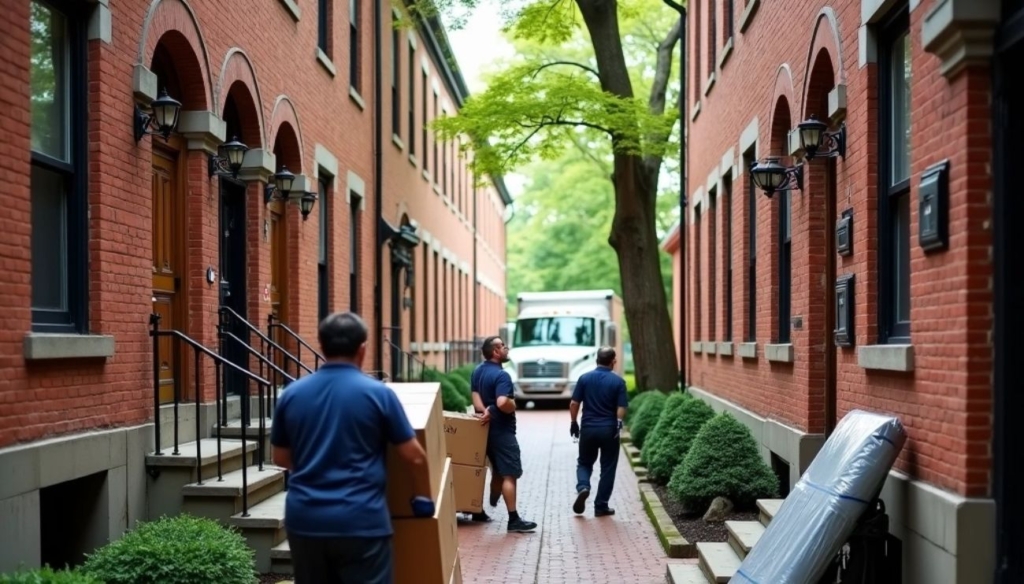
We've put together practical hacks for moving in Brighton's courtyard buildings. You'll learn equipment strategies to avoid expensive long carry moving fees and basement entrance navigation tips. We'll also show you how to work with a Brighton local moving company that understands these unique access challenges.
What is a Long-Carry Move and Why Brighton Brick Courtyards Create This Challenge
The 100+ Foot Problem in Commonwealth Ave and Cleveland Circle Brighton
A long carry moving fee gets charged when movers must haul your belongings beyond a standard distance between the truck and your unit's entrance. The moving industry uses 75 feet as the baseline threshold. Movers measure this distance by walking the route from the truck's rear to your door, not a straight line. That measurement has hallways, lobby corridors and outdoor walkways, plus any turns or obstacles along the path.
Brighton MA apartments with courtyard layouts have distances that exceed 150 feet from the street parking spot to your unit entrance. Commonwealth Ave buildings and Cleveland Circle Brighton properties were designed with interior courtyards that sit deep inside the property footprint. You access them through archways and garden paths that wind between wings of the structure.
Why Trucks Can't Pull Up to Pre-War Brick Buildings
Pre-war brick buildings create access restrictions that modern apartment complexes don't face. The archways leading into courtyard spaces weren't built for vehicle traffic. Width restrictions, low clearance heights and ornamental landscaping block direct truck access. Besides these physical barriers, there's another reason near Cleveland Circle where street parking regulations prevent large moving trucks from positioning close to building entrances during peak hours.
How Long-Carry Fees Add Up Fast
Moving companies structure long carry moving fees two ways. The flat-fee model charges $75 to $150 once you exceed that 75-foot mark. The per-foot model bills $1 to $2 for each additional foot past the threshold. Most customers end up paying between $75 and $300 in long carry charges depending on the specific situation.
The distance effect extends beyond just the fee. A long carry adds 30 to 90 minutes to your move timeline when the distance exceeds 75 feet. That extra time compounds hourly labor rates charged by your Brighton local moving company. Crew fatigue sets in faster when hauling heavy furniture 200+ feet repeatedly, and this slows the pace while increasing injury risk.
Essential Equipment and Setup Hacks for Long-Carry Access
Rubber-Wheeled Rolling Bins vs Standard Dollies
Durable moving bins with handles make DIY long carries manageable when you work with friends. A Brighton local moving company brings their own equipment systems if you hire them. Plastic bins offer water resistance and stack securely. They provide better protection than cardboard during extended outdoor courtyard hauls.
Furniture dollies with four-wheel platforms handle the bulk of apartment furniture moves. These flat dollies support 1,000 to 1,500 lbs and feature carpet or rubber surfaces that prevent items from sliding. The rubber grip outperforms carpet padding for courtyard moves where uneven cobblestone creates shifting loads. Swivel wheels at each corner deliver tight turning radius needed for narrow Brighton pathways. Standard furniture dollies cannot go up or down stairs, so plan basement entrance routes therefore.
Slim-Profile Dollies for Narrow Courtyard Paths
Slim-profile dollies sit just 3.25 inches off the ground and slide easily under heavy furniture pieces. These portable units distribute weight evenly across wheels that roll smoothly on hardwood and outdoor concrete surfaces. The 220 lb capacity works for most apartment furniture. Multiple units connect together for oversized items. The compact footprint prevents scraping against brick walls in tight Commonwealth Ave courtyard archways.
Multi-Person Relay Staging Lines
Relay staging cuts fatigue on 150+ foot carries. Position one person at the truck loading boxes onto dollies. A second person midway through the courtyard transfers loads, and a third person waits at the unit entrance. This assembly-line approach keeps equipment moving continuously rather than having the same crew walk the full distance repeatedly.
Protective Floor Runners and Landscaping Guards
Neoprene floor runners create non-slip surfaces for hand truck dollies while protecting hardwood, tile and laminate floors. The 1/6-inch thickness provides cushioning without creating trip hazards. Non-adhesive backing removes cleanly without residue. The material cuts easily to fit stairs and narrow hallways. Carpet Shield plastic protector self-adheres for up to 30 days for carpeted areas. Both options prevent scratches from repeated dolly traffic during moving in Brighton courtyard buildings.
Navigating Basement Entrances and Low-Clearance Service Doors
Measuring Doorways and Transoms Before Moving Day
Basement entrances in homes over 100 years old present undersized openings built when we moved smaller items in and out. These service doors often feature low clearance heights fitted to exposed foundation dimensions rather than modern door standards. Measure door openings at the narrowest point and take measurements inside the doorframe rather than the door itself. That interior measurement matters because you lose space you might have assumed was available.
You can add two to three inches of usable width by removing doors from hinges. A nail against the bottom hinge pin, tapped upwards with a hammer until it slides out, lets you shift the door sideways off its hinges. The whole ordeal takes just minutes.
Disassembly Strategies for Bulky Furniture
Modern furniture disassembles more than most renters expect. Start by checking if legs, arms, or other components remove without tools. Unscrew table legs, pull out dresser drawers, and remove bookshelf shelves to reduce weight and bulk. Take photos before disassembling so you remember how pieces reconnect later. All screws, bolts, and hardware go in labeled plastic bags that you tape to the corresponding furniture piece.
Using Subterranean Walkways in Older Brighton Buildings
Subterranean walkways in pre-war Brighton MA apartments offer alternative routes at the time biggest problems arise with clearance through standard entrances. Older foundations feature double-layer brick construction exceeding eight inches thick and create substantial wall depth that limits door width. Ground levels changed over time in historic neighborhoods near Commonwealth Ave through street repaving, raising to consider drainage improvement, and natural debris accumulation. Buildings constructed at original grade now sit partially below current street level and create basement and sub-grade service entrances that provide access points for bulky furniture when standard doors prove too restrictive.
Working with Brighton Local Moving Companies and Building Management
Questions to Ask Moving Companies About Long-Carry Experience
Professionals who understand courtyard logistics will save you money and stress. Ask your Brighton local moving company how they calculate long-carry charges—whether they use flat fees or per-foot pricing. Confirm their measurement process runs from the truck's rear to your unit entrance, not a straight-line estimate. Request details on flight charges for stairs and elevator fees. Ask about any fuel surcharges that might apply.
Coordinating with Property Managers for Access Times
You should reserve service elevators or arrange dedicated elevator time blocks before your move date. Buildings without freight elevators sometimes assign staff to manage elevator traffic during scheduled moving windows. Contact property managers early to confirm move-in policies and loading dock access. Check any building-specific restrictions on moving hours.
Understanding MBTA Transit Restrictions Near Cleveland Circle
Green Line C branch service suspends between Kenmore and Cleveland Circle Brighton for maintenance from time to time, requiring shuttle busses that add 15+ minutes to commutes. Plan your move date around scheduled transit work and avoid street congestion from diverted traffic.
Parking Permits and Street Access Rules in Brighton MA
Boston requires moving truck permits for street parking in residential or metered zones. Standard permits cost $69 for two non-metered spaces and rise to $109 for metered locations. Apply online at least 15 days before your move, or in person three days ahead. Post official "No Parking" signs 48 hours before your 7 a.m. start time. Call Boston police at 617-343-4911 if vehicles occupy your reserved spot.
Conclusion
Brighton's brick courtyard buildings offer incredible character, but the long-carry challenge just needs strategic planning. Use the equipment hacks and basement navigation tips we've covered to avoid fees that get pricey and timeline delays. The smartest move? Work with a Brighton local moving company that knows these courtyard layouts and tight service entrances. Your back will thank you, and your moving day will run smoothly from truck to door.
Key Takeaways
Moving into Brighton's charming brick courtyard apartments requires special planning due to unique access challenges. Here's what you need to know to avoid expensive surprises and execute a smooth move:
• Long-carry fees kick in beyond 75 feet – Brighton courtyard buildings often require 150+ foot carries from street to unit, adding $75-$300 in fees plus 30-90 minutes to your move time.
• Invest in proper equipment for courtyard terrain – Rubber-wheeled dollies, slim-profile platforms, and protective floor runners handle cobblestone paths and narrow archways better than standard moving gear.
• Measure basement entrances and disassemble furniture beforehand – Pre-war service doors have low clearances; removing door hinges adds 2-3 inches of width, while furniture disassembly prevents costly delays.
• Secure moving truck permits 15 days in advance – Boston requires permits costing $69-$109 for street parking, with "No Parking" signs posted 48 hours before your move.
• Hire movers experienced with Brighton courtyard buildings – Local companies familiar with Commonwealth Ave and Cleveland Circle layouts save money by efficiently navigating these unique access challenges.
FAQs
Q1. How do moving companies calculate long-carry fees for apartment moves? Moving companies typically measure the actual walking distance from the truck's rear to your unit entrance, including hallways, corridors, and outdoor paths. Most use 75 feet as the baseline threshold. Beyond that distance, they charge either a flat fee of $75-$150 or a per-foot rate of $1-$2 for each additional foot. The total long-carry charge usually ranges from $75 to $300 depending on the specific distance and company pricing structure.
Q2. Is it safe to gradually move items into a new apartment before officially living there? Yes, it's perfectly safe to move items gradually into your new apartment once you have the keys and your lease has started. Just ensure you lock all doors and windows when leaving, avoid bringing valuable items until later trips, and keep your renters insurance updated with the new address. Many renters prefer this approach as it reduces stress and allows time to clean and organize before the main move-in day.
Q3. What equipment works best for moving through narrow courtyard pathways? Rubber-wheeled dollies and slim-profile platforms work best for courtyard moves. Slim-profile dollies sit just 3.25 inches off the ground and navigate tight spaces easily, while rubber-wheeled options handle uneven cobblestone better than carpet-padded alternatives. Protective floor runners prevent damage to hardwood and tile during repeated trips, and plastic moving bins offer better water resistance than cardboard for outdoor hauls.
Q4. How can I get furniture through low-clearance basement doors? Start by measuring doorways at their narrowest interior point before moving day. Removing doors from their hinges adds 2-3 inches of usable width—simply tap the hinge pins upward with a hammer and slide the door off. Disassemble furniture by removing legs, arms, drawers, and shelves, taking photos beforehand for reassembly. Place all hardware in labeled plastic bags and tape them directly to the corresponding furniture piece.
Q5. What permits do I need for a moving truck in Brighton, MA? Boston requires moving truck permits for street parking in residential or metered zones, costing $69 for two non-metered spaces or $109 for metered locations. Apply online at least 15 days before your move or in person three days ahead. You must post official "No Parking" signs 48 hours before your scheduled 7 a.m. start time to reserve your spaces legally.